
Despite Exchange Rate and Capital Flow Pressures, Indonesia's Economic Fundamentals Remain Sound for Investment
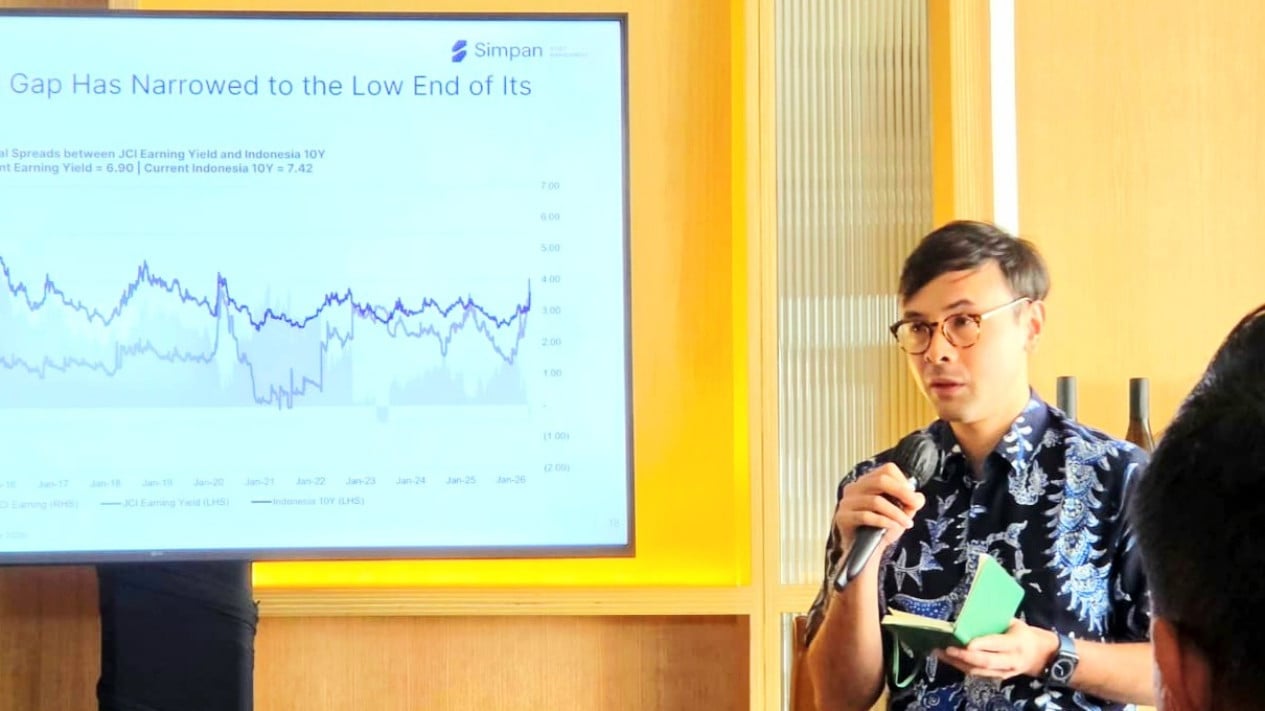
A number of economic indicators show that Indonesia’s economic fundamentals remain relatively intact amidst current financial market volatility, meaning investment opportunities are still considered wide open. Co-Founder of Simpan Asset Management, Nicholas Hilman, said the rupiah exchange rate and capital flows are factors putting pressure on financial markets, rather than an overall weakening of economic fundamentals. Nicholas explained that the rupiah’s depreciation since October 2024 has reached 15.6 percent, followed by a decline in foreign investor ownership of government bonds from around 23 percent to 13 percent. On the other hand, the stock market correction has pushed the Jakarta Composite Index (IHSG) valuation to one of its lowest levels in recent years. “So investors need to note that the pressure is actually concentrated on the currency and capital flow side, and not on the economic foundation,” Nicholas said in a statement on Thursday, 18 June 2026. Nevertheless, he acknowledged there are also challenges from the fiscal and monetary side, such as the state revenue shortfall in 2025 and a surge in government spending. Meanwhile, Bank Indonesia has raised its benchmark interest rate by 75 basis points in the last two months to maintain exchange rate stability. Indonesia’s foreign exchange reserves were recorded as having dropped from around US$156 billion to US$145 billion, in line with efforts to stabilise the rupiah. However, Nicholas assessed that this condition has not significantly altered the national economic fundamentals. According to him, internal indicators used by the company show that Indonesia’s macroeconomic condition is still in a relatively constructive zone. Moreover, the market is currently responding more to policy uncertainty and external factors, rather than a decline in corporate performance. “The market is reacting to policy uncertainty, not to a collapse in fundamentals. When assets are at attractive valuations and macro conditions are still relatively constructive, investment opportunities remain open,” he said.