
Despite Abundant Raw Materials, Indonesia Still Imports Solar Panel Components
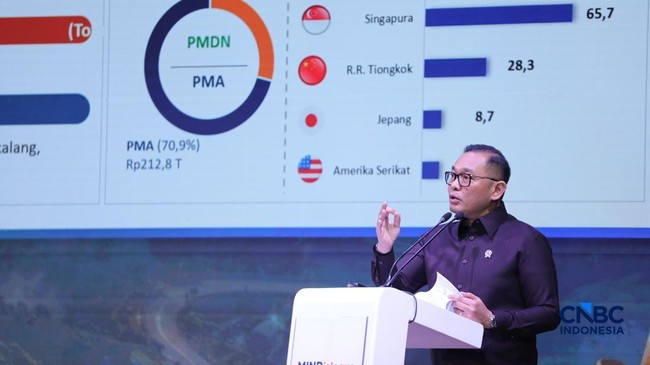
The Ministry of Investment and Downstreaming/BKPM has revealed that the solar panel industry remains dependent on imported components, even though Indonesia possesses abundant raw material resources. This situation leaves the country unable to independently control the cost structure of renewable energy production.
Deputy Minister of Investment and Downstreaming Todotua Pasaribu stated that the majority of existing solar panel manufacturing facilities in Indonesia only carry out assembly processes. He stressed that mastering the component supply chain is crucial for Indonesia to create added value from its own mineral wealth.
“Our solar panels, the factories here are all just assembly plants. Yet for solar panels, we actually have 87% of the components,” Pasaribu said during the Mindialogue 2026 event in Jakarta, quoted on Thursday (13/8/2026).
According to him, Indonesia possesses almost all the basic materials needed to produce solar panels, ranging from silica, tin, bauxite, to copper. However, because there is no industry for processing core components, these materials must be sourced from abroad, burdening the production costs of national solar energy.
“We have the silica, we have the tin, we have the bauxite, we have the copper, we have everything. But because we are still only assembling, we still import the component materials,” he explained.
The lack of control over this cost structure impacts the selling price of solar power, making it difficult to compete with the purchasing capacity of the state electricity company PT PLN (Persero). The government is accelerating the downstream processing of components so that Indonesia no longer merely serves as a market for foreign technology but becomes a competitive producer.
“We cannot control the cost. How can we manage the production of energy itself if we cannot control the cost,” he concluded.
According to ministry records, Indonesia has successfully produced 60% of solar panel components domestically, supported by the availability of raw materials such as silica, bauxite, copper, and tin. Components available domestically include aluminium frames, front and back glass, EVA/POE, solar cells, and junction boxes. Meanwhile, components still unavailable domestically and requiring import are ribbon and silicon.