
Despite Abundant Fish Stocks, Central Java Ranks Second Lowest in National Fish Consumption
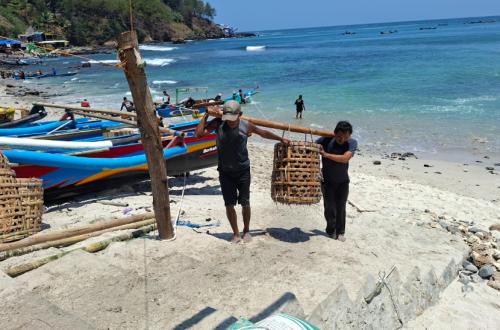
Central Java is ranked among the top ten fish producers in Indonesia, yet the fish consumption rate of its residents ranks 37th out of 38 provinces. According to data from the Coordinating Ministry for Food Affairs, fish consumption in Central Java in 2025 reached only 16.32 kilograms per capita per year.
This figure is higher than that of South Papua, which recorded a consumption of 10.2 kilograms per capita per year. In comparison, North Sulawesi holds the highest consumption rate in the country at 48.97 kilograms per capita per year.
Deputy Coordinating Minister for Food Affairs, Hanif Faisol Nurofiq, stated that the high volume of fish production has not been matched by consumption among the people of Central Java. He shared this during a socialisation session for Presidential Regulation Number 7 Capable 2026 regarding the Movement to Popularise Fish Consumption (Gemarikan) in Semarang on Wednesday (30/09/2026).
“Central Java is part of the top 10 fish producers in the country. However, if we calculate it honestly, fish consumption in Central Java is relatively very small. In fact, across all provinces in Indonesia, it is the second lowest,” said Hanif.
Data from the Coordinating Ministry for Food Affairs shows that the average capture fisheries production in Central Java between 2019 and 2024 reached 390,000 tonnes per year. During the same period, the average aquaculture production reached 531,000 tonnes per year.
The Regional Secretary of Central Java, Sumarno, stated that capture fisheries production in 2025 reached 436,000 tonnes, while aquaculture production reached 539,000 tonnes. However, he noted that the public is still more accustomed to consuming chicken and beef rather than fish.
“Particularly in the central regions of Central Java, such as Boyolali, Magelang, Wonosobo, Purbalingga, and Banjarnegara, people still rely on chicken and beef. Even though the potential for fishery products in Central Java is quite significant,” said Sumarno.
Sumarno assessed that eating habits represent one of the primary challenges in increasing fish consumption. The Central Java Provincial Government has reportedly begun efforts to encourage the public to eat fish, though he acknowledged that changing habits requires time.
According to Sumarno, a large portion of Central Java’s fish production is still marketed to other regions or exported. This situation indicates that the high production levels have not been fully absorbed by local domestic consumption.