
Desil Changes: Social Affairs Office in Majalengka Provides Explanation
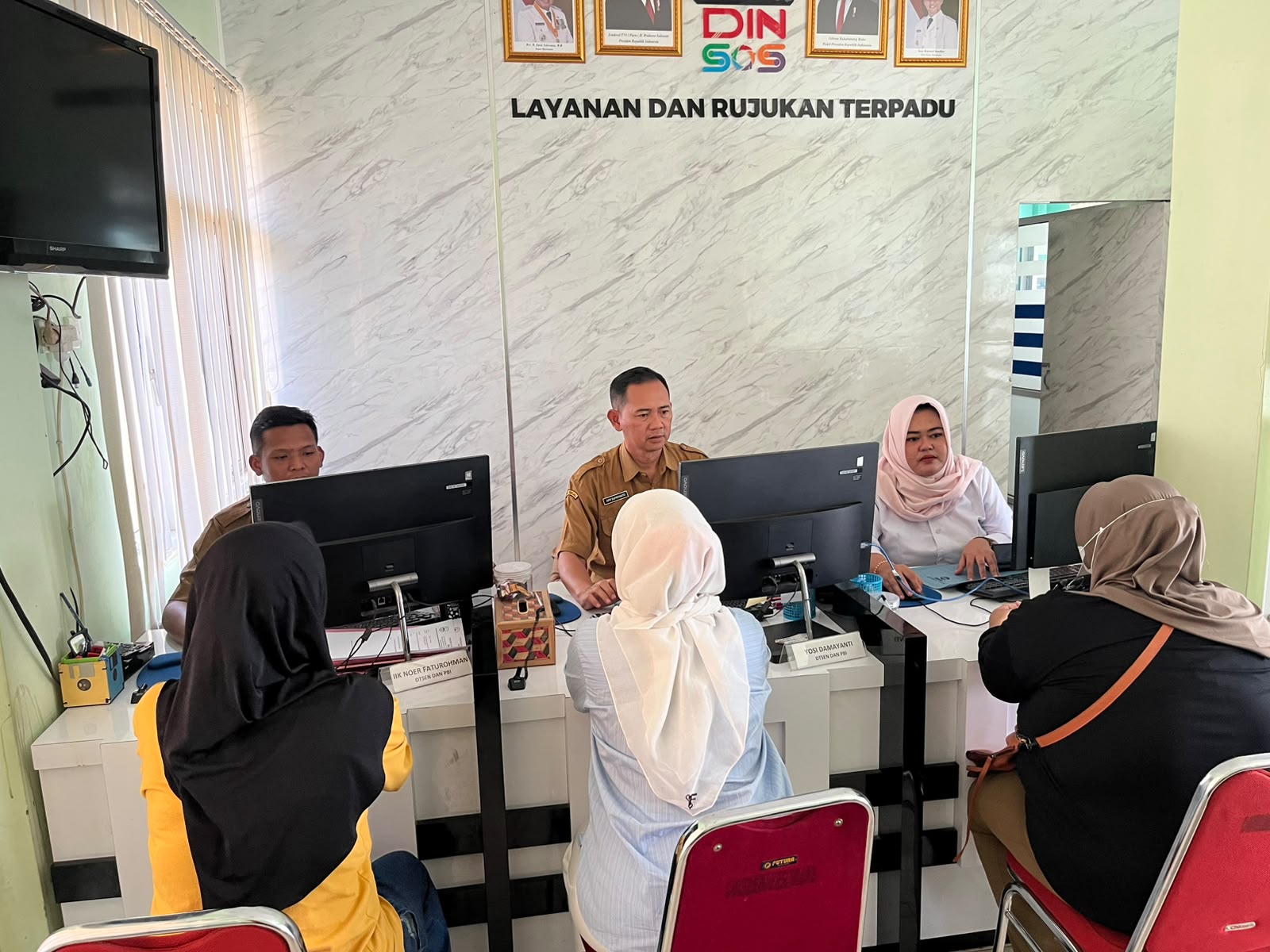
The Majalengka Regency Government is working to ensure that the process of updating and proposing community data is carried out objectively, accurately, and in accordance with actual conditions on the ground. Many residents have complained about changes in welfare classification data, or desil, which they feel do not match their economic conditions, leading to protests and questions about the accuracy of social assistance beneficiary data.
In response, the Majalengka Regency Government, through its Social Affairs Office, continues to ensure that data updating and proposal processes are objective and accurate. This effort is considered important because data validity is key to ensuring that various social protection programmes reach those who truly need them. Apip Supriyanto, Head of the Social Protection and Security Division at the Majalengka Social Affairs Office, stated that data updating is not merely an administrative routine but part of the government’s social responsibility.
“This task is not just a routine, but a field of social devotion. Therefore, it must be carried out correctly and honestly. Professionalism, the spirit of mutual cooperation, and a sincere heart are the weapons in breaking the chain of poverty,” Apip said on Monday (24/8).
Apip explained that many people still do not understand the mechanism for determining desil in the National Single Social and Economic Data (DTSEN). In accordance with the Minister of Social Affairs’ direction, local governments and Family Hope Programme (PKH) facilitators do not have the authority to determine a person’s desil ranking.
“Our task is only to send data according to what is in the field. The data is then processed by BPS and eventually the desil ranking comes out from the Data and Information Centre, which is then used by the Ministry of Social Affairs as a reference for distributing social assistance,” Apip explained.
Apip stressed that local governments do have an important role in ensuring that the data sent truly reflects factual conditions in the field. However, the authority for processing and determining welfare rankings is carried out through a national mechanism.
“There are still misunderstandings, with some thinking that the regent or mayor determines it. No, it is BPS that determines it,” Apip emphasised.
Apip also explained that desil is the grouping of the population into 10 levels of welfare. Desil 1 represents the bottom 10% of the population in terms of socio-economic conditions, while desil 10 represents the top 10% with the highest level of welfare. With this system, a person’s desil position can serve as a reference in determining the targets of various social protection programmes and government policies. The determination process is carried out by BPS in accordance with Presidential Instruction Number 4 of 2025.
According to Apip, changes in desil status, including when someone suddenly moves to a higher desil even though they feel their economic condition has not changed much, are related to the national data updating process. The current data system uses integration of various variables and data matching. Population data can be matched with a number of socio-economic indicators, including information related to PLN electricity capacity, vehicle ownership, and banking or OJK data.
“Therefore, changes in desil ranking are not solely determined based on a person’s admission of their economic condition, but through the processing of various variables in the national data system,” Apip explained.
Regarding the possibility that some data may not yet accurately reflect community conditions, Apip acknowledged this. Residents who feel their desil status does not match their current economic conditions can use the mechanism for data updates or submit an appeal.
“If the data or desil status does not match current economic conditions, residents can submit an appeal or data update through the Ministry of Social Affairs’ Cek Bansos application or through the SIKS-NG operator at the local sub-district or village,” Apip said.
Apip also urged residents not to immediately blame the local government or PKH facilitators when desil status changes occur.
“Instead, residents should use the mechanisms provided by the government to convey their latest conditions so that data updates can be carried out according to procedure,” Apip said.
Meanwhile, several Majalengka residents also hope that the welfare data updating process is carried out transparently and truly takes into account conditions in the field. Dadan, 45, a resident of Sukahaji, said that changes in desil status have confused some residents, especially when their family’s economic condition is felt to have not changed much.
“What we hope is that the data truly matches the residents’ conditions. If there are changes, residents also need to be given an explanation so there is no misunderstanding,” he said.