
Deputy Trade Minister Visits Uzbekistan's Deputy PM to Strengthen Trade Cooperation and Women's SME Exports
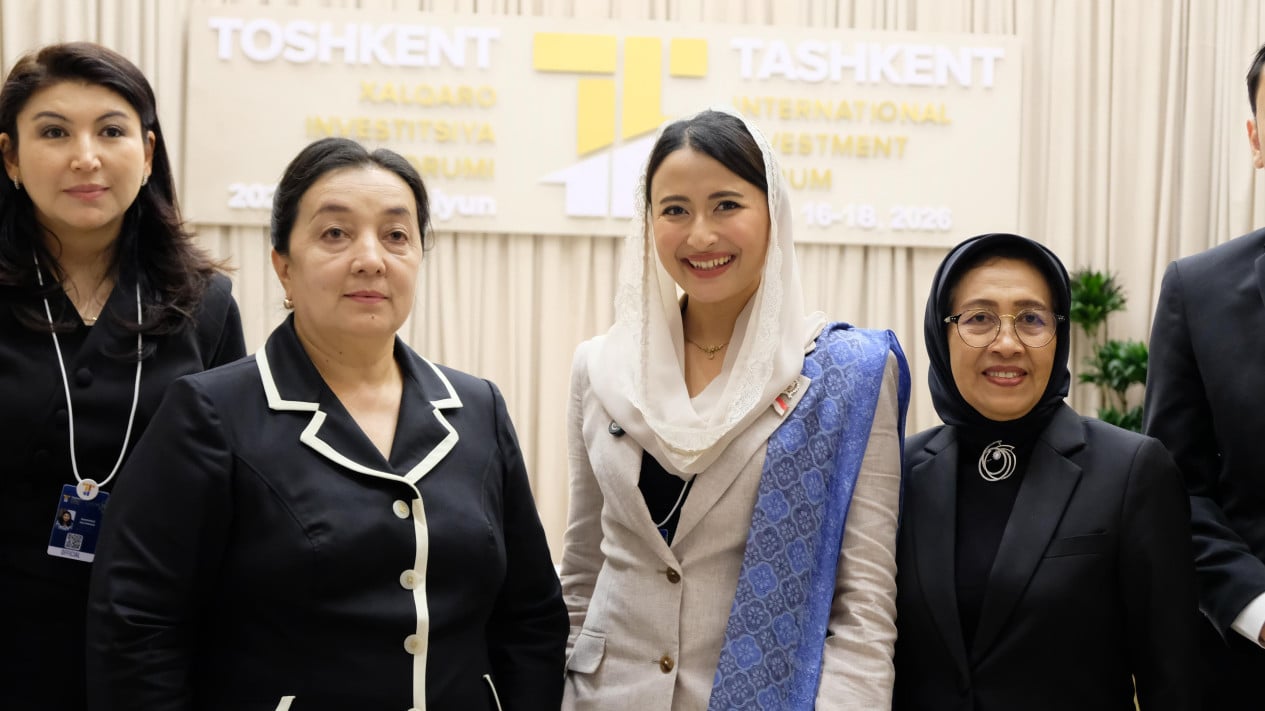
Deputy Trade Minister Dyah Roro Esti held a meeting with Uzbekistan’s Deputy Prime Minister and Chair of the Family and Women Committee, Zulaykho Mahkamova, in Tashkent on Tuesday, 16 June 2026. The meeting focused on strengthening the role of women in international trade and expanding the participation of women-led small and medium enterprises (SMEs) in the economic relationship between Indonesia and Uzbekistan. Both parties agreed that women play an increasingly strategic role in driving inclusive economic growth.
As trade relations between the two countries strengthen through the Indonesia–Uzbekistan Joint Working Group on Trade and Investment Cooperation, significant opportunities are emerging for women entrepreneurs to engage in the economic partnerships being developed. Indonesia and Uzbekistan have the opportunity to build stronger connectivity between women business actors in both nations. One form of cooperation being explored is the organisation of seminars and knowledge-sharing programmes for export-ready SMEs, conducted either virtually or in person with the support of diplomatic representatives from both countries.
These programmes are expected to help business actors understand the market characteristics of each country, expand business networks, and obtain information on export procedures and requirements needed to enter the Uzbek and Indonesian markets. The two sides also exchanged views on a number of products with prospects for development in bilateral trade. Products such as tea, chocolate, dried fruit, tropical fruit, modest fashion, and cosmetics are considered to have opportunities to reach wider markets in both countries.
Deputy Minister Dyah Roro stated that strengthening economic relations is not only measured by an increase in trade value, but also by the opening of opportunities for community groups that have long been drivers of the economy at the grassroots level. When women are given access to markets, information, and international networks, they not only build their own businesses but also create jobs and improve the welfare of their families and communities.