
Deputy Speaker of the MPR Receives Ninth Constitutional Law Conference Delegation, Urges Strengthening of Democracy and the Rule of Law
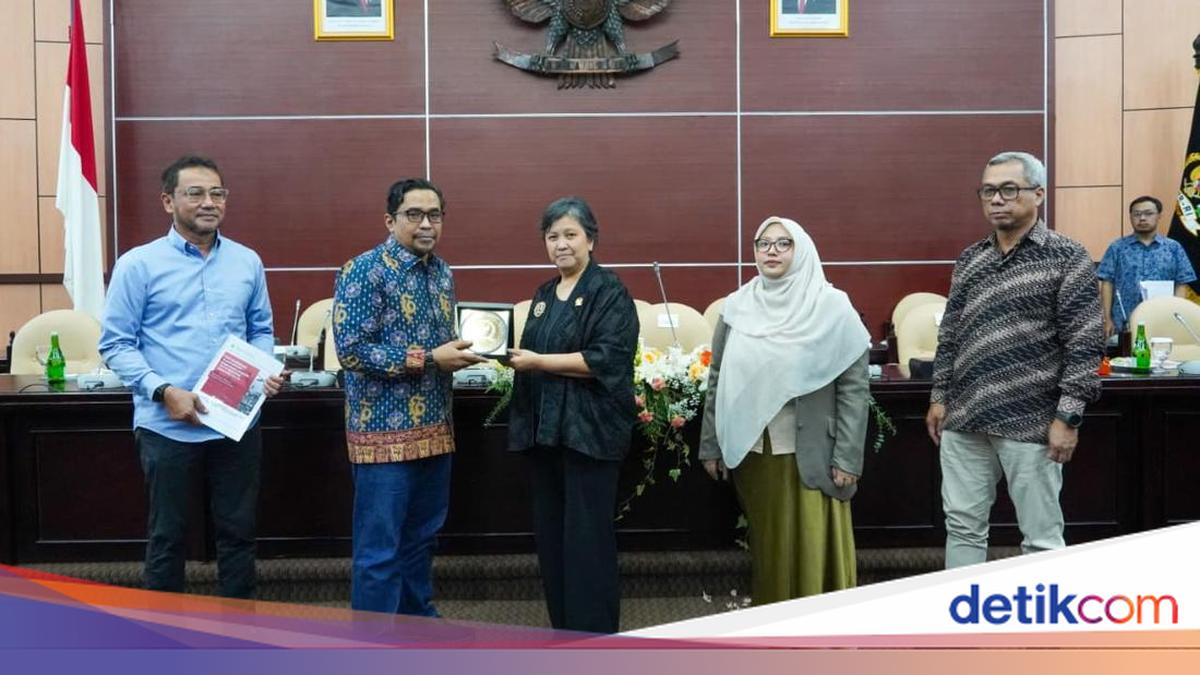
Deputy Speaker of the MPR RI Lestari Moerdijat received a delegation from the Ninth National Constitutional Law Conference (KNHTN IX) at the MPR RI building in Jakarta today. The meeting served as a forum for dialogue between the MPR, academics and civil society to convey the findings and recommendations of their studies on improving democratic life and Indonesia’s constitutional system.
According to Lestari, meetings with academics and civil society are important for maintaining the tradition of critical thought whilst strengthening shared responsibility in reading the direction of the constitution’s journey. For that reason, the findings and aspirations conveyed deserve attention in constitutional studies.
She also stressed the importance of placing academic thought within the broader, long-term interests of the nation, rather than merely in fleeting political considerations. Openness to listening, accepting criticism and accommodating public views is an essential part of building public trust in representative institutions.
KNHTN IX was organised by the Centre for Constitutional Studies (PUSaKO) of Andalas University’s Faculty of Law under the theme “Three Decades of Constitutional Performance After Reformasi”. The conference gathered ideas from academics, practitioners, civil society organisations, and representatives of ministries and state institutions.
At the audience, participant representatives delivered recommendations from five discussion groups: the consolidation of state regulation and institutions; economic and environmental justice for the people’s welfare; the independence and integrity of the judiciary; democratic and constitutional general elections; and the strengthening of political party institutions.
On party matters, participants pushed for internal democratisation, cadre development based on capability and integrity, and transparency in party organisational and financial management. Reforming political parties is seen as important to improve the quality of political recruitment and prevent the concentration of power in particular elites or figures.
Meanwhile, the election recommendations emphasised the need to renew the legal framework, provide clarity on transitional arrangements for simultaneous elections, and substantively strengthen women’s representation. Participants also proposed the use of technology that supports electoral principles, simplified law enforcement, transparency in campaign financing, and reform of the organising institutions.
In the discussion on regulation and state institutions, participants highlighted the importance of meaningful public participation in rule-making, evidence-based regulatory evaluation, and stronger oversight mechanisms and checks and balances between institutions. The recommendations also included strengthening the role of representative institutions and arranging the division of authority within the constitutional system.
On the judiciary, participants stressed that judicial independence must be strengthened alongside integrity and oversight. The proposals put forward included strengthening judicial, administrative, financial and human-resource autonomy, renewing the regulation of judicial office, opening up the regulatory review process, and reforming military justice.
The economic and environmental recommendations placed the people’s welfare, economic democracy and ecosystem sustainability as interconnected goals. In line with this, participants called for the protection of indigenous peoples’ living space, stronger corporate responsibility, and the prevention of structural impoverishment.
On the same occasion, Lestari invited academics and the wider public to provide input on the deliberations of the State Policy Outline (PPHN), including through the official website mpr.go.id. She stressed the importance of enriching the deliberations with research findings and views from various elements of society so that the considerations developed remain connected to the needs and interests of the people.
Taufik Basari, Chair of the MPR’s Constitutional Studies Commission, expressed his appreciation while attending the handover of the recommendations. According to him, there are several important matters that warrant further discussion, particularly regarding the substance of the draft PPHN.
Meanwhile, PUSaKO expressed appreciation for the MPR’s willingness and openness in receiving the aspirations of the people arising from constitutional studies, and in opening a dialogue space for the direct delivery of the conference’s findings.
After all groups had delivered their recommendations, Charles Simabura, Director of PUSaKO at Andalas University, symbolically handed over the KNHTN IX recommendation documents to Lestari Moerdijat. The handover was followed by the presentation of a plaque and a group photograph with the participants.
Through the meeting, Lestari invited all parties to continue safeguarding constitutional life. This is important so that the administration of the state becomes increasingly just and delivers prosperity for all the Indonesian people.
Source: jawawa.id (https://jawawa.id/newsitem/deputy-speaker-of-the-mpr-receives-ninth-constitutional-law-conference-delegation-urges-strengthening-of-1789487650)
Originally published by detikcom (https://news.detik.com/berita/d-8664518/terima-delegasi-knhtn-ix-waka-mpr-dorong-penguatan-demokrasi-negara-hukum), translated from Indonesian