
Deputy Speaker of MPR states subsidies hinder energy transition acceleration
Jakarta (ANTARA) - The Deputy Speaker of the MPR RI, Eddy Soeparno, believes that energy subsidy policies could hinder the acceleration of the energy transition because they make fossil-based energy prices cheaper than their actual production costs.
According to Eddy, energy prices suppressed through subsidies mean that the public and businesses are not yet fully incentivised to switch to cleaner energy sources.
“Our problem is subsidies. In reality, fossil energy is artificially cheap because the subsidies are large,” Eddy stated during a forum in Jakarta on Wednesday.
He cited the price of Pertalite, which currently sits around Rp10,000 per litre, while its production cost reaches approximately Rp16,100 per litre. The difference is covered by the government through the subsidy mechanism.
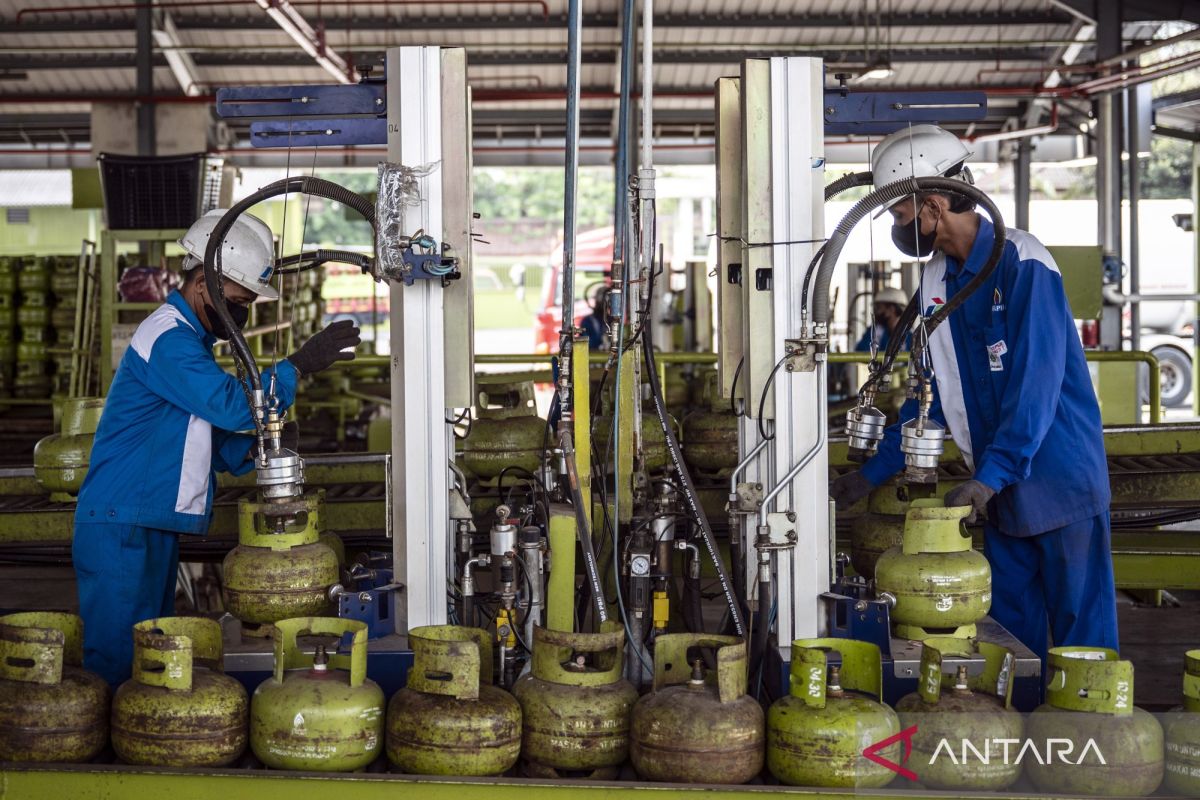
In addition to fuel, Eddy highlighted the subsidy on 3kg LPG cylinders. According to him, the cost of providing subsidised LPG reaches about Rp56,000 per cylinder, whereas the price paid by the public is around Rp20,000–Rp25,000 per cylinder.
Eddy suggested that the government needs to implement ‘right sizing’ and ‘right targeting’ of subsidies so that the savings can be partially reallocated to support energy transition programmes.
“If we can implement right sizing and right targeting for those subsidies, there will certainly be savings that we can use to finance the current energy transition,” he said.
He assessed that the precise restructuring of subsidies should become one of the government’s priority programmes, as subsidy policies influence energy price structures and investment interest in renewable energy.
Eddy noted that accelerating the energy transition requires comprehensive policy changes, including creating an energy price structure that encourages the use of renewable energy sources.
On the other hand, he stated that the energy transition also requires massive investment, meaning the government must create policies capable of attracting private sector participation and investors to build renewable energy infrastructure.
Eddy mentioned that Indonesia requires approximately US$180 billion in investment to execute its energy transition agenda until 2034, including the development of renewable energy power plants and supporting infrastructure.
This requirement, he continued, does not yet include the investment needed for the development of 100 gigawatt (GW) capacity solar power plants (PLTS), which is estimated to require an additional US$100 billion.
In the Electricity Supply Business Plan (RUPTL), Eddy noted that the government targets the construction of almost 70 GW of new power plants by 2034, with approximately 52 GW coming from renewable energy, including battery energy storage systems.
With this additional capacity, Indonesia’s renewable energy mix is expected to increase from around 17 per cent currently to almost 30 per cent by 2034 and 40 per cent by 2040.