
Deputy Social Minister Urges Universities to Drive Poverty Alleviation
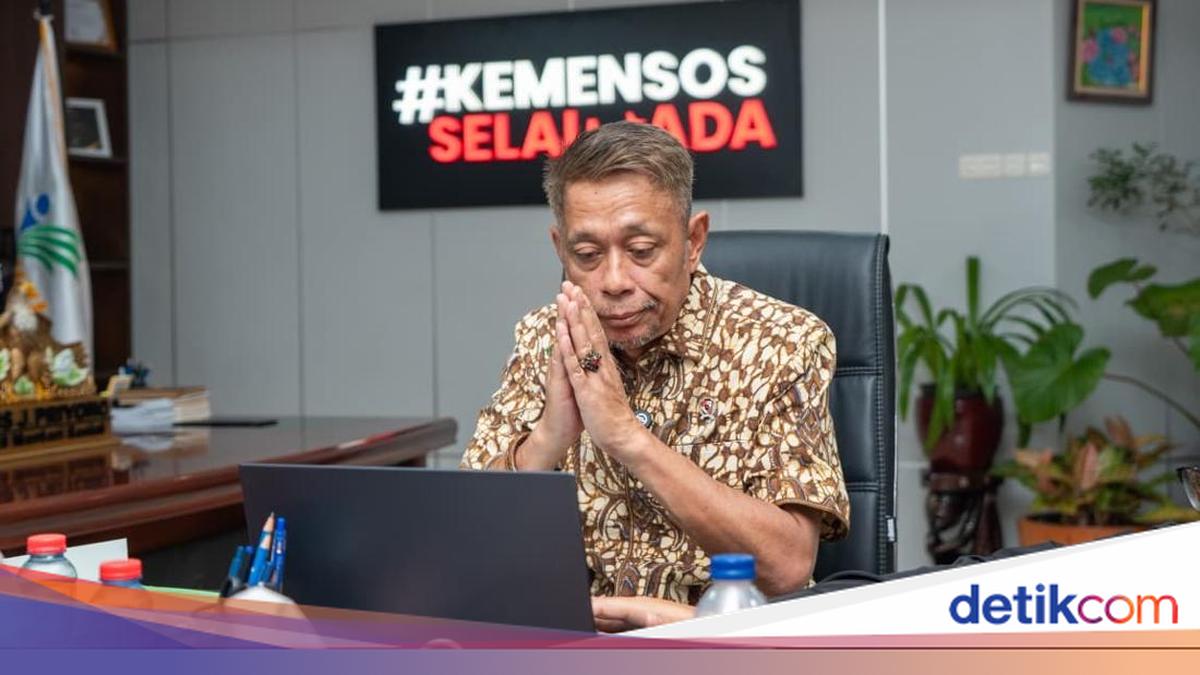
Deputy Social Minister Agus Jabo Priyono has emphasised the important role of higher education institutions in poverty alleviation through the development of knowledge, research, innovation and community empowerment. He made the remarks while speaking at the 11th National Seminar on Research and Community Service Results (SNasPPM XI) hosted by Universitas PGRI Ronggolawe (UNIROW), themed ‘The Strategic Role of Higher Education in Building a Resilient Generation Towards Golden Indonesia 2045’. The seminar was held in a hybrid format from the second-floor hall of UNIROW in Tuban, with Agus Jabo participating online from the Ministry of Social Affairs office in Jakarta on Thursday (27/8).
According to Agus Jabo, education is closely linked to efforts to break the intergenerational cycle of poverty. Poverty is not only about income, but also about access to education, health, nutrition, skills, capital and employment opportunities. ‘Education is not merely a matter of schooling. Education is a tool of social struggle, a tool of social mobilisation, and a tool for liberating people from poverty and underdevelopment,’ he said.
In this context, he described Sekolah Rakyat as one of the government’s efforts to expand access to education for children from poor and vulnerable families. He said Sekolah Rakyat is not simply about providing classrooms and dormitories, but is part of the struggle to break the intergenerational cycle of poverty through education. ‘Sekolah Rakyat is not just a school. Sekolah Rakyat is a social movement, a liberation movement against poverty, a movement to honour the people, and a movement to open the way for children from poor families,’ he said.
Agus Jabo argued that universities need to take a greater role by ensuring that knowledge and research have a real impact on society. ‘Knowledge must not only circulate in seminar rooms, research must not stop at journals, students must not only chase grades, lecturers must not only chase publications. Because knowledge that does not touch the problems of the people will lose part of its meaning,’ he stressed.
He encouraged campuses to measure success not only by the number of graduates or research publications, but also by the changes produced for society. ‘Do not only ask how many research papers we have published, but ask how many farmers, fishermen, small businesses and poor communities have seen their productivity increase because of support from campuses and university graduates,’ he said.
According to Agus Jabo, collaboration between the Ministry of Social Affairs and universities can be directed towards community empowerment. The Ministry has programme targets, social facilitators, centres and various social service instruments, while universities have knowledge, lecturers, students, laboratories, research and innovation. ‘If we combine these strengths, we can do something far greater. The Ministry of Social Affairs brings real problems, campuses bring knowledge, the business world brings capital and markets, local government brings regional potential, and the community will be the main actors. This is what I call a community empowerment ecosystem,’ he explained.
He stressed that social protection remains necessary for communities facing crises and in need of assistance. However, social interventions need to be directed towards enabling communities to become self-reliant. ‘Our task is not to make people wait for social assistance. Our task is to make people empowered and independent, living prosperously,’ he said.
For this reason, the Ministry of Social Affairs is promoting an economic empowerment approach that combines entrepreneurship, capital assistance and skills training. According to Agus Jabo, universities can collaborate through continuous mentoring, from assessment, training and practice to access to capital and markets, business development, and evaluation and graduation. He also invited universities to build a ‘Kampus Berdaya Menuju Masyarakat Mandiri’ movement, including through assisted villages, assisted small businesses, social entrepreneurship laboratories and empowerment programmes that directly involve students.
‘It is not about how many activities we carry out, but how much community income increases, how many businesses grow, how many jobs we create, how many families escape poverty, and how many families have become empowered and independent,’ he stressed.
Agus Jabo expressed hope that universities can produce a generation that not only masters science and technology, but is also productive, has character, is creative and cares about community problems. ‘From campuses we build knowledge, from knowledge we build innovation, from innovation we build production, from production we build self-reliance and prosperity. And from the prosperity of the people, we build Golden Indonesia 2045,’ he concluded.
Source: jawawa.id (https://jawawa.id/newsitem/deputy-social-minister-urges-universities-to-drive-poverty-alleviation-1787845935)
Originally published by detikcom (https://news.detik.com/berita/d-8637382/wamensos-dorong-perguruan-tinggi-jadi-penggerak-pengentasan-kemiskinan), translated from Indonesian