
Deputy Social Affairs Minister Urges Youth and Student Activists to Champion Empowerment Programs
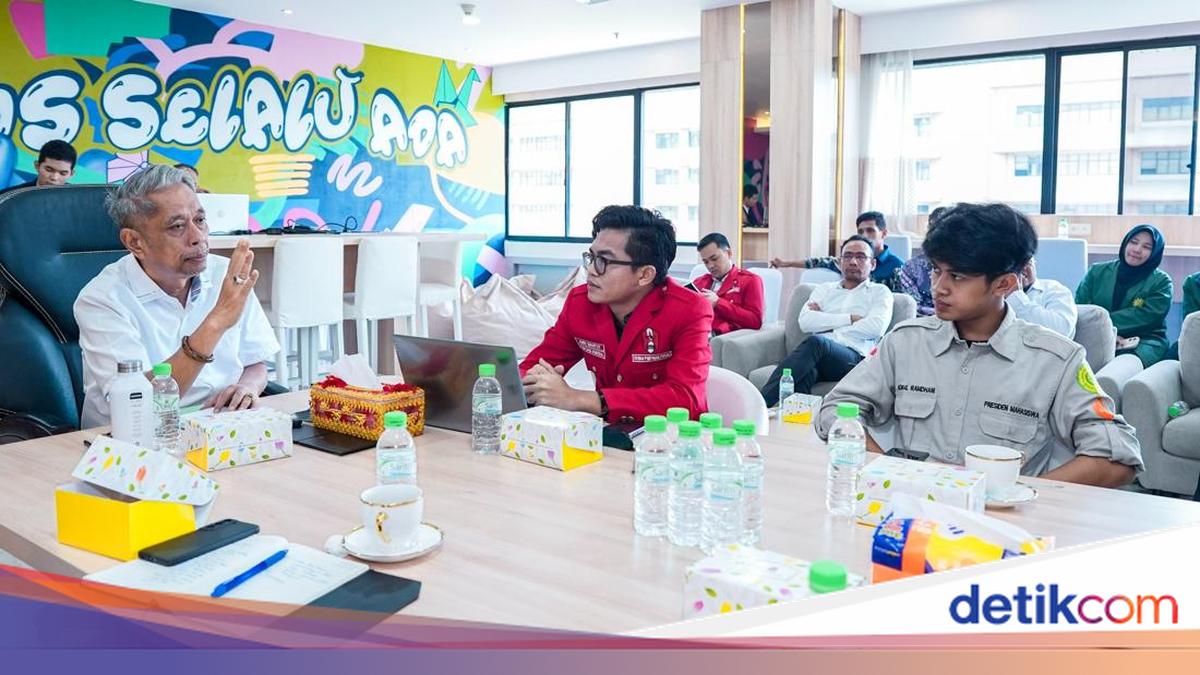
The initiatives include village development, character education, national social welfare literacy, economic empowerment, psychosocial support, social volunteers, and youth organisation agendas. The meeting was attended by representatives from the Indonesian National Student Movement (GMNI), Muhammadiyah University of Jakarta (UMJ), Central Board of Indonesian Islamic Students (PB PII), Central Board of Youth of the Islamic Unity Party (PP Pemuda PUI), and Central Leadership of the Islamic Women’s Student Association (PP HIMI Persis). In this meeting, Agus stressed that activists must understand the root causes of social issues. Social work cannot be limited to technical activities but must have a clear strategic direction. ‘I want to encourage you to become great leaders, not merely social workers,’ Agus said in a written statement on Monday (25 May 2026). Agus urged youth and student organisations to develop concrete programmes. Each activity must have clear targets, implementation methods, and final objectives. ‘Therefore, I demand concrete programmes. What is the empowerment? What are the targets? It must be clear,’ Agus stressed. Agus also emphasised the importance of data in implementing social programmes, citing President Prabowo Subianto’s mandate for more targeted social assistance. ‘Our data is what forms the President’s mandate,’ Agus said. Agus explained that the Ministry of Social Affairs has three major priorities: improving the National Socio-Economic Single Data (DTSEN), more targeted social assistance, and the People’s School initiative. ‘Indonesia has never had unified data. Government agencies and local governments each have their own data, leading to fragmented economic and social programmes,’ Agus explained. ‘This lack of focus means poverty eradication remains incomplete,’ he added. Regarding social assistance, Agus stated that the Ministry of Social Affairs is transforming passive welfare into more productive assistance through empowerment. Agus also explained that the People’s School initiative is a key measure to break intergenerational poverty. ‘The People’s School’s goal, as per the President, is to stop the transmission of poverty. If parents are poor, the President does not want their children to be poor,’ Agus explained. Agus urged youth organisations to build strong leadership, not just engage in technical activities but also understand the nation’s major issues. ‘You want to be national leaders, not civil servants. Your thinking must be big and strategic,’ Agus said. Meanwhile, PB PII Chairman Amsal Alfian expressed concern over the crisis of school dropouts and plans for collaboration through the People’s School programme. Amsal also noted that PII has a regional cadre network that can assist in data collection and character education for People’s School students. ‘PII’s cadre system can be integrated into the People’s Schools to focus on character education. Secondly, we can recommend dropouts to enrol in nearby schools,’ Amsal said. Meanwhile, GMNI General Secretary Amir Mahfud presented the National Social Welfare Literacy Movement and a programme to develop 1,000 villages in remote, border, and outermost areas (3T). UMJ representative Sadam Sabili outlined plans for village development activities by the UMJ Student Executive Board (BEM UMJ). Furthermore, PP Pemuda PUI Chairman U Palahuddin Assopari detailed social volunteer programmes, SME empowerment, compassionate boarding schools, and community-based food security initiatives. Then, PP HIMI Persis Chairman Ghina Ainal Mardliyah outlined the Rising Intellectual Home programme, women’s economic empowerment, psychosocial services, the Teman Aman Women’s Complaint Booth, and the Mutiara initiative.