
Deputy Social Affairs Minister Urges People's Schools to Break Intergenerational Poverty Chain
The government has made People’s Schools one of its efforts to break the chain of intergenerational poverty through education. The state is present from an early stage to ensure that children from poor families have the opportunity to grow up in an environment that supports their future.
Deputy Social Affairs Minister Agus Jabo Priyono said People’s Schools specifically target children from poor families in deciles 1 and 2 of the National Socio-Economic Single Data. Children from families outside this target group cannot join the programme, even though the facilities provided are relatively complete.
‘I remind you that once it is ready, it is for decile 1. If decile 1 has not been filled, then move to decile 2. So the maximum is decile 2,’ Agus Jabo said in his statement on Thursday (27/8/2026).
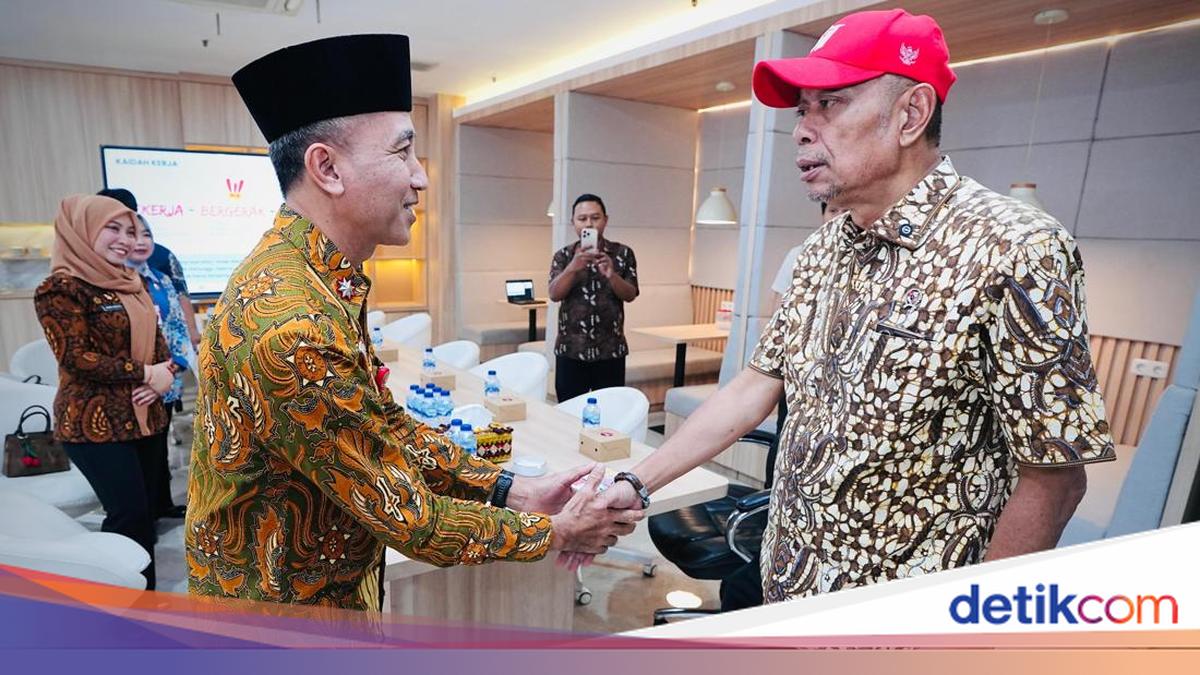
He made the statement while receiving an audience with West Nias Regent Eliyunus Waruwu and Grobogan Regional Secretary Anang Armunanto at the Ministry of Social Affairs office in Central Jakarta on Thursday (27/8).
According to him, poverty cannot be adequately addressed through social assistance alone, but must also be cut off at its source through investment in quality education.
‘So the aim is to break the transmission of poverty between generations through education. President Prabowo wants it that way. The President does not want that if the parents are poor, the children will also be poor,’ he said.
He explained that children from poor families do not only face economic limitations. They also potentially face problems of nutrition, sanitation, self-confidence, and a less supportive social environment. In certain conditions, children even have to help their parents work. These conditions can reduce children’s opportunities to learn and develop themselves.
‘The state picks up these poor people from an early stage. So that these children do not live in an environment of poverty,’ said Agus Jabo.
Therefore, People’s Schools use a boarding education concept. Children not only receive learning in the classroom, but also live in an educational environment designed to support character building and the fulfilment of their basic needs.
Currently, according to Agus Jabo, there are still around 4.1 million children who have not received access to education. Meanwhile, the capacity for providing education at People’s Schools this year is only around 43,000 students.
‘The target for 2029 is 1 million students. So to meet the target of 4.1 million is still a long way,’ said Agus Jabo.
To pursue this target, the government is encouraging regions to accelerate the readiness of People’s School locations. Regions that have proposed land and been declared clear and clean are asked to immediately complete the requirements so they can take part in this year’s construction stages.
‘We are fighting so that those who have proposed and are already clear and clean can be included this year, so they should immediately complete the requirements so that hopefully they can join the next stage,’ he said.
One of the regions preparing a People’s School location is West Nias Regency, North Sumatra. Eliyunus said the regional government has prepared 8.6 hectares of land in Simaeasi, Mandrehe District.
‘Previously it was already complete, the certificate has been finished and the team from the office has also come down. It meets the requirements with an area of 8.6 hectares,’ explained Eliyunus.
Eliyunus said People’s Schools are greatly needed by the people of West Nias because the poverty rate in the area is still high. Out of approximately 97,856 residents, 22.47 percent are still in the poor category.
‘We are conveying a great longing for a People’s School. In North Sumatra, West Nias, we are not proud of the current conditions, around 22.47 percent are our families who are still categorised as poor,’ he said.
Similarly, the Grobogan Regency Government has prepared 6.75 hectares of land in Kalongan Urban Village, Purwodadi District. The location is in an urban residential area and has adequate infrastructure support. The location is also close to a hospital and the regency government centre.
‘The location is very strategic, located in an urban residential area. Of course it is also close and has strategic infrastructure support and adequate basic services,’ said Anang Armunanto.
For information, present at the meeting were Minister’s Expert Staff Agustinus Budi, Alif Kamar, Virgo Sulianto, Hendri Kurniawan, Dardo Pratisyo, People’s School Joint Secretariat Herman Koswara, Acting Director of PSKB Masryani Mansyur, Head of Grobogan Social Service Indri Agus Velawati, and Grobogan Baperinda Wahyu.
Source: jawawa.id (https://jawawa.id/newsitem/deputy-social-affairs-minister-urges-peoples-schools-to-break-intergenerational-poverty-chain-1787842404)
Originally published by detikcom (https://news.detik.com/berita/d-8637349/wamensos-dorong-sekolah-rakyat-putus-mata-rantai-kemiskinan-antargenerasi), translated from Indonesian