
Deputy Social Affairs Minister Says People’s Schools Will Help Break the Cycle of Intergenerational Poverty
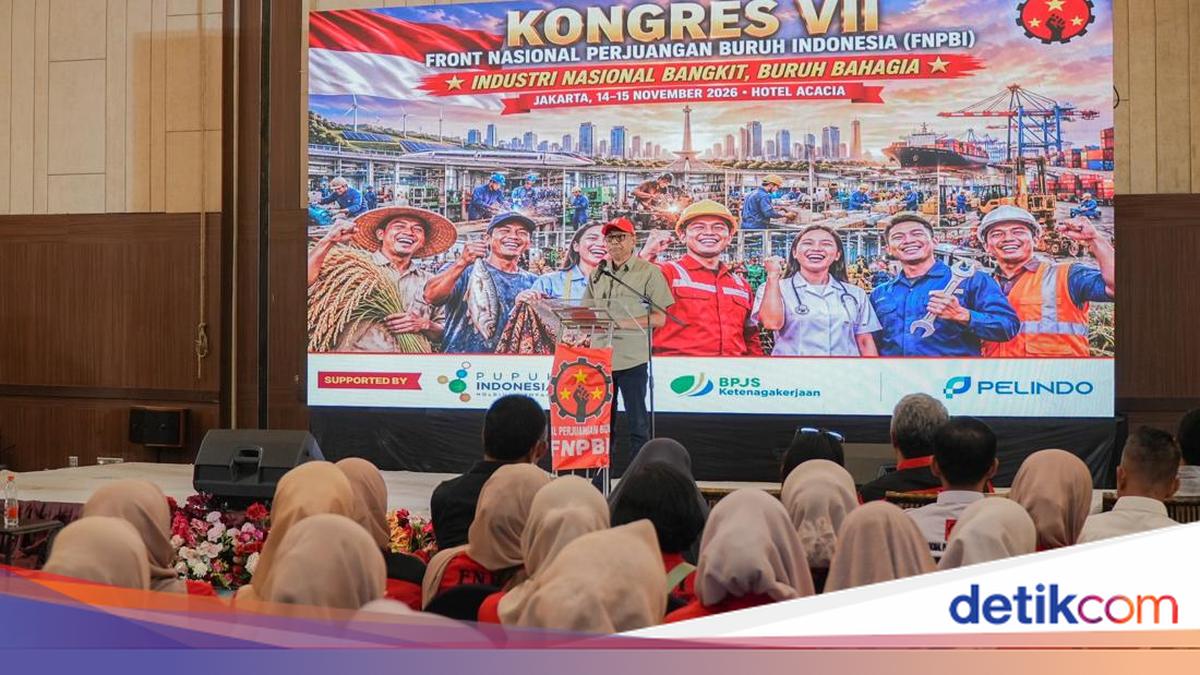
Deputy Social Affairs Minister Agus Jabo Priyono said People’s Schools are one of the government’s efforts to break the cycle of intergenerational poverty. Through the programme, the state provides children from poor families with access to education so that they do not inherit their parents’ economic hardship.
“People’s Schools were established to reach children from poor families so they do not inherit the poverty experienced by their parents. From primary school onwards, the state takes them in, supports them and helps them realise their aspirations,” Agus Jabo said in a written statement on Sunday (15 November 2026).
He made the remarks while closing the seventh congress of the Indonesian National Front for Workers’ Struggle (FNPBI) at The Acacia Hotel in Jakarta.
Agus Jabo said People’s Schools were a strategic measure to tackle poverty, which remains a major challenge in Indonesia, particularly in socio-economic terms.
“We still face a serious poverty problem, especially in socio-economic terms,” he said.
Agus Jabo also described President Prabowo Subianto’s intention to address poverty, including by using a single, open and transparent data set. The data would provide an important basis for ensuring government policies and programmes reach those who need them.
“The President wants all poverty data to be disclosed transparently, with nothing concealed. This will enable the government to formulate well-targeted programmes to reduce poverty and eradicate extreme poverty,” he added.
According to Statistics Indonesia (BPS), as of March 2026, there were still 22.9 million people living in poverty in the country, with monthly per capita expenditure of Rp600,000 or less.
Poverty also directly affects children’s access to education. About 4.1 million Indonesian children are out of school or have dropped out for economic reasons. In addition, around 74 per cent of people living in poverty have no more than primary-level education.
Financial hardship is a major obstacle preventing poor families from sending their children to school. Some 76 per cent of parents said they could not afford to educate their children. Meanwhile, more than 64 per cent of children from poor families are at risk of experiencing poverty themselves.
These figures show that poverty is not merely a matter of low income, but also a structural problem that can be passed down through generations. When parents cannot afford their children’s education, the children’s opportunities to improve their quality of life and escape poverty become increasingly limited.
Through People’s Schools, the government is seeking to ensure that a family’s financial circumstances do not prevent Indonesian children from receiving a proper education. Under the boarding-school system, children have access to learning, guidance and personal development so they can build a better future and improve their families’ lives.
Source: jawawa.id (https://jawawa.id/newsitem/deputy-social-affairs-minister-says-peoples-schools-will-help-break-the-cycle-of-intergenerational-poverty-1794757876)
Originally published by detikcom (https://news.detik.com/berita/d-8754386/wamensos-sebut-sekolah-rakyat-hadir-putus-rantai-kemiskinan-antargenerasi), translated from Indonesian