
Deputy National Police Chief Opens Door for Student Criticism to Improve Police Force
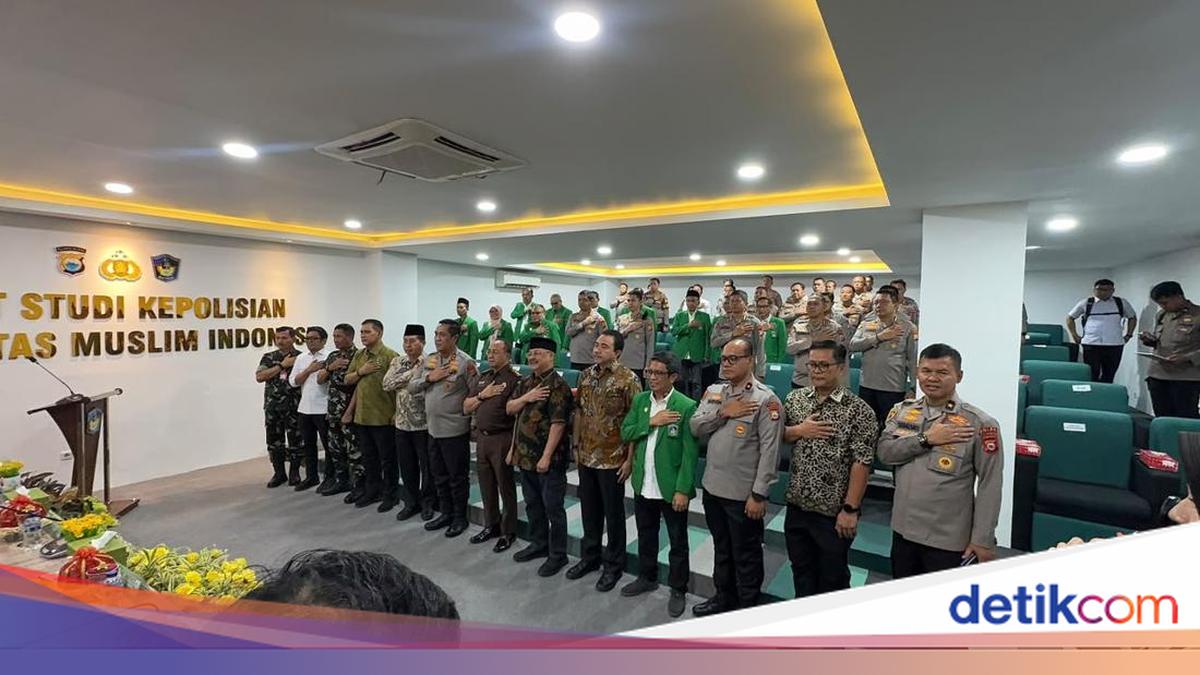
The Deputy Chief of the Indonesian National Police, Commissioner General Dedi Prasetyo, has invited students to play an active role within the ecosystem of the Police Studies Centre. He stated that creativity, energy, perspectives, and criticism can enrich studies regarding policing and various social dynamics.
“We highly appreciate the thoughts, criticism, and input from the academic community. Through an open and constructive dialogue space, we can learn from each other and together seek better approaches for both the police and the public,” said Commissioner General Dedi virtually from Jakarta during the inauguration of the Police Studies Centre at Hasanuddin University (Unhas) Makassar on Wednesday (9/9/2026).
Commissioner General Dedi expressed his appreciation to the Rector of Unhas, Jamaluddin Jompa, and the entire Unhas academic community. He noted that the National Police possess practical experience and knowledge regarding various field-based issues, while universities provide academic strength, research methodology, and a wealth of scientific perspectives.
“We express our appreciation and gratitude to the Rector and the entire academic community for their initiative and commitment to establishing this Police Studies Centre. The involvement of universities is a vital step in expanding academic collaboration networks in the field of policing science, strengthening the ‘Tridharma Perguruan Tinggi’ (the three pillars of higher education), and supporting the transformation of the National Police,” said the Deputy Chief.
Meanwhile, Jamaluddin Jompa appreciated the establishment of this collaboration, which he believes is significant in facing the complexity of societal issues. He hopes that the Unhas Police Studies Centre will become a vibrant academic space, not only for discussion but also through research and studies that provide tangible benefits.
“The police need science to face the complexities of the era, and science needs the police to ensure that knowledge is truly present amidst the problems of society,” said Jamaluddin.
According to Jamaluddin, these issues encompass legal, environmental, public safety, and social dimensions, thus requiring a multidisciplinary approach. He emphasised that Unhas is open to serving as a collaborative space for the National Police and various parties to develop scientific knowledge and contribute to the nation.
“We need to bring various disciplines together so that the problems faced by the community can be viewed more holistically, resulting in recommendations that are truly beneficial,” he added.
The National Police are also collaborating with the Muslim University of Indonesia (UMI) to establish a Police Studies Centre. The Vice Rector II for General Administration, Finance, and Human Resources Development at UMI, Zakir Sabara, stated that the partnership with the police represents their commitment to leveraging academic strength and university resources to address real-world societal problems.
“Our principle is simple: the National Police and UMI shall mutually grow. The National Police possess experience and knowledge from various real-world issues on the ground, while UMI possesses human resources, academic capacity, technology, and various scientific disciplines. When these two forces are brought together, we hope to generate knowledge and solutions that provide greater benefits to the community,” said Zakir.
He noted that developments in technology, artificial intelligence, cybersecurity, economy, energy, health, the environment, and social dynamics require studies that are not limited to a single discipline. “The Police Studies Centre should not only be a space for discussion but also a space to produce studies, innovations, and recommendations that can meet the needs of the community,” he concluded.