
Deputy MPR Speaker Urges Schools and Families to Prevent Emotional Abuse of Children
The 2024 National Survey on the Life Experiences of Children and Adolescents (SNPHAR) found that 50.78% of Indonesian children aged 13–17 had experienced at least one form of violence in their lifetime. The figure is higher when emotional abuse is included as an indicator.
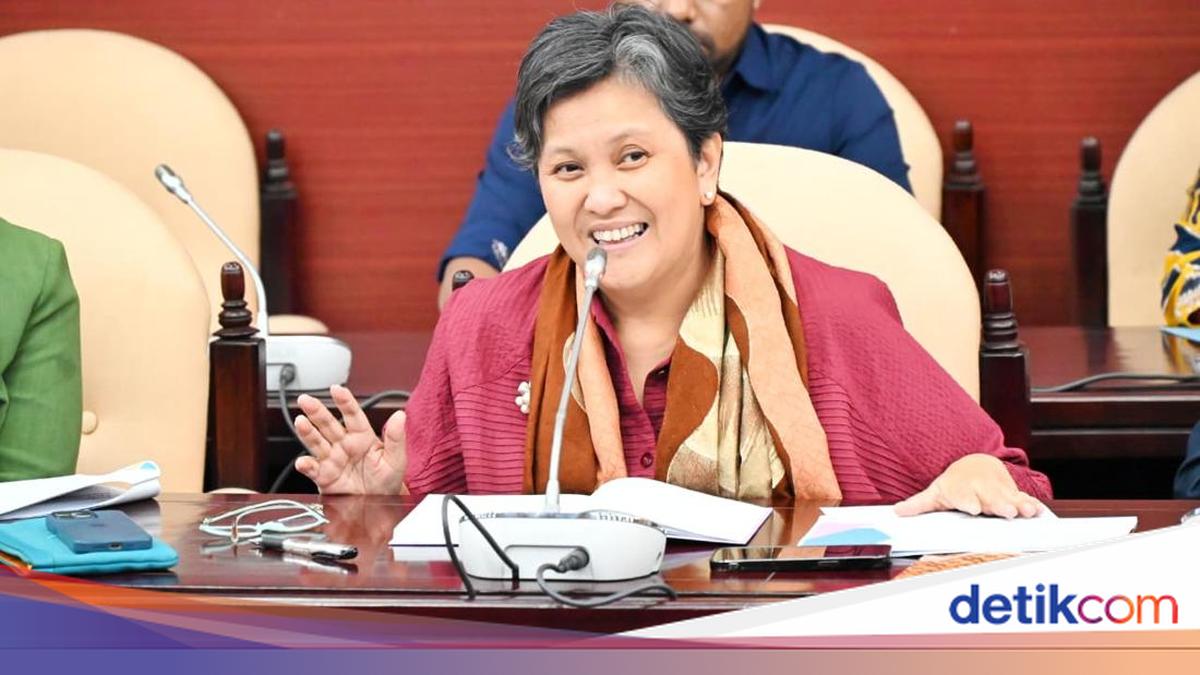
Deputy Speaker of the People’s Consultative Assembly (MPR) Lestari Moerdijat said child protection must go beyond regulations. Practical, measurable and consistent action must form its foundation, particularly to address abuse that leaves no physical injuries.
“Emotional abuse is often presented as education or something done for a child’s own good. Yet its impact on children’s development is just as serious as that of physical abuse,” Lestari said in a statement on Tuesday (27 October 2026).
SNPHAR 2024 data also show that 70% of violence experienced by children is repeated. A further 3.48% of children have experienced three forms of violence at once: physical, emotional and sexual.
Meanwhile, the Indonesian Child Protection Commission (KPAI) recorded 426 cases of violations involving children between January and April 2026. Physical and psychological violence accounted for most cases in the special-protection category, with 76 cases.
Lestari said the figures show that violence against children is not sporadic, but a pattern requiring structural intervention.
The member of Commission X of the House of Representatives (DPR) said emotional abuse often goes undetected because it has no visible physical signs. Children who are continually shouted at, belittled or threatened may suffer serious psychological developmental problems, she said, but people around them often fail to recognise this.
“Teachers at school and parents at home are on the front line and must be trained to recognise the warning signs,” she said.
Lestari backed concrete measures whose implementation can be measured and monitored. She also called for educators to be better equipped to identify emotional abuse through training with clear evaluation indicators, rather than one-off seminars.
She said every teacher should be able to recognise changes in pupils’ behaviour as early signs of psychological distress. Every school should also have a complaints mechanism that works in practice.
Lestari called for standard operating procedures to ensure that every report, including those concerning emotional abuse, is followed up promptly and transparently, with parents and relevant authorities involved.
“If a child is afraid to go to school, that is a failure of our protection system,” she said.
Lestari said family-level intervention also requires systematic support, as the roots of violence are often within the home, driven by economic pressures and repressive parenting patterns passed down through generations.
Parenting support services should also be linked to grassroots child-protection organisations. This would give parents under pressure access to psychological support and practical guidance on parenting, rather than holding them accountable only after a tragedy has occurred.
The NasDem Party’s senior board member also highlighted data from SIMFONI PPA, which recorded an increase in cases of violence against children from 11,952 in 2021 to 19,628 in 2024. She said the trend calls for accurate regional mapping so that legal interventions and prevention efforts can proceed together.
“It is impossible for the Ministry of Women’s Empowerment and Child Protection alone to resolve cases of violence against children. A multi-stakeholder ecosystem is needed, with clear targets and evaluation,” Lestari said.
She stressed that the success of child protection should not be measured by the number of cases recorded, but by whether children feel safer. Protecting children is a long-term effort that requires consistency, from policymaking to the classroom and the dining table.
“As long as our children still feel afraid and distressed in places that should be their safest spaces, all discussions about protection are merely promises yet to be fulfilled,” she concluded.
Source: jawawa.id (https://jawawa.id/newsitem/deputy-mpr-speaker-urges-schools-and-families-to-prevent-emotional-abuse-of-children-1793098441)
Originally published by detikcom (https://news.detik.com/berita/d-8726567/waka-mpr-dorong-sekolah-keluarga-cegah-kekerasan-emosional-pada-anak), translated from Indonesian