
Deputy MPR Speaker: Heroes’ Day a Moment to Strengthen Nationalism
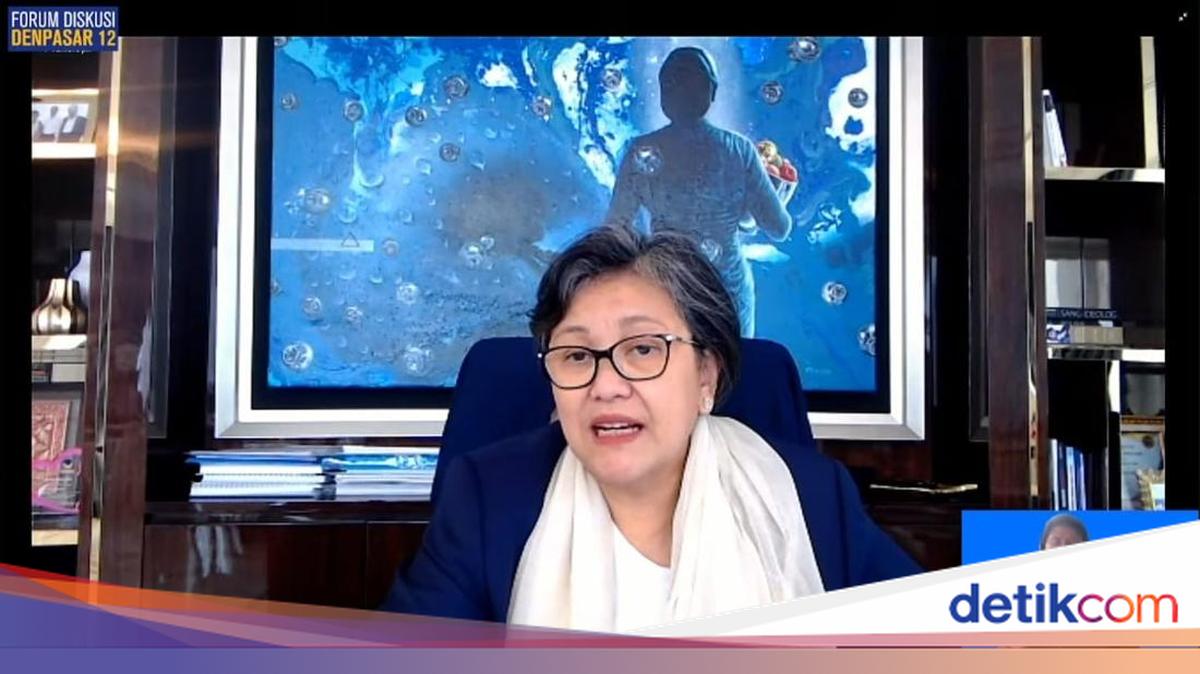
Deputy Speaker of the People’s Consultative Assembly (MPR), Lestari Moerdijat, known as Rerie, said the spirit of heroism once expressed through physical struggle to defend territorial sovereignty must be understood appropriately to confront today’s far more complex threats.
“The spirit of Heroes’ Day must be reflected in our lives today. We must inherit the courage of the heroes in the context of defending Indonesia, while continuing to uphold humanity in a sovereign nation,” Rerie said in a written statement on Wednesday (11 November 2026).
She made the remarks in her opening address at an online discussion entitled ‘Nationalism at a Crossroads: Emulating the Spirit of the Heroes, Guarding Against the Dangers of Ultranationalism’, organised by the Denpasar 12 Discussion Forum on Wednesday (11 November).
Rerie highlighted the V-Dem Democracy Report 2026, which found that 74% of the world’s population live under autocratic regimes and that the global democracy index had fallen back to its 1978 level. She said international sentiment was promoting a form of nationalism that could trap people in a narrow outlook on civic life.
“Young people today need an understanding of nationalism that they can accept, interpret and use as a foundation for their thinking. The values of Pancasila must guide every citizen in national and civic life,” said Rerie, who is also a member of the NasDem Party’s high council.
Luthfi Assyaukanie, a lecturer in international relations at Universitas Paramadina’s postgraduate programme, said Indonesian nationalism had been built through historical resistance to colonialism.
Citing historian and political scientist Benedict Anderson, Luthfi said Indonesian nationalism rested on a fragile foundation because it was built on a shared feeling or imagination.
He said nationalism would be threatened if that shared imagination changed. Meanwhile, he added, extreme nationalism was on the rise in Europe and the United States.
Luthfi acknowledged that it was difficult to identify ultranationalist groups or find concrete examples of them in Indonesia.
Raden Maisa, an international relations lecturer at the University of Indonesia (UI), said ultranationalist groups emerge when systems of government are weak. She added that industrialisation had failed to progress, leaving workers and labourers unprotected.
Raden said economic crises that create uncertainty in a country provide ultranationalist groups with an opportunity to offer an imagined sense of certainty.
“Ultranationalism can emerge from uncertainty about the outcomes of democracy, which can lead to public disillusionment,” Raden said.
Amelia Anggraini, a NasDem Party member of Commission I of the House of Representatives (DPR), stressed that true nationalism was not about who had the greatest right to claim Indonesian identity, but about every citizen feeling an inseparable part of the nation.
Amelia pointed to the spirit of the struggle on 10 November 1945 as an example of unity that transcended differences. The heroes, she said, had shown the courage to unite, respect human dignity and put the common interest first despite their different backgrounds.
“This is our responsibility today. To honour the heroes means carrying on their courage to live together in diversity,” Amelia said.
Ahmad Hafidz, chair of the student council at Jakarta’s Syarif Hidayatullah State Islamic University (UIN), said Indonesia was woven from many colours, from Sabang to Merauke. Indonesians, he said, should understand nationalism through the principle of Bhinneka Tunggal Ika, or Unity in Diversity.
He added that ultranationalism did not develop only abroad; it could also emerge within Indonesia.
“We need to create a nationalism that embraces and builds, not an ultranationalism that strikes and judges,” Ahmad said.
The discussion was moderated by Eva Kusuma Sundari, a special staff member to the MPR deputy speaker. Its speakers were Amelia Anggraini, Luthfi Assyaukanie, PhD, and Raden Maisa, with Ahmad Hafidz participating as a respondent.
Source: jawawa.id (https://jawawa.id/newsitem/deputy-mpr-speaker-heroes-day-a-moment-to-strengthen-nationalism-1794412315)
Originally published by detikcom (https://news.detik.com/berita/d-8748993/waka-mpr-peringatan-hari-pahlawan-momentum-memperkuat-nasionalisme), translated from Indonesian