
Deputy MPR Speaker Calls for National Learning Standards to Give Pupils Room to Grow
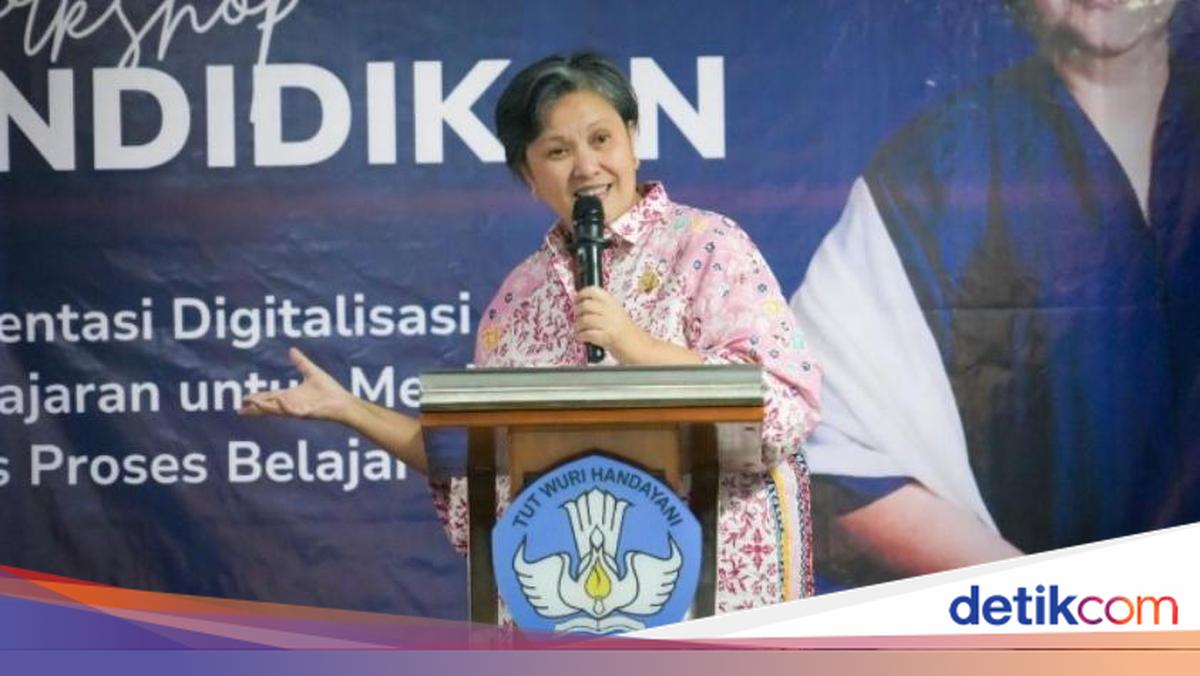
Deputy Speaker of the People’s Consultative Assembly (MPR) Lestari Moerdijat, known as Rerie, says national learning standards place too much emphasis on administrative compliance rather than giving pupils room to develop according to their needs. She said the goals of national education should shift away from simply meeting bureaucratic targets towards providing genuinely liberating learning environments.
“There must be learning standards that give pupils room to grow and express themselves freely, with measurable outcomes in a conducive learning environment,” Rerie said on Wednesday (28 October 2026).
She made the remarks while opening an online discussion on Wednesday entitled ‘Building Learning Standards that Encourage Motivation and Improve the Quality of Indonesian Education’, organised by Forum Diskusi Denpasar 12.
The discussion was moderated by Usman Kansong, a special staff member to the MPR deputy speaker, and featured Dr Laksmi Dewi, head of the Centre for Curriculum and Learning (Puskurjar) at the Ministry of Primary and Secondary Education. Other speakers included Unifah Rosyidi, chairwoman of the executive board of the Indonesian Teachers’ Union (PB PGRI), and education expert Indra Charismiadji. Character education expert Dr Doni Koesoema was a respondent.
Rerie said the discussion was particularly relevant to efforts to improve national education, as it coincided with Youth Pledge Day. The spirit of the 1928 Youth Pledge, she said, not only created space to realise national unity but should also open up learning opportunities for Indonesian children to pursue their aspirations.
She said education in Indonesia still faces many obstacles and challenges. Student competency levels remain below standard in many cases, while the quality of education continues to vary significantly between regions.
Rerie said learning standards should support a continuous process that builds pupils’ competencies in line with current conditions. She hoped revisions to standards and curricula would not become caught in a cycle of changes every time national leadership changes.
Laksmi said promotion to the next grade should not be an automatic administrative process, but a pedagogical decision based on evidence of a pupil’s development and readiness.
She said promotion should be guided by pedagogical values and focused on successful learning, rather than pass rates. Decisions should also take account of pupils’ competency, discipline and participation.
“The decision to promote a pupil is made by the education institution,” Laksmi said.
She added that debate over automatic promotion had partly arisen because education targets from one year to the next were not clearly specified.
Unifah said disparities in education quality remained highly visible throughout Indonesia, despite the country’s decades of independence.
“The issue of education quality must be something we confront together,” she said.
She proposed that education programmes should not rely solely on learning outcomes. The system should also help children enjoy learning and establish standards that enable the next generation to fulfil its aspirations.
Education expert Indra Charismiadji questioned who should be held responsible when children cannot read or do mathematics: the pupils, teachers, schools or the education system.
There are currently efforts to tighten promotion rules, as if education quality would improve if more children repeated a year. Indra said every pupil had the right to receive the learning they needed to improve their competencies.
“We must not let children bear the consequences of changes to the education system when the problem does not lie with them,” he said.
Indra said teachers’ assessments should be fair, objective and educational. If teachers cannot distinguish between pupils’ levels of attainment, their assessment capacity should be strengthened.
Character education expert Doni Koesoema also said the central issue was not whether pupils were promoted or held back.
“What is school actually for?” Doni asked.
He argued that learning itself could not be standardised, although educational content could. People now have different learning goals, he said, but the system has become caught up in global benchmarks such as the Programme for International Student Assessment (PISA), expressed through test scores.
Doni said learning was preparation for life and called for a more humane assessment system. A culture of respect and integrity, he said, was the foundation of good education.
Veteran journalist Saur Hutabarat said he opposed the government’s proposed policy of holding pupils back at every level. One of education’s deepest purposes, he said, was to help children grow and find their place in a complex world. He suggested conducting a serious comparative study of Singapore’s education system, which does not hold pupils back a year.
Singapore instead uses remedial policies and provides close attention to children showing signs of falling behind.
“Schools provide a teacher to help those children outside regular school hours,” Saur said.
Source: jawawa.id (https://jawawa.id/newsitem/deputy-mpr-speaker-calls-for-national-learning-standards-to-give-pupils-room-to-grow-1793195584)
Originally published by detikcom (https://news.detik.com/berita/d-8728529/waka-mpr-bicara-standar-belajar-nasional-beri-ruang-anak-didik-tumbuh), translated from Indonesian