
Deputy Minister Warns Rice Traders: Excessive Profits Prohibited
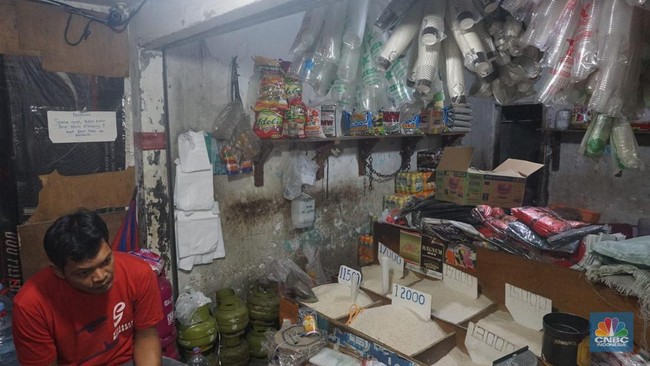
Jakarta, CNBC Indonesia - The Deputy Minister of Agriculture, Sudaryono, has emphasised that the government is closely monitoring the trade of essential commodities (bapokting), from the producer level to the hands of consumers. Consequently, business actors cannot freely take large profits from the sale of strategic food commodities such as rice, corn, sugar, and cooking oil.
According to Sudaryono, the food sector differs from other commodity businesses that are not specifically regulated by the government. In the trade of essential commodities, the government has established various price control instruments to ensure producers receive reasonable profits while simultaneously protecting the public from price surges.
“Trading or selling in the essential food sector (bapokting) means you cannot take profits recklessly. The producers’ margins are measured, and the consumers’ prices are also measured. Producers are measured by their Cost of Production (HPP); therefore, it must not be too high above the HPP. Because if the HPP is too high, the Maximum Retail Price (HET) of the product will eventually become expensive,” said Sudaryono when met at his office in Jakarta on Friday (5/6/2026).
He explained that the government’s duty is to maintain a balance between the interests of producers and consumers. On one hand, farmers and business actors must continue to obtain decent profits. On the other hand, the public must not be burdened by excessively high food prices.
“So, the government’s task is to adjust or regulate so that at the producer level, the price is profitable for them—whether it is paddy, corn, eggs, chicken, or whatever the form—and to ensure that with the HET, consumers are not disadvantaged by overly expensive prices,” he stated.
Due to the existence of the Reference Sale Price (HAP) and the Maximum Retail Price (HET) regulations, the profit margin in the trade of essential commodities is limited. Sudaryono noted that business actors operating in the essential food sector cannot seek excessive profit margins.
“So, if you are selling rice, corn, granulated sugar, or cooking oil, you cannot make a huge profit. This is because the profit is measured between the HAP and the HET,” he asserted.
He then compared this to other business sectors that do not fall under the category of essential public needs. In his view, the government provides much wider space for business actors to operate and seek profits in non-essential commodity sectors.
“But if you are selling something else, for example, exporting coffee or exporting chocolate, or exporting anything (non-bapokting), there are no such regulations for that. For those, please proceed; people can engage in downstreaming from raw materials to semi-finished, three-quarters finished, or finished products. But for these essential commodities, it is not possible; everything is regulated,” he added.
Regarding the potential for rising rice prices, Sudaryono ensured that the government has prepared several steps to maintain price stability in the market. Monitoring will continue, and enforcement will be an option if violations are found.
“Our mitigation is clear; we will check. There are three ways if prices become too high. First, there is food assistance. Second, there is SPHP rice (Stabilisation of Supply and Price). Third, action must be taken. We will take action against shops that sell at high prices; we will target the upstream, not just the downstream,” he concluded.