
Deputy Minister warns deepfake technology heightens digital fraud threats
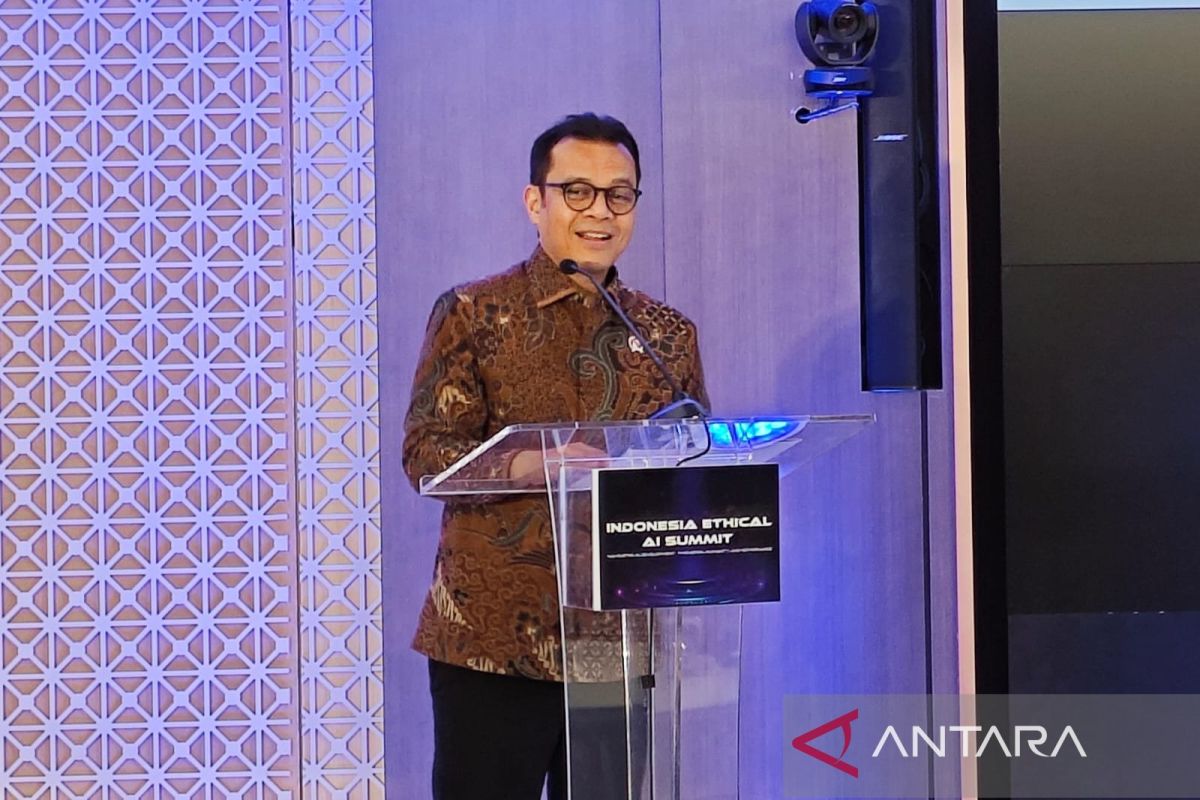
Deputy Minister of Communication and Digital Affairs (Wamenkomdigi) Nezar Patria has assessed that the misuse of artificial intelligence (AI) through deepfake technology is one of the ethical and digital security challenges that must be seriously anticipated, as it has the potential to increase the threat of digital fraud. Deepfake technology enables the creation of fake videos, images, or voices that closely resemble the originals, making them increasingly difficult to distinguish from reality. “Now our voices can be imitated, our facial images can be imitated, and appear in the form of deepfake videos generated by AI very seamlessly,” Nezar said at the Indonesia Ethical AI Summit in Jakarta, Wednesday. According to Nezar, the development of artificial intelligence is currently progressing very rapidly, having even surpassed the generative AI phase towards agentic AI and various other new technologies. This development brings great benefits to various sectors, but at the same time also creates new risks that require serious attention. In the aspect of cybersecurity, he highlighted the use of AI by digital criminals to commit fraud using deepfake technology. He assessed that AI-based manipulation has now evolved into what is called synthetic reality, namely digitally engineered content that is increasingly difficult to distinguish from reality. He considered that the public’s low literacy regarding AI developments makes many people easily deceived by such manipulated content. “The public’s unfamiliarity with these AI developments causes many to be fooled. That is why scams are currently rampant,” he said. Nezar also reminded of the importance of human involvement in the decision-making process, known as ‘human in the loop’, in the development of autonomous AI that has the ability to reason and make decisions independently. According to him, a number of experts have proposed implementing stricter protocols to ensure that important decisions remain under human supervision. “Many experts propose implementing a fairly strict protocol, including applying the ‘human in the loop’ principle in decision-making,” he explained. Furthermore, he considered that the AI ethics approach can no longer be merely voluntary, as it was in the early stages of the technology’s development. He stressed that principles such as transparency, accountability, and security must be concretely realised in the AI product development process through an ‘ethics by design’ approach. Therefore, Nezar encouraged developers, industry players, academics, and AI user communities to strengthen governance and risk mitigation from the planning stage. “Transparency, accountability, security, these must be present in the implementation, in the development of an AI product,” he asserted.