
Deputy Minister Urges Villages to Make Better Use of Village Funds to Improve Health
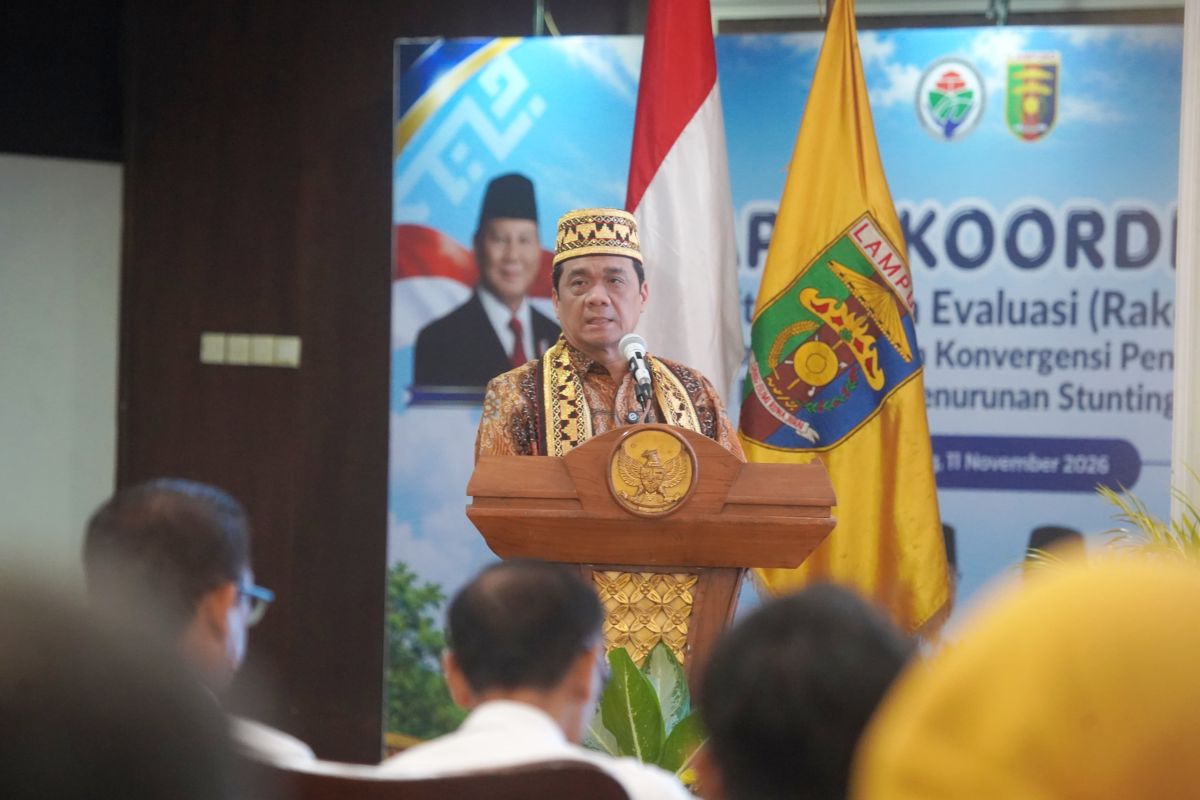
Bandarlampung (ANTARA) – Deputy Minister of Villages and Development of Disadvantaged Regions Ahmad Riza Patria said village funds needed to be used more effectively to improve public health and welfare.
“Building villages means building people. These efforts must begin in the womb, particularly during the first 1,000 days of life,” Ahmad Riza Patria said in Bandarlampung on Wednesday.
He said stunting was not merely a matter of a child’s height, but also affected brain development, intelligence, health, productivity and the quality of the next generation.
According to the 2024 Indonesian Nutritional Status Survey (SSGI), the national stunting prevalence was 19.8 per cent, while Lampung Province’s rate was 15.9 per cent.
“These results deserve appreciation, but further hard work and joint commitment are still needed. Local and village governments should focus on three main areas,” he said.
One was making better use of village funds to improve public health and welfare. This, he said, was in line with Minister of Villages and Development of Disadvantaged Regions Regulation No. 16 of 2025 on operational guidelines for the 2026 priorities for village fund use.
Another priority was strengthening village government leadership and commitment. Village heads should understand the circumstances of their communities, including which families were at risk of stunting, which pregnant women needed support and which children required special attention.
“Village governments must ensure that planning and budgeting reflect community needs, from supporting pregnant women and meeting toddlers’ nutritional needs to strengthening integrated health posts (Posyandu) and improving sanitation and healthy environments,” he said.
He added that the capacity of village facilitators and community cadres should be strengthened, particularly Human Development Cadres (KPM), Family Assistance Teams (TPK), Posyandu cadres and professional facilitators. They are at the forefront of programme delivery, interacting directly with communities and ensuring interventions reach target families.
“Capacity-building through integrated training and the HDW Learning platform must continue to be reinforced so that cadres can further improve their knowledge, skills and commitment,” he said.
Andrey Ikhsan Lubis, director of village and rural social, cultural and environmental development at the Ministry of Villages and Development of Disadvantaged Regions’ Directorate General of Village and Rural Development, provided further details.
“Lampung Province’s stunting prevalence is 15.9 per cent, with the highest rate in Tanggamus Regency at 24.9 per cent and the lowest in South Lampung Regency at 10.4 per cent,” Andrey said.
Data from the e-HDW convergence score as at 1 November 2026 showed that 1,505 of Lampung’s 2,446 villages, or 61.5 per cent, had achieved a convergence score above 40 per cent.
That was up from 1 October 2026, when 1,280 villages, or 52.3 per cent, had reached that category – an increase of 225 villages, or 9.2 percentage points.
He said the next steps included strengthening coordination between central and local governments, identifying provincial and regency or municipal support for efforts to accelerate stunting reduction in villages, identifying obstacles and developing solutions to improve convergence results, and preparing a jointly agreed follow-up work plan.
Source: jawawa.id (https://jawawa.id/newsitem/deputy-minister-urges-villages-to-make-better-use-of-village-funds-to-improve-health-1794412381)
Originally published by Antara (Indonesian) (https://www.antaranews.com/berita/5847767/wamendes-pdt-optimalkan-dana-desa-tingkatkan-kualitas-kesehatan), translated from Indonesian