
Deputy Minister Urges Universities to Shape the Direction of AI Development
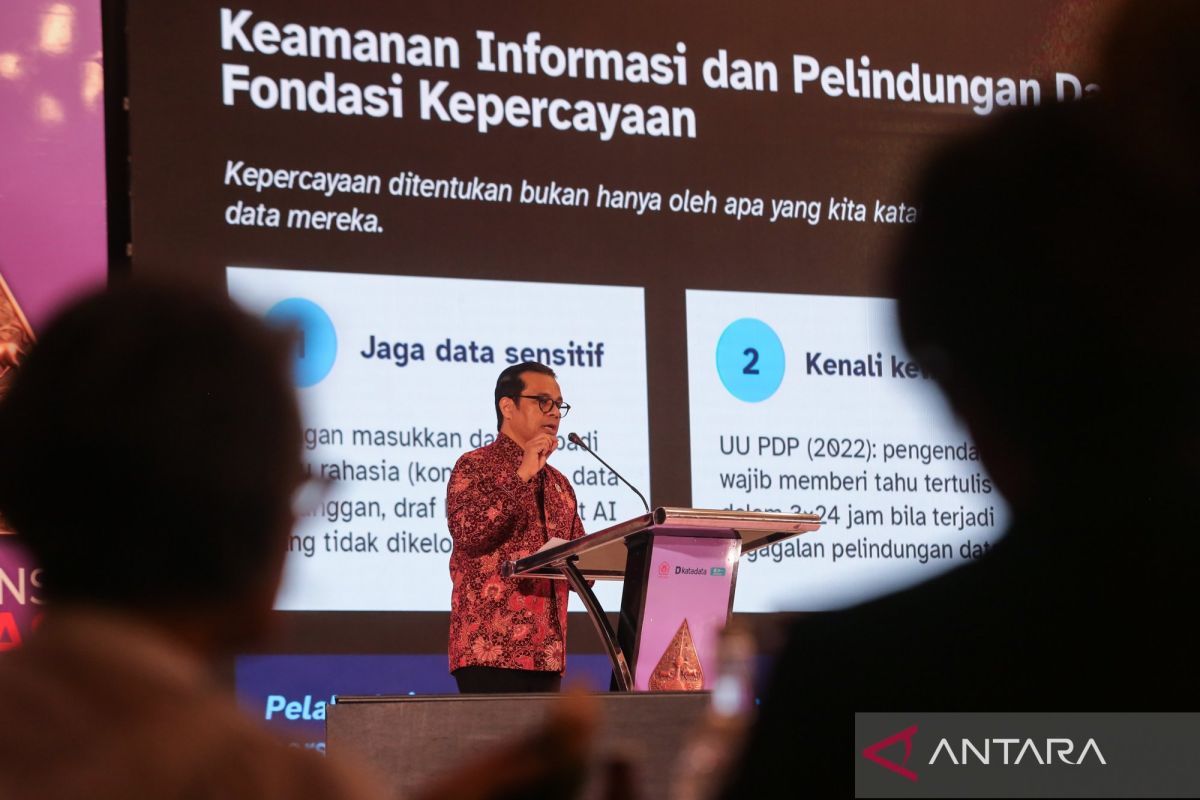
Universities have an important role in preparing digital talent, developing research and promoting the use of AI technology to meet society’s needs.
Banda Aceh (ANTARA) – Deputy Minister of Communications and Digital Affairs Nezar Patria has urged Indonesian universities, particularly those in Aceh, to take a strategic role in shaping the development of the artificial intelligence (AI) ecosystem.
“Universities have an important role in preparing digital talent, developing research and promoting the use of AI technology to meet society’s needs,” Nezar said in Darussalam, Banda Aceh, on Monday.
He made the remarks while delivering the keynote address at an open seminar entitled “Aceh on the National AI Map: Infrastructure, Talent and Ecosystem” at the Prof Ali Hasymi Auditorium at UIN Ar-Raniry in Banda Aceh.
Nezar said Indonesia had an opportunity to compete in the global development of AI. That opportunity did not depend on creating the largest AI model; it could instead be pursued by adopting and using the technology to improve public services and drive economic growth.
He said the global AI competition was shifting. Previously, it had been dominated by major countries racing to develop cutting-edge, or frontier, AI models. Now, opportunities were also emerging through the application of the technology across different sectors of everyday life.
Nezar said Indonesia did not have to follow the same path. It could build an advantage by adopting AI quickly to improve public services, stimulate economic activity and address various social challenges.
“In the race to adapt, we are not starting from behind. Victory will be determined by who is boldest in using AI to provide more humane public services and a more personalised economy,” Nezar said.
He identified four aspects that needed attention in building an AI ecosystem: access to technology and digital sovereignty; the transformation of government; strengthening Indonesia’s position in industrial value chains; and preparing human resources for changes to the world of work caused by automation.
Nezar also stressed the importance of ensuring that people could access high-quality AI technology without becoming dependent on a single technology provider. Reskilling and upskilling programmes were also needed to help people adapt to changing workplace requirements.
UIN Ar-Raniry Rector Prof Dr Mujiburrahman said collaboration between the government, universities and industry was essential to preparing human resources for the digital transformation.
Universities, he said, should do more than produce graduates with academic knowledge. Students also needed to be able to adapt to technological developments, think critically, and understand the ethical considerations and responsibilities involved in using AI.
He hoped cooperation with Indosat would create more opportunities for students and lecturers to improve their digital skills, conduct research and develop innovations that benefit society.
Agus Sulistio, Head of Circle Sumatra at PT Indosat Ooredoo Hutchison, said AI development depended not only on network infrastructure but also on talent readiness and a collaborative ecosystem.
“AI is no longer merely a technology of the future; it is already changing how people learn, work, do business and innovate. Digital progress will be more meaningful when connectivity is supported by skilled talent and a strong collaborative ecosystem,” Agus said.
Source: jawawa.id (https://jawawa.id/newsitem/deputy-minister-urges-universities-to-shape-the-direction-of-ai-development-1793616898)
Originally published by Antara (Indonesian) (https://www.antaranews.com/berita/5826847/wamen-komdigi-ajak-perguruan-tinggi-jadi-penentu-arah-pengembangan-ai), translated from Indonesian