
Deputy Minister urges universities to help tackle Indonesia's waste problem
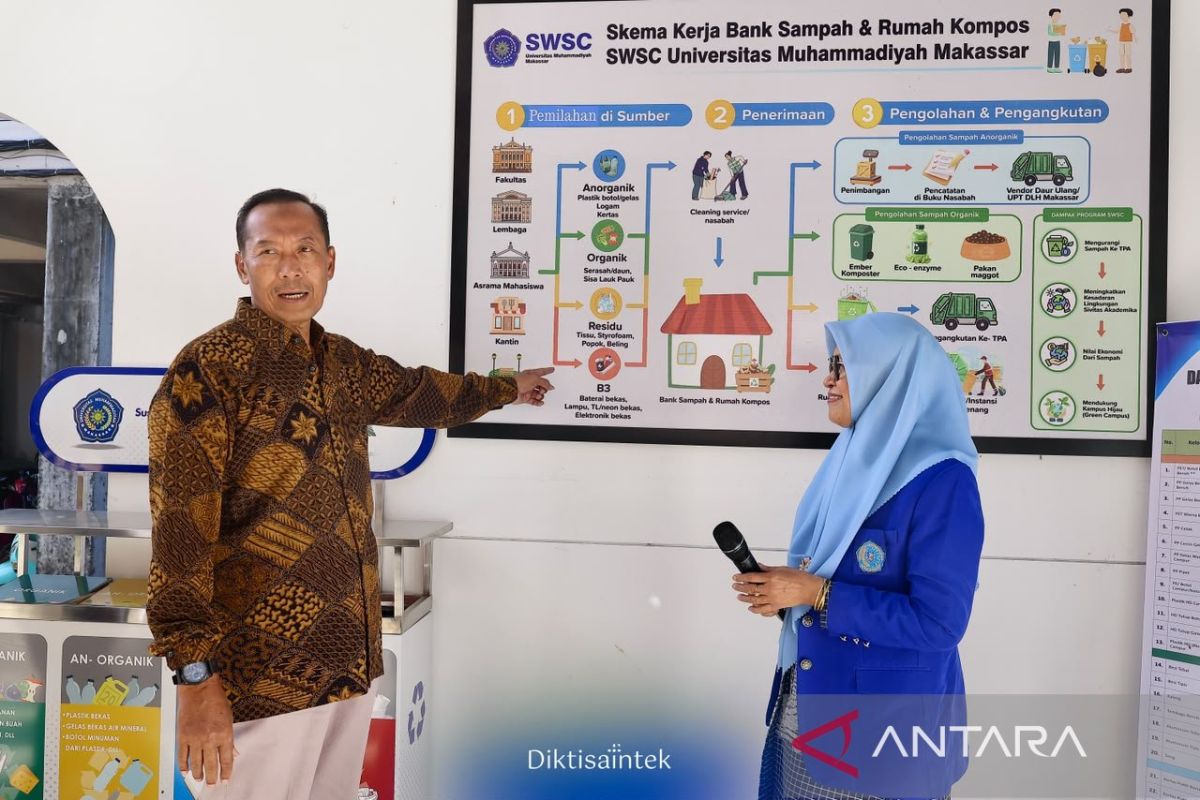
Deputy Minister for Higher Education, Science and Technology (Wamendiktisaintek) Fauzan has urged universities across Indonesia to be responsive and help address the country’s waste problem. In a statement in Jakarta on Tuesday, Deputy Minister Fauzan stressed that research commercialisation is a crucial step to ensure that findings developed in higher education do not stop at scientific publications but deliver real benefits to society. “The waste issue is currently a national concern and a challenge in various regions of Indonesia. Therefore, campuses, as centres of knowledge and innovation, are expected to play a role in providing solutions through research and technology,” he said. Deputy Minister Fauzan appreciated the initiative of Universitas Muhammadiyah (Unismuh) Makassar, which has successfully developed a waste management model with added value and potential benefits for the community. According to data from the National Waste Management Information System (SIPSN) of the Ministry of Environment, total waste generation in South Sulawesi Province in 2024 reached 1.21 million tonnes. Fauzan stated that this research-based waste processing model can make a real contribution to significantly reducing regional waste volumes. “The most important thing is that waste is no longer seen merely as refuse, but can be processed into more functional and valuable products. This is a tangible manifestation of higher education’s contribution to supporting sustainable development,” said Deputy Minister Fauzan. Unismuh developed a waste processing innovation based on the Sustainable Waste Solutions Center (SWSC) method. The SWSC has been developed as a sustainable waste management centre, encompassing waste sorting at source, strengthening waste banks, reducing single-use plastics, processing organic waste through composters and maggots, and developing creative products from inorganic waste. Through this system, waste is no longer understood as an end burden but as part of a circular economy that can provide ecological and economic benefits. The source-level waste sorting system is implemented across faculties, institutions, dormitories, and work units within the campus. Waste is sorted by type, such as organic, inorganic, residue, and hazardous and toxic materials (B3), so that the volume sent to final processing sites can be minimised. Organic waste is then processed into various valuable products, such as compost, eco-enzyme, maggot feed, and even soap and candles made from used cooking oil. Meanwhile, inorganic waste is managed through a waste bank mechanism involving the academic community as customers, supported by cooperation with the Makassar City Environmental Agency. In addition to functioning as a waste management centre, the facility also serves as an environmental education tool for students through the involvement of volunteers gathered in the Eco Ranger group. Various recycled products, such as ecobricks, crafts made from plastic and paper waste, and candles from used cooking oil, demonstrate that waste management can generate added value while fostering a culture of sustainability within the campus environment.