
Deputy Minister urges Riau and Kepri universities to form consortium
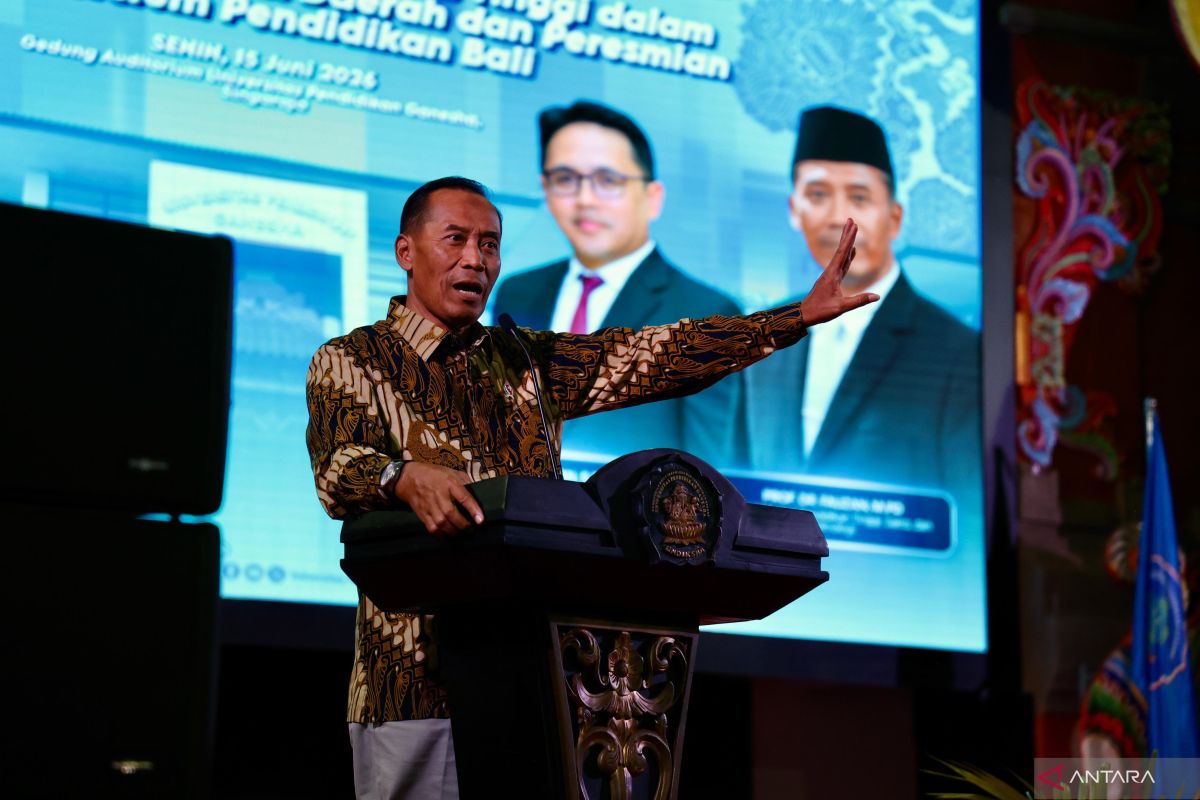
A consortium is essentially about building a single ecosystem to advance higher education whilst contributing to regional development.
Tanjungpinang (ANTARA) - Deputy Minister of Higher Education, Science and Technology (Wamendiktisaintek) Fauzan is encouraging universities in the provinces of Riau and Riau Islands (Kepri) to establish a consortium as a shared platform to address regional development challenges.
“Higher education is a strategic asset, because campuses are the primary space for developing human resources. That capacity needs to be directed at the real problems faced by the regions,” said Deputy Minister Fauzan in a statement in Tanjungpinang, Kepri, on Monday.
According to him, Riau and Kepri possess strong development capital, along with distinctive challenges.
Riau’s economy ranks sixth largest nationally, whilst Kepri recorded the third-highest growth in Indonesia in the third quarter of 2025, with a Human Development Index (HDI) of 80.53, the third highest nationally.
Another challenge is the disparity between regions. In Riau, the poverty rate in the Meranti Islands stands at 23.15 per cent, compared with 3.14 per cent in Dumai City.
Meanwhile in Kepri, the highest poverty rate is in Natuna Regency at 8.06 per cent, whilst Batam City stands at 4.03 per cent.
In the health sector, the prevalence of stunting in Riau rose from 13.6 per cent in 2023 to 20.1 per cent in 2024, exceeding the World Health Organization (WHO) threshold.
For this reason, Wamendiktisaintek Fauzan believes such potential and challenges cannot be resolved by a single university working alone. The combined expertise, programmes, resources and facilities of universities can be brought together through a higher education consortium so they work towards the same objectives.
Wamendiktisaintek Fauzan cited the university consortium in East Nusa Tenggara (NTT), which brought together 27 universities to tackle stunting and poverty.
Through the Thematic Community Service Programme (KKN) for Stunting-Affected Family Assistance, thousands of students were deployed to villages under the supervision of lecturers, whilst also producing research that could be used by regional governments. That experience demonstrated the importance of directing campus research towards the real needs of the regions.
“Their research draws on problems that exist in the region, so when they graduate and submit their dissertations, these can serve as the basis for recommendations in regional policymaking,” said Wamendiktisaintek Fauzan.
In his view, achievements in governance and accreditation must go hand in hand with service quality and the relevance of graduates.
Wamendiktisaintek Fauzan also stressed the importance of universities providing support so that students can complete their studies on time and gain relevant learning, collaborative networks, and a welcoming academic environment.
“We also encourage more concrete collaboration between Riau and Kepri, including mapping the expertise held by universities and then pairing it with the programmes and needs of regional governments,” he said.