
Deputy Minister Urges Pesantren Cooperatives to Drive Economic Self-Reliance
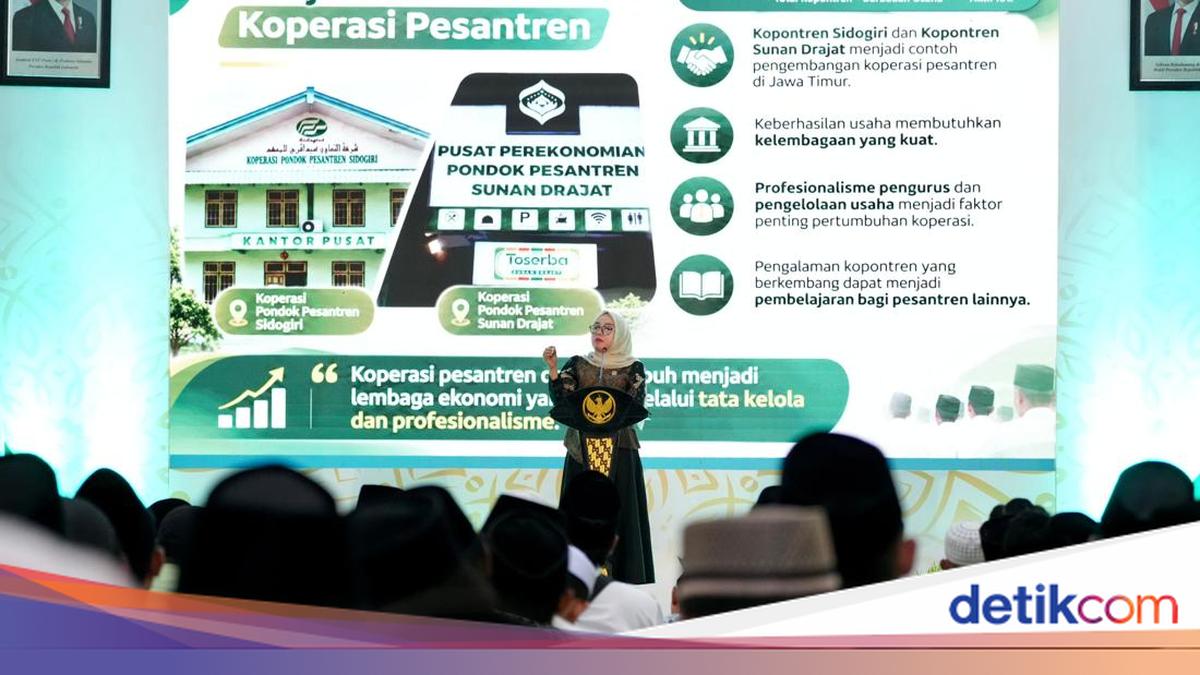
Deputy Cooperatives Minister Farida Farichah has called for stronger cooperatives at Islamic boarding schools (pesantren) to increase the economic self-reliance of Muslim communities. She said pesantren have significant potential to develop productive businesses through their established institutional and community networks.
Farida made the remarks at a financial literacy event for pesantren cooperative administrators from across East Java, held at Mamba’ul Ma’arif Islamic Boarding School in Denanyar, Jombang, on Wednesday (11 November). The event was organised by the Coordinating Ministry for Community Empowerment and the Deposit Insurance Corporation (LPS) to strengthen cooperative management capacity at pesantren.
Of the approximately 42,000 pesantren registered with the Ministry of Religious Affairs, an estimated 6,000 have a notarial deed establishing a cooperative, Farida said. However, only around 2,000 to 3,000 cooperatives are conducting business in a healthy and sustainable way.
The figures point to considerable scope for improving pesantren cooperatives, particularly in institutional capacity, governance and business development. Strengthening them is important to ensure they deliver wider economic benefits to members and surrounding communities.
“Pesantren are among the strongest networks, having grown since before Indonesia’s independence and continuing to this day. This strong network plays a role not only in education, social affairs and religion, but also has the potential to become an economic force that drives self-reliance for pesantren and communities,” Farida said in a written statement on Wednesday (11 November 2026).
For this economic potential to generate added value, Farida said activities need to be managed in an organised and professional way through cooperatives. Good management, she added, should enable economic activity within pesantren to grow into productive businesses that benefit all members.
Farida highlighted four areas for strengthening pesantren cooperatives: improving human resources and management; reinforcing institutional governance; developing businesses based on market needs; and expanding access to financing. These are the foundations for cooperatives to operate healthily and sustainably.
She said cooperative administrators need to understand the economic needs of their pesantren communities. Accurate assessments would help cooperatives develop business units with identifiable markets and manage supply chains efficiently.
“Good governance, for example, requires cooperative managers to map supply chains and the needs of their immediate community: what is most needed, where supplies come from, and how they can be distributed efficiently. That enables cooperatives to run businesses based on genuine market demand,” she said.
Farida also stressed the importance of transparency and accountability in financial management. Sound governance, measurable business activities and clear market prospects can build members’ trust and improve cooperatives’ chances of securing financing, including from banks.
The Ministry of Cooperatives said it was ready to provide guidance and strengthen the institutional capacity of pesantren cooperatives. Support would cover the establishment process, preparation of notarial deeds and the permits required to conduct business.
“The Ministry of Cooperatives is ready to support the establishment and institutional development of pesantren cooperatives. We hope they will become stronger institutionally and more professional in running their businesses,” Farida said.
In addition to strengthening their own economic activity, pesantren cooperatives could help support national food security, she said. They have the potential to develop businesses at various stages of the food sector, from production and processing to marketing and distribution of agricultural products.
Farida added that these activities could be brought together through cooperative institutions. Pesantren could then act not only as consumers but also as productive businesses, creating added value and employment opportunities for local communities.
“The potential is enormous, especially as the country is currently strengthening food security. If managed well, pesantren can become one of the strongest pillars in this sector,” she said.
Coordinating Minister for Community Empowerment Muhaimin Iskandar likewise stressed the importance of pesantren cooperatives in building an independent and equitable economic foundation for the country. He said they should be developed on the principles of collective ownership and clear institutional governance to ensure businesses can endure across generations.
Muhaimin said he hoped pesantren cooperatives could become a model of community-based economic empowerment that could be adopted more widely. Developing such a model would require support from various parties so cooperatives can expand their capacity and deliver sustainable economic benefits.
LPS Deputy Chairman of the Board of Commissioners Farid Azhar Nasution also underlined the importance of sound cooperative management. He said the expansion of a cooperative’s business must be matched by transparent and accountable financial management.
“The larger a cooperative’s business becomes, the greater the managers’ responsibility to ensure its finances are managed soundly and accountably,” he said.
Mamba’ul Ma’arif Islamic Boarding School leader K.H. Abdussalam Shohib, known as Gus Salam, welcomed the government’s and other parties’ support for developing pesantren cooperatives. He said he hoped the assistance would go beyond setting up institutions and include guidance to help cooperatives develop sustainably.
“Ongoing guidance and monitoring can help pesantren cooperatives continue to grow and deliver tangible benefits to the community,” he said.
The financial literacy event was also attended by santri and pesantren administrators from across East Java as part of efforts to improve understanding of cooperative management. Their involvement is expected to strengthen cooperation in building a productive and sustainable pesantren business ecosystem.
These efforts are intended to strengthen the role of cooperatives in developing pesantren’s economic potential. Through stronger institutions, improved financial literacy and wider access to financing, pesantren cooperatives are expected to increase economic self-reliance and extend their benefits to surrounding communities.
Source: jawawa.id (https://jawawa.id/newsitem/deputy-minister-urges-pesantren-cooperatives-to-drive-economic-self-reliance-1794394459)
Originally published by detikcom (https://news.detik.com/berita/d-8748586/wamenkop-dorong-koperasi-pesantren-jadi-penggerak-kemandirian-ekonomi-umat), translated from Indonesian