
Deputy Minister Urges Graduates of National Leadership Training to Take on Strategic Bureaucratic Responsibilities
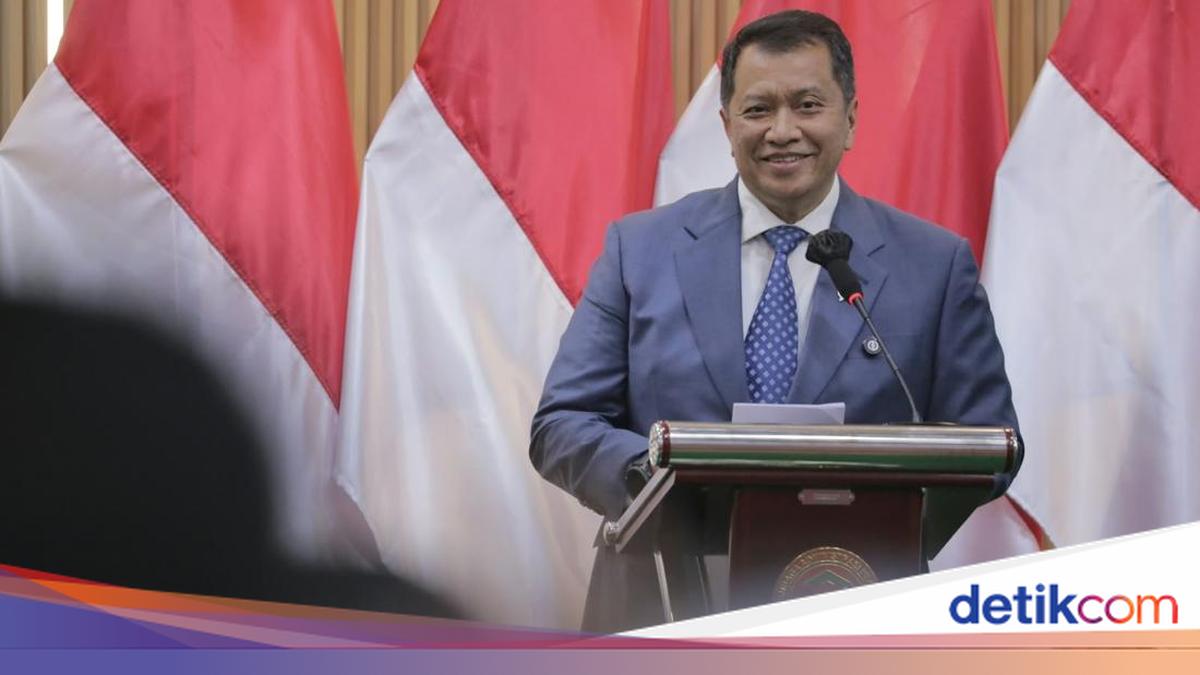
The National Leadership Training (PKN) Level I is the highest stage of leadership development for public officials preparing to take on strategic responsibilities in the bureaucracy. Graduates are expected to apply what they have learnt through sound decision-making, cross-sector cooperation and policies that benefit the public.
Deputy Minister for Administrative and Bureaucratic Reform Purwadi Arianto made the remarks at the graduation ceremony for the 67th cohort of PKN Level I participants in 2026, held at the National Institute of Public Administration (LAN) in Jakarta on Thursday (8 October).
“Leaders must do more than understand the direction of change. They must be able to make change happen,” Purwadi said in a statement on Thursday (8 October 2026).
Purwadi said public officials played an important role in shaping the direction of the bureaucracy, particularly amid a national transformation agenda that requires increasingly integrated government action. The end of the PKN programme, therefore, was not simply the completion of a course but the start of greater responsibility when participants returned to their respective institutions.
He said development programmes could not be carried out in isolation. Each institution had a different role, but all had to work towards the same goals. In this context, senior officials were expected to bridge organisational needs, policy direction and the public interest.
“You are not only organisational drivers, but also connectors between technocratic reasoning, political aspirations and public needs. Modern bureaucratic leaders must be able to break down sectoral barriers, ensure decisions are data-based, safeguard policy accountability and build cross-sector partnerships,” Purwadi said.
Purwadi also offered the graduates three things to carry forward: a broader perspective, lasting relationships across institutions and tangible results. He encouraged them to use the connections formed during the training to help resolve shared challenges.
Integrity, he added, must remain a guiding principle. A leader’s success should be measured not only by how quickly results are achieved, but also by whether the process is proper and accountable.
Concluding his remarks, Purwadi urged the graduates to use the knowledge and experience gained during the training to strengthen performance at their respective institutions.
“Let us keep moving forward together, build collaboration and deliver a bureaucracy that has an ever greater impact on the public,” Purwadi said.
LAN head Muhammad Taufiq said the 67th cohort was the second to undertake the programme under the new 2026 curriculum. The curriculum was designed to strengthen strategic competencies for translating national development priorities into cross-sector policies.
“Strategic leadership today is no longer measured by the extent of a person’s authority, but by their ability to build alignment, bring diverse actors together and orchestrate resources to deliver a tangible public impact,” Taufiq said.
He said he hoped graduates would not return to their institutions with a purely sectoral perspective. They were expected to connect different parties and ensure cross-sector programmes worked towards the same development goals.
Representing the participants, South Sumatra Provincial Secretary Edward Candra said the training had not only provided new knowledge but also brought together diverse experience from ministries and agencies, the Attorney General’s Office, the National Police and regional governments.
“The success of this training will not be measured by the certificates we receive, but by changes in the way we work and think, and by the capabilities we bring to our respective workplaces,” he said.
The 67th cohort of PKN Level I ran from 18 May to 8 October 2026. All 42 participants completed the programme and graduated: 10 received the “Very Satisfactory” rating and 32 were rated “Satisfactory”.
LAN also announced its five top-performing participants. Istyadi Insani of the Ministry of Administrative and Bureaucratic Reform placed third with a change project on establishing business process management in government institutions.