
Deputy Minister Sudaryono Ensures Protection for Palm Oil Farmers and Industry Players
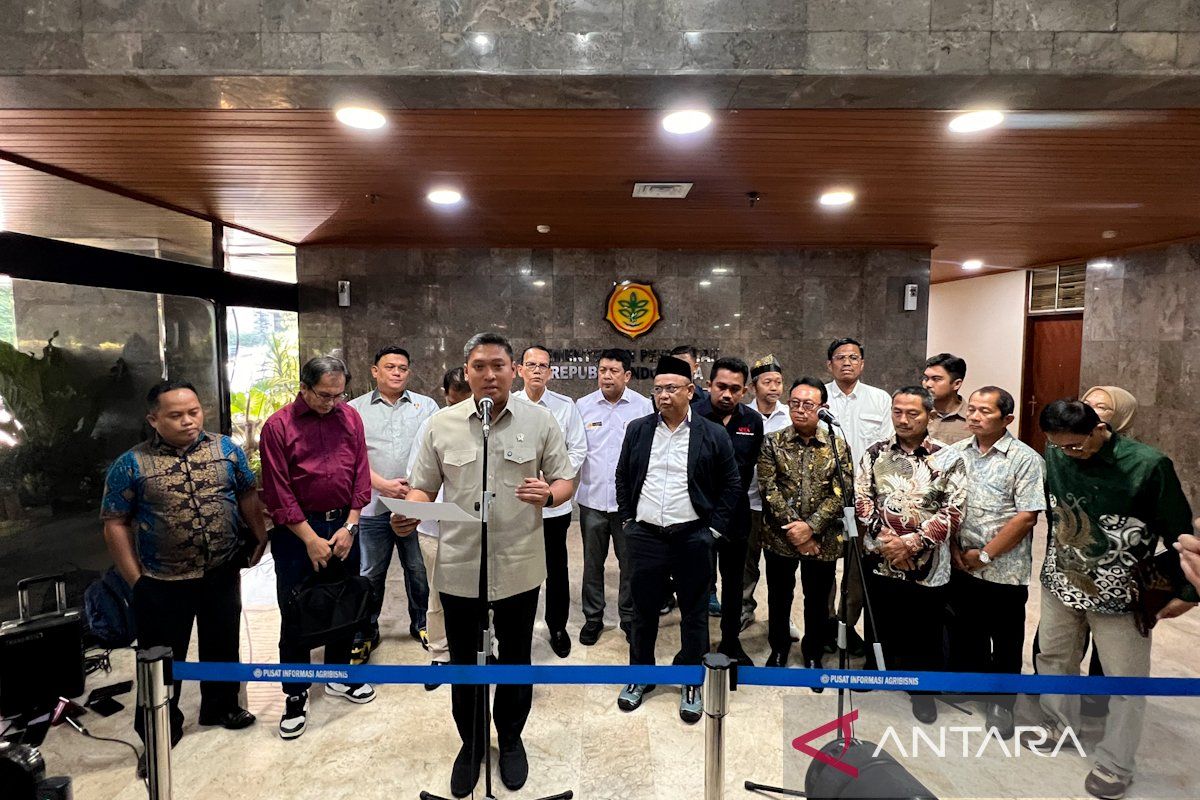
Today, the Ministry of Agriculture responded to palm oil farmers’ complaints about falling fresh fruit bunches (TBS) purchase prices. Deputy Minister Sudaryono assured that farmers and palm oil industry players would remain protected following swift action on the decline in TBS prices across several regions. ‘Today, the Ministry of Agriculture addressed palm oil farmers’ complaints about falling TBS prices, followed by a coordination meeting,’ Sudaryono said after a meeting with the Indonesian Palm Oil Association (Gapki), palm oil farmers’ associations, and the National Police Food Task Force (Satgas Pangan) in Jakarta on Tuesday. The Ministry of Agriculture initiated coordination efforts with farmers, industry players, and stakeholders to ensure market volatility does not affect farmers or the sustainability of the national palm oil industry. Sudaryono stated the meeting was held following concerns among industry players and the market regarding the implementation of the one-stop natural resource export policy through PT Danantara Sumber Daya Indonesia (DSI), which had led to lower TBS purchase prices for farmers. During the meeting, the government, industry players, palm oil farmers’ associations, and stakeholders agreed on several measures to stabilise TBS prices and ensure smooth export policy implementation. Five key points were highlighted. Firstly, the government stated that current TBS price volatility was primarily driven by psychological effects such as anxiety, uncertainty, and lack of understanding regarding the new one-stop export policy managed by PT Danantara Sumber Daya Indonesia (DSI). ‘The current bottleneck is due to anxiety, uncertainty, and lack of knowledge about the new one-stop export policy mechanism,’ the Deputy Minister said. Secondly, the government confirmed PT DSI’s role as a transparent, accountable, and responsible manager and overseer of natural resource export policies. The scheme ensures no additional fees or profit-taking from export transactions. ‘PT DSI does not profit from transactions or charge extra fees. Farmers and exporters need not worry as business operations will continue as usual,’ he stressed. Thirdly, a transition period for the one-stop export policy has been set from 1 June to 31 August 2026. During this phase, export activities will continue normally while gradual evaluations and adjustments are made. Full implementation is scheduled to take effect from 1 January 2027. ‘Companies ready from 1 September can transition immediately. Full implementation is planned for 1 January 2027,’ he added. Fourthly, the government assured that downstream industry players, including refineries and exporters, can continue normal operations during the transition period until all phases are implemented. Fifthly, the government hopes that after this clarification, industry players will adjust TBS purchase prices according to regional crude palm oil (CPO) benchmarks, restoring stability for farmers. Sudaryono added that the Ministry of Agriculture had identified 139 palm oil mills (PKS) across Indonesia that had reduced TBS purchase prices. The government urged industry players to adjust prices according to regional CPO benchmarks. ‘We hope this clarification will alleviate industry concerns and restore normal TBS purchase prices in line with established mechanisms,’ he said. Apkasindo Chairman Gulat Manurung hoped TBS prices would recover following the Ministry of Agriculture and industry meeting. He said government coordination with palm oil processors was crucial to address the recent price drop affecting farmers in major production areas. Apkasindo also urged companies to recognise palm oil farmers’ vital role in national agricultural development and support the government’s Asta Cita program under President Prabowo. ‘We hope the TBS price collapse can be swiftly resolved after this meeting,’ Gulat said. Gulat revealed independent farmers’ TBS prices had plummeted from Rp3,600 to Rp1,800 per kg, causing losses as production costs (HPP) stood at Rp2,000 per kg. Plasma farmers also faced price drops, though independent farmers were more severely affected. Gapki Chairman Eddy Martono praised the Deputy Minister for bringing together government, farmers’ associations, and stakeholders to discuss TBS price dynamics. He said the meeting clarified previous uncertainties, which affected both farmers and buyers needing certainty on trade mechanisms and policies. Through government dialogue, previously unclear information is now better understood, providing a basis for future steps. However, industry players noted further discussions are needed for 2027 policy implementation, including TBS purchasing mechanisms and each party’s role in the supply chain.
Source: jawawa.id (https://jawawa.id/newsitem/deputy-minister-sudaryono-ensures-protection-for-palm-oil-farmers-and-industry-players-1779931162)
Originally published by Antara (Indonesian) (https://www.antaranews.com/berita/5583329/wamentan-sudaryono-pastikan-petani-dan-pelaku-usaha-sawit-terlindungi), translated from Indonesian