
Deputy Minister Stresses Importance of Asset Management for 'Sekolah Rakyat' Programme
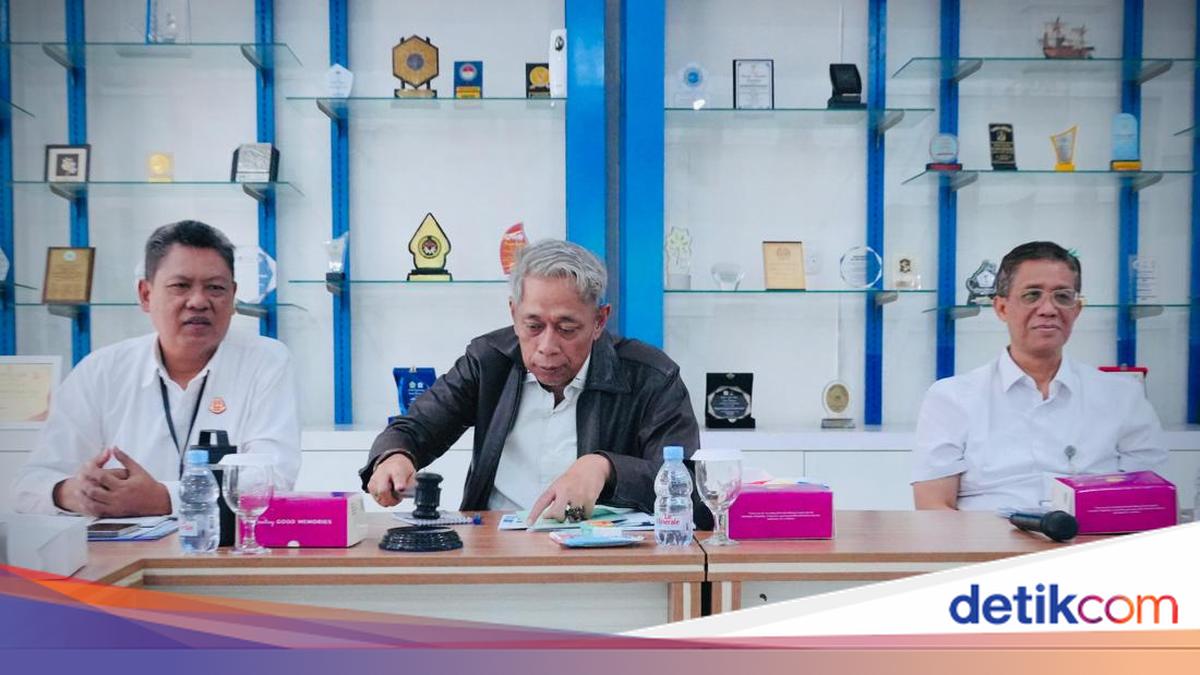
Deputy Social Minister Agus Jabo Priyono has emphasised the importance of properly managing the infrastructure and facilities of the Sekolah Rakyat (People’s School) programme. According to him, the management of all facilities classified as state-owned property (BMN) is one of the aspects determining the success of this priority programme of President Prabowo Subianto.
He made the remarks whilst attending and opening the Coordination Meeting of the Task Force on BMN Governance and Inventory for the People’s School Programme at the Pangudi Luhur Integrated Centre (STPL) in Bekasi, West Java. The event runs for two days until 23 July 2026.
“The success of the People’s School programme is determined not only by the quality of the learning process and the competence of teaching staff, but also very much by the extent to which the state is able to provide infrastructure and facilities. Educational equipment, health facilities, kitchen appliances and various other assets that support the educational process,” Agus Jabo said in a written statement on Wednesday (22 July 2026).
Agus Jabo added that the President not only conceived the People’s School programme but also provided tangible support in terms of budgeting, systems, and the procurement of goods and services.
“And I think the President has prepared, and it has been proven, that the facilities provided to support the teaching and learning process at People’s Schools are truly extraordinary,” he said.
The facilities at People’s Schools include beds, study desks, computers, laptops, laboratory equipment, kitchen appliances, operational vehicles, and various other strategic supporting facilities.
Agus Jabo said that all of these facilities are state-owned property. State-owned property means property belonging to the people, acquired through the state budget (APBN). Therefore, managing BMN is not merely an administrative task, but a form of accountability by the Ministry of Social Affairs, as the organiser of People’s Schools, to the state and the public.
“If BMN is managed well, then services to students will certainly be good. Conversely, if BMN management is not orderly, the quality of educational services will also suffer,” he stressed.
Agus Jabo placed particular emphasis on the importance of strengthening the Internal Control System (SPI) and Risk Management in BMN management so that it can be accounted for in accordance with prevailing regulations.
To that end, he issued eight directives at the coordination meeting. First, he called on all work units within the Ministry of Social Affairs to promptly draw up follow-up plans (RTL) for all recommendations from the monitoring and evaluation conducted at the coordination meeting, with clear deadlines. According to him, this is essential as an indicator of success, along with clear lines of responsibility.
“Second, accelerate the completion of all BMN distribution processes, so that no assets are left held up in warehouses or not yet utilised by People’s Schools,” he said.
Third, he urged the task force to conduct a fresh inventory of all BMN at each People’s School to ensure administrative records match conditions in the field. Fourth, complete all BMN administrative documentation, asset codification, goods lists, inventory records and entries in the BMN management information system, including handover certificates.
“So these handover certificates are really important, especially the handover certificates for goods that have already arrived at the People’s Schools. From us to the People’s Schools, the certificates must be in order, because that is how we can account for things objectively,” he explained.
Fifth, build the capacity of human resources, or BMN managers, through training, technical guidance and mentoring so they possess adequate competence in BMN management. Sixth, draw up and implement SOPs for BMN management to be issued to all People’s Schools as guidelines for the processes of receipt, use and maintenance.
“Seventh, make use of information technology to support real-time monitoring of BMN management, so that leadership can obtain precise, accurate information as a basis for decision-making,” said Agus Jabo.
And finally, he asked the Inspectorate General of the Ministry of Social Affairs to continue providing guidance, mentoring and risk-based oversight of BMN management, and to ensure all recommendations arising from supervision are consistently followed up.
Furthermore, Agus Jabo noted that BMN management is not merely a matter of asset administration, but a reflection of the quality of governance, the integrity of state officials, and the commitment to delivering quality public services.
“Every asset funded by the people’s money must deliver the greatest possible benefit to the people,” he said.
Agus Jabo added that People’s Schools are a poverty alleviation programme delivered through education. He therefore stressed that no asset may be neglected, unrecorded, unused, or poorly maintained.
“I invite the entire Ministry of Social Affairs to make the results of this monitoring and evaluation a momentum to strengthen governance, safeguard accountability, and improve the effectiveness of internal spending and internal control,” he concluded.
Also in attendance at the meeting were Acting Inspector General of the Ministry of Social Affairs Dody Sukmono, Ministerial Expert Staff Abdul Muis, Head of the Ministry’s General Bureau Yadi Muhtar, Head of the Centre for Education and Training Afrizon Tanjung, and Director of Non-Disaster Social Protection Faisal.
Source: jawawa.id (https://jawawa.id/newsitem/deputy-minister-stresses-importance-of-asset-management-for-sekolah-rakyat-programme-1784728457)
Originally published by detikcom (https://news.detik.com/berita/d-8585867/wamensos-tekankan-pentingnya-pengelolaan-sarana-prasarana-sekolah-rakyat), translated from Indonesian