
Deputy Minister Stresses Headteachers of 'People's Schools' Must Be Agents of Change
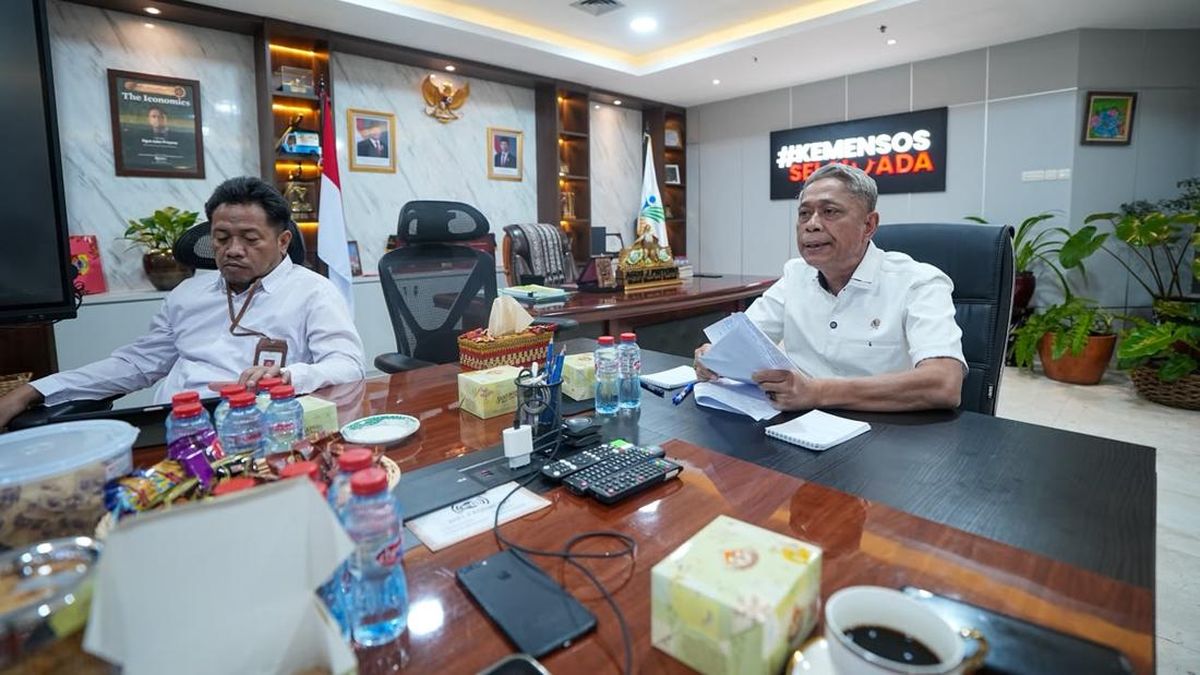
Wakil Menteri Sosial (Wamensos), Agus Jabo Priyono, has stressed that the headteachers of ‘Sekolah Rakyat’ (People’s Schools) are not merely managers of educational units, but leaders of change. They carry a major mission to break the chain of poverty in Indonesia through education. He made the statement while closing the Consolidation and Briefing Meeting for People’s School Headteachers for the 2026/2027 Academic Year, held online from the Ministry of Social Affairs office in Jakarta on Wednesday (8/7). The event, centred in Kulon Progo, Special Region of Yogyakarta, was attended by 191 People’s School Headteachers and 12 Regional PPKs. “Today is a very special and historic day because we are embarking on a new journey to provide education capable of changing the future of children from families who have not yet had the same opportunities,” he said in a written statement on Wednesday (8/7). Agus explained that the People’s School programme is a direct mandate from President Prabowo Subianto. This boarding school facility comes with modern infrastructure support to free children from the shackles of intergenerational poverty. The state built this institution so that children from poor and extremely poor families can overcome their limitations. Therefore, headteachers are required to ensure all facilities and infrastructure are managed professionally and responsibly. “The task of the headteacher is not only to ensure the teaching and learning process runs well, but also how the children we assist can escape the poverty line and have a better future,” he stressed. The Ministry of Social Affairs is committed to fully supporting the aspirations of students from underprivileged families. Support and mentoring will be provided according to each child’s interests and talents. “Those who want to become doctors, we will guide them to become doctors; those who want to join the TNI, we will guide them to join the TNI; those who want to become police officers, we will guide them to become police officers; and those who want to become entrepreneurs, we will mentor them to become entrepreneurs,” he said. Furthermore, Agus reminded of the importance of transparent and accountable school governance. The People’s School environment must also instil a culture of discipline, mutual cooperation, service, and strong collaboration. This responsibility is considered different from the governance of general educational institutions. There is a special mission entrusted by the state to the teachers at this school. “We are not just managing an ordinary school. People’s Schools have a special task and a special mission, which is to break the transmission of intergenerational poverty through education,” he said. Ahead of the implementation of the School Environment Introduction Period (MPLS), headteachers were asked to make this momentum the beginning of student character building. A culture of hard work, deliberation, and respect for others must begin to be cultivated from an early age. Agus also referred to the serving headteachers as patriots of poverty liberation. They are expected to become beacons of hope for underprivileged families across Indonesia. “You are patriots, you are fighters, you are beacons of hope who will illuminate the darkness and guide children towards a better future,” he said. At the end of his briefing, he invited all related parties to do real work in the field. The success of this programme will be proof that socio-economic status can be changed through appropriate educational intervention. “Let us prove that poverty can be defeated through education and that People’s Schools truly become a path of change for our poor and underprivileged brothers and sisters,” concluded Agus.