
Deputy Minister Stella encourages Indonesian children to cultivate science from an early age
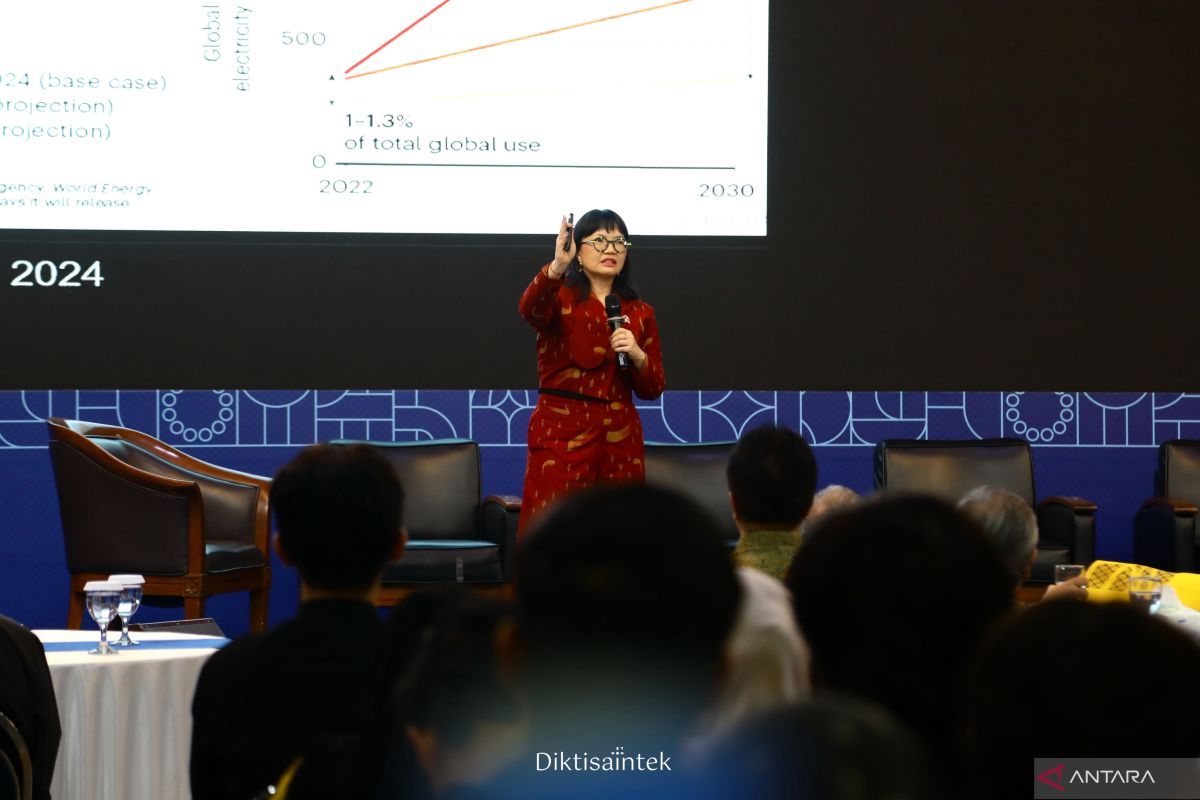
Science is for everyone. What I actually emphasise is not only the science itself, but the thinking about logic and research.
Deputy Minister of Higher Education, Science, and Technology (Wamendiktisaintek), Stella Christie, encouraged students to build a culture of science from an early age through curiosity, the courage to ask questions, and the ability to answer questions based on data.
Wamen Stella said science does not always begin with questions about direct benefits. She cited the development of X-rays, GPS, and Google to show that scientific questions can find their applications long after the research is conducted.
Google, for example, developed from academic research presented in dissertations and scientific publications.
Therefore, Stella said curiosity needs to be given space. Questions that arise from curiosity can be the beginning of a scientific process, while their application can be discovered later.
“The number one thing about science is what we usually call questions from curiosity. Questions from curiosity, not questions solely about what it is for,” she said.
The cognitive psychology expert assessed that scientific habits can be trained from school. Students can start from simple issues in their surroundings, then turn them into questions that are answered systematically and based on data.
For example, she continued, schools can research the amount of waste produced or the amount of food left over in the canteen.
This way of thinking is also relevant for looking at environmental issues. Environmental issues need to be approached through research because every part of them is interconnected.
“Environmental problems are of course our common problems. And whatever part or phase of the environment, it must always be done with research,” said Stella.
Wamen Stella emphasised that science competitions do not mean every piece of research must be immediately applied, but rather serve as an opportunity to sharpen the quality of thinking, build a culture of asking questions, and accustom students to answering questions systematically and based on data.
Existing research results can be further developed through a scaling-up process. This development requires connectivity between researchers, universities, and industry so that research results can move from the research stage to broader utilisation.
In this context, Stella mentioned the role of the Directorate of Downstreaming and Partnerships of the Ministry of Higher Education, Science, and Technology (Kemdiktisaintek) to encourage research results to be developed and scaled up.
“Research is the engine of the nation’s economic growth,” said Stella Christie.
Source: jawawa.id (https://jawawa.id/newsitem/deputy-minister-stella-encourages-indonesian-children-to-cultivate-science-from-an-early-age-1787892768)
Originally published by Antara (Indonesian) (https://www.antaranews.com/berita/5714871/wamen-stella-dorong-anak-indonesia-budayakan-sains-sejak-dini), translated from Indonesian