
Deputy Minister Stella Discusses Indonesia's Geothermal Potential in the US: Second Largest in the World
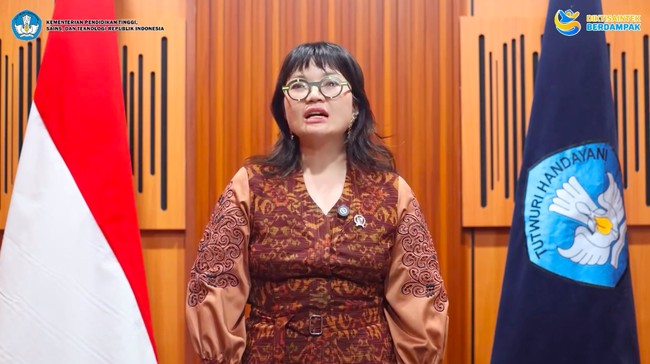
Jakarta, CNBC Indonesia - Deputy Minister for Higher Education, Science, and Technology (Wamendiktisaintek) Stella Christie revealed several key points from the meeting of global energy players at the CERAWeek conference in Houston, Texas, United States.
Amid global geopolitical dynamics, she assessed that the forum produced various strategic insights for Indonesia, particularly in strengthening national energy resilience.
“Indonesia has extraordinary potential, from natural wealth to renewable energy that has not yet been fully utilised. This is no longer about having it or not, but about whether we are ready to take on the role,” Stella wrote, quoted from her personal Instagram account, on Thursday (9/4/2026).
In her post, one highlighted aspect was Indonesia’s geothermal energy potential, noted as the second largest in the world. With current technology, the geothermal potential is recorded at around 29 GW, equivalent to 73% of the national electricity capacity.
“But according to the latest research with cutting-edge technology, Indonesia’s geothermal electricity could reach 2,160 GW = 54 PLN,” she said.
On the other hand, geothermal is a clean, stable energy source that does not depend on weather conditions. This makes it potentially the backbone of Indonesia’s energy.
In addition, Stella spotlighted the rising demand for critical minerals, especially copper. This need is driven by the rapid development of AI technology and data centres that require large electricity supplies.
“Data centres need a lot of electricity, and copper is the best electricity conductor. Does Indonesia have copper? Of course!” she stated.
Not only that, she also highlighted developments in carbon capture technology, particularly at sea. Based on the latest research, the ocean can absorb up to 24 million tons of carbon dioxide (CO2) per day.
In that meeting, Stella also revealed opportunities for collaboration with the National Aeronautics and Space Administration (NASA) through the NASA-Indonesia STEM Challenge programme.