
Deputy Minister: Spatial Plans Must Guide Bali's Development
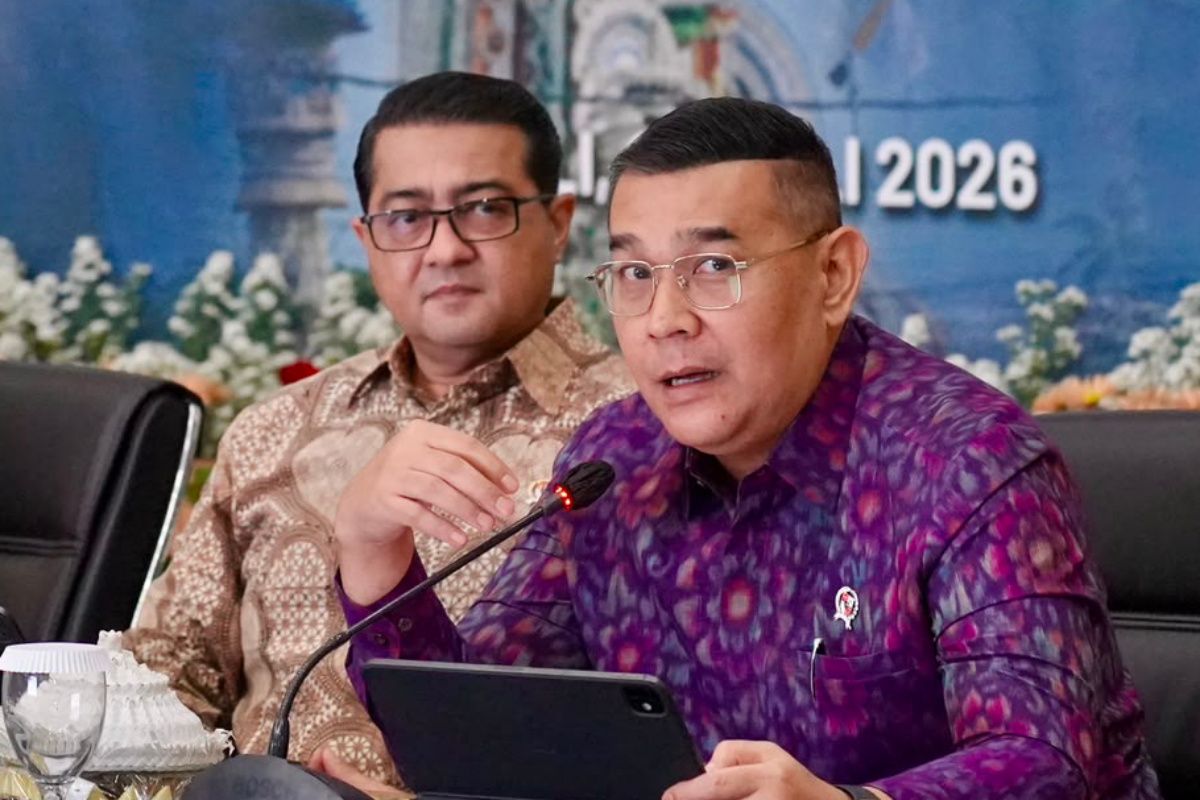
Jakarta (ANTARA) - Deputy Minister of Agrarian Affairs and Spatial Planning/Deputy Head of the National Land Agency (Wamen ATR/Waka BPN) Ossy Dermawan has said that the Spatial Plan (RTR) serves as the compass for development, whilst the Detailed Spatial Plan (RDTR) acts as its operational manual for development in the continually growing province of Bali.
“When we speak of Bali’s future, we are speaking about how to manage limited space whilst answering ever-growing needs,” said Deputy Minister Ossy in his statement in Jakarta on Monday.
According to him, the future of spatial management and continuing development in Bali must be viewed through the lens of the RTR and RDTR, given that the two must be interlinked with one another.
To realise sustainable regional development in Bali, Ossy said the Ministry of ATR/BPN wants the RTR to serve as the foundation for all of its planning.
“From the National Spatial Plan (RTRWN), provincial and regency/municipal spatial plans, through to the RDTR, these must all serve as references for development, as the commanding authority and the foundation for development and investment going forward,” he said.
Ossy reminded the Bali Provincial Government to accelerate the integration of RDTRs into the Online Single Submission (OSS) system. Based on current data, of the target of 75 RDTRs in Bali, 30 have been integrated with OSS, with a further four still in the process of integration.
Indeed, he noted, only Denpasar City, Badung Regency, and Gianyar Regency have achieved 100 per cent integration of their RDTRs into OSS.
“I believe this needs a ‘boosting’ so that it can be followed up promptly, allowing the RDTR to serve as the foundation for development and the basis for sustainable and continuous investment in Bali Province,” he said whilst attending a meeting between the Coordinating Minister for Infrastructure and Regional Development (Menko IPK), Agus Harimurti Yudhoyono (AHY), and the Bali Provincial Government.
Coordinating Minister AHY emphasised that Bali’s development must be carried out in an integrated manner across various aspects. Development must prioritise long-term planning involving the central government, regional governments, state-owned enterprises (BUMN), and regionally owned enterprises (BUMD).
“If it is done carelessly, it will result in disaster and simultaneously add to problems in tourism, connectivity, and the environment,” he said.