
Deputy Minister Says Jatiwaringin Landfill Fire More Dangerous Than Peatland Blazes
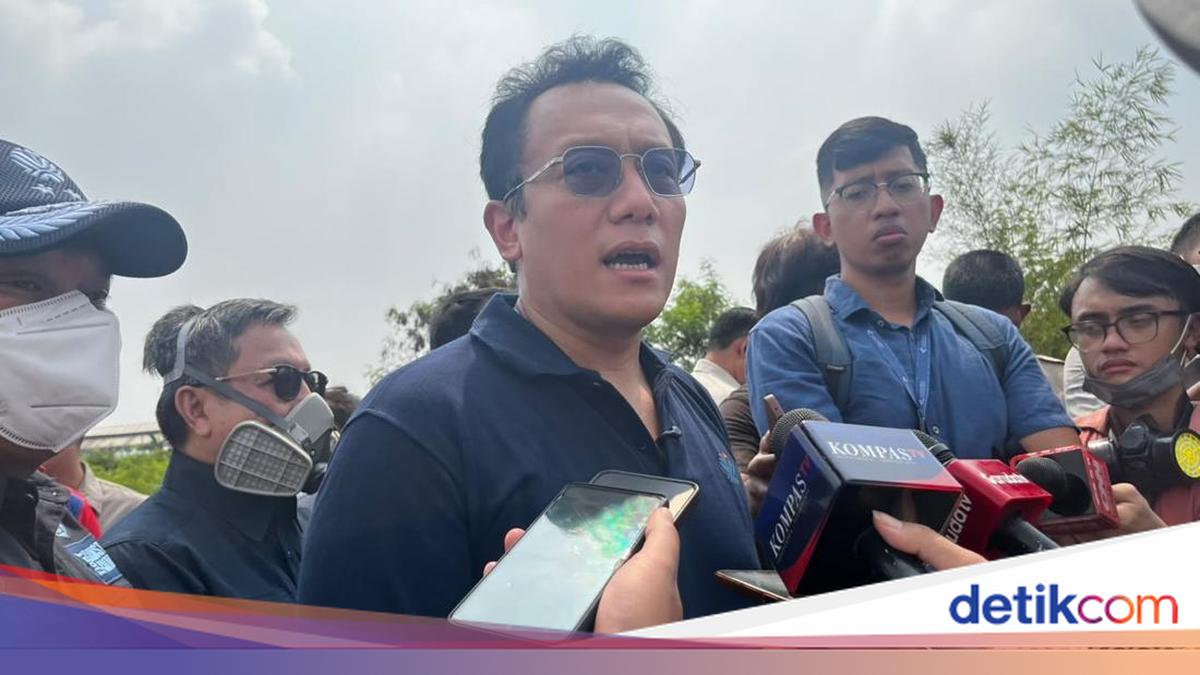
The Deputy Minister of Environment, Diaz Hendropriintono, has inspected the fire site at the Jatiwaringin Landfill. Diaz noted that while the characteristics of the landfill fire are similar to peatland fires, it could be more dangerous due to the presence of methane gas (CH4).
“Extinguishing this is certainly not easy. The characteristics are similar to peatland fires; while the surface may appear extinguished, there is still fire active underneath,” Diaz told reporters after inspecting the site on Saturday (4/7/2026).
He explained that the presence of methane gas beneath the waste piles gives the Jatiwaringin Landfill an explosion risk that ordinary peatlands do not possess. He highlighted the potential for explosions caused by the gas.
“With peat, there is only the potential to burn because there is no gas like here. Here, it could be more explosive due to the CH4,” Diaz explained. He added, “It is even more dangerous because methane has the potential to explode.”
During the inspection, Diaz revealed that the Ministry of Environment has deployed two mobile monitoring system units to monitor air quality around the location. Results showed that air pollution parameters had previously reached 1,000, far above the normal threshold.
“A good quality standard is 15.5, moderate is 15.5 to 55.5, and beyond that, it becomes unhealthy and dangerous. This has reached levels of 1,000. It has been at this level for several days, though I saw it drop drastically last night,” he said.
However, monitoring was temporarily hindered by power supply issues at the command post, which could not support the 3,500-watt monitoring equipment. Diaz coordinated directly with PLN (the state electricity company) to ensure a stable power supply so that air quality data could be accurately monitored.
Involving Manggala Agni
One of the challenges faced by the firefighting team on the ground is the topography of the waste mounds, which reach heights of 20 to 30 metres. This condition causes fire to remain trapped deep within the waste piles.
To extinguish the fire embedded beneath the mounds, the government has deployed 30 Manggala Agni personnel from West Java and Sulawesi. This team was selected due to their specialised expertise in handling underground fires.
“We need assistance from Manggala Agni to perform water injection deep into the lower points. Simply watering from the top is ineffective, as the fire continues to burn underneath,” Diaz stated.
While using peatland firefighting techniques, Diaz mentioned that technical adjustments were necessary because the depth of the landfill waste is much greater than peatlands, which are usually only 5 to 10 metres deep. Additionally, the injection equipment requires a clean water supply from PDAM (the regional water company) to prevent high-pressure pipes from being clogged by mud.
“In peatlands, the depth might be around 4 to 5 metres. Here, we can see how high these mountains are,” said Diaz. “Therefore, adjustments were made; the injection process by Manggala Agni must be extended. But the most important factor is not just the length, but the water itself.”
During the visit, Diaz emphasised that this incident serves as a vital reminder of the importance of transitioning waste management from open systems to sanitary or closed landfills to prevent the accumulation of methane gas that triggers future fires.
“This is why it is essential that landfills move towards sanitary or closed landfill systems,” he concluded.
The fire at the Jatiwaringin Landfill in Tangerang Regency, Banten, has been burning since last Tuesday (30/6). By the fifth day of firefighting efforts, the area affected by the fire is estimated to have reached 15 hectares.
Source: jawawa.id (https://jawawa.id/newsitem/deputy-minister-says-jatiwaringin-landfill-fire-more-dangerous-than-peatland-blazes-1783165938)
Originally published by detikcom (https://news.detik.com/berita/d-8559842/wamen-lh-sebut-kebakaran-tpa-jatiwaringin-lebih-berbahaya-dari-lahan-gambut), translated from Indonesian