
Deputy Minister Ribka Reveals Challenges in Recording ID Cards for Millions of Indigenous Papuans: Fear of Surveillance
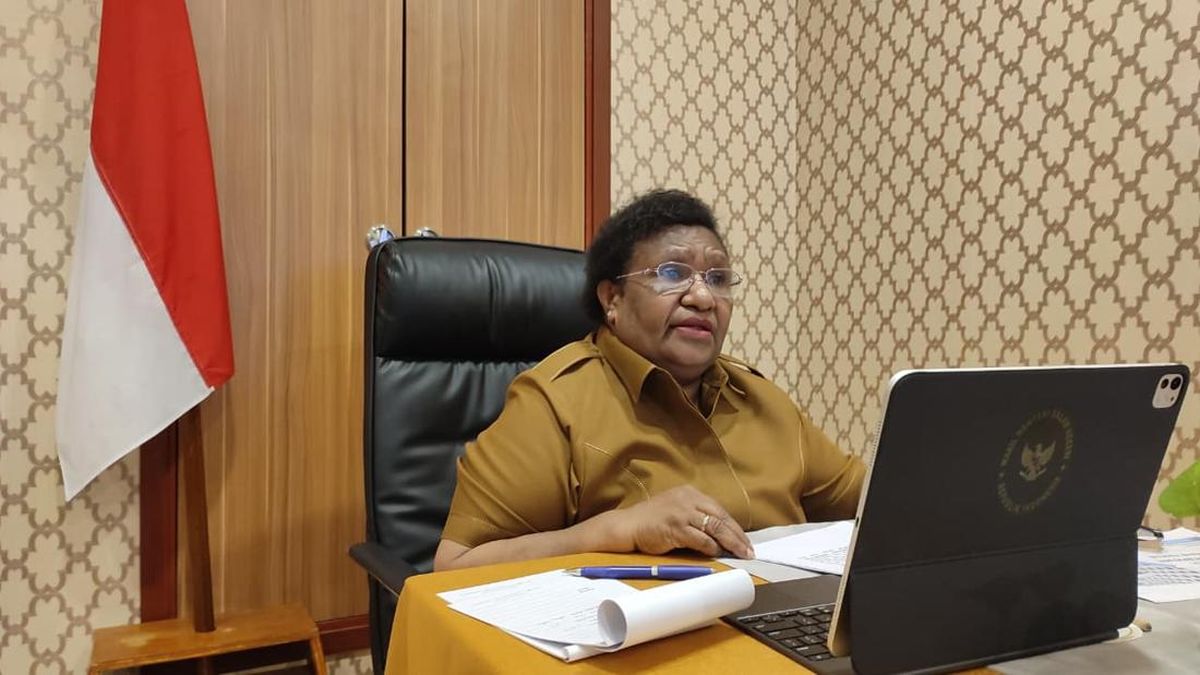
Deputy Minister of Home Affairs Ribka Haluk has clarified misconceptions circulating among the public regarding the data collection of Indigenous Papuans (OAP) across six provinces. She emphasised that the current number of OAP recorded in the Population Administration Information System (SIAK) cannot be used to conclude that OAP are a minority in Papua.
“Following our meeting concerning the OAP data collection initiative launched by the Papua Provincial Government and five other provinces in Papua, it has become evident that netizens, commentators, and local observers have expressed the perception that Indigenous Papuans are becoming a minority,” Ribka stated in Jakarta on Tuesday (26 May).
According to data from the Directorate General of Population and Civil Registration (Dukcapil) at the Ministry of Home Affairs, Ribka noted that 2,296,846 OAP have completed electronic ID card registration and are recorded in SIAK. Meanwhile, the total population of Papua based on the Dynamic Clean Consolidated Data (DKB) stands at 5,832,120.
She explained that these figures remain dynamic and subject to change, as many Indigenous Papuans, particularly in remote, mountainous, and isolated regions, as well as those living abroad, have yet to complete population data registration.
Ribka highlighted that the primary challenge in OAP data collection is the uneven distribution of population administration registration across regions, especially in mountainous and 3T (frontier, outermost, and underdeveloped) areas.
Misconceptions
Beyond geographical barriers, Ribka also pointed out persistent misunderstandings among communities regarding electronic ID card registration. She noted that some residents believe misinformation causing reluctance to register.
“There is a stigma where some people conclude that recording an ID card is associated with the number 666, considered anti-Christ. Hence, they refuse to register. Others claim that registration leads to being monitored,” she said.
She stressed that population data is vital for government policymaking, including the calculation of General Allocation Funds (DAU), special autonomy funds, administrative services, and community welfare programmes. Incomplete data would hinder the government’s ability to assess development and welfare needs.
Based on the analysis of active OAP data and total population across Papua, Central Papua Province has the highest number of active OAP.
Central Papua recorded 995,248 active OAP, comprising 526,469 males and 468,779 females, with a total population of 1,393,565 according to DKB Dynamic.
Second is Papua Province with 512,331 active OAP out of a total population of 1,126,448.
West Papua Province recorded 281,161 active OAP from a total population of 592,451.
Southwest Papua Province has 256,915 active OAP out of a total population of 636,164.
South Papua Province recorded 229,337 active OAP from a total population of 595,192.
Mountainous Papua Province has the lowest number of active OAP at 21,854, despite a total population of 1,488,300.
Ribka urged all local governments in Papua to enhance population administration services and accelerate comprehensive OAP data collection.