
Deputy Minister: Revision of the Law on Human Rights responsive to digital and environmental issues
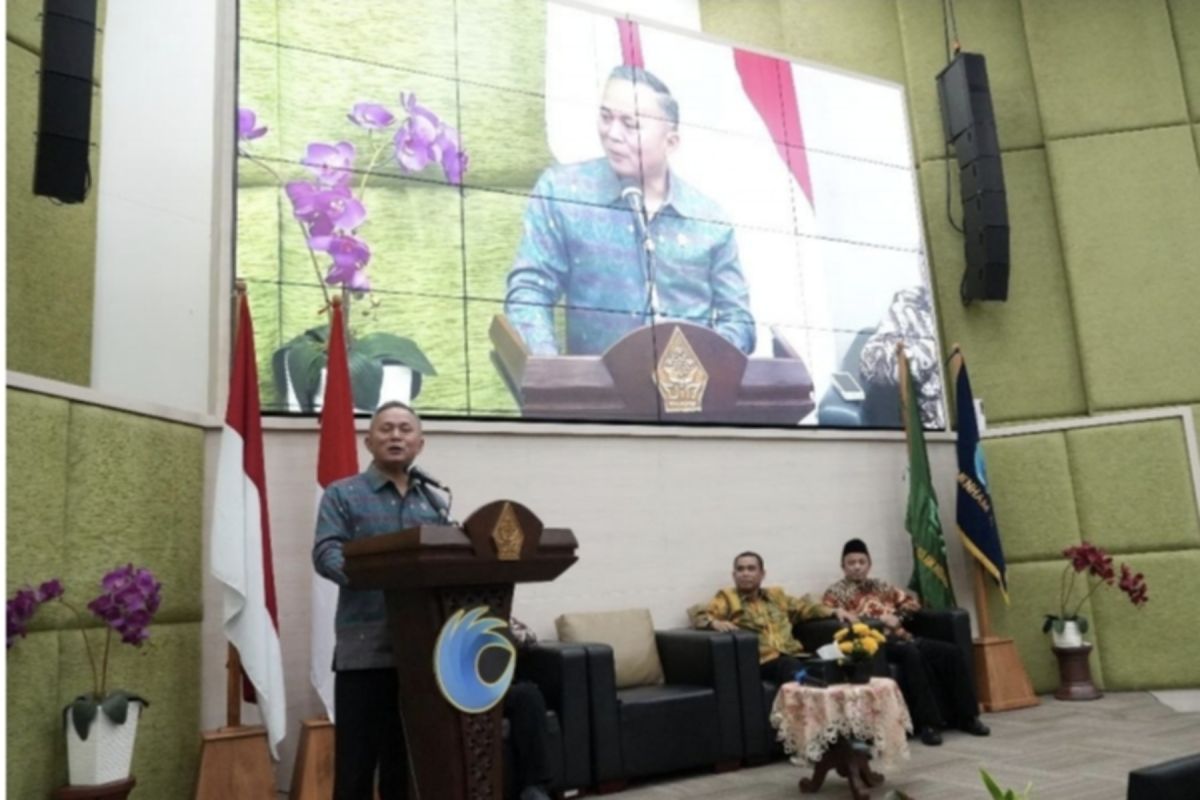
Jakarta — Deputy Minister for Human Rights Mugiyanto said that revising Law Number 39 of 1999 on Human Rights is needed to align human rights protections with contemporary challenges, ranging from the digital space to the right to a healthy environment. ‘The evolution of the times presents new challenges, from the digital space, environmental protection, the right to privacy, to other constitutional rights that are developing dynamically,’ Mugiyanto said in a statement received in Jakarta on Friday. Speaking at a public test on the revision of the HAM Law at UIN Walisongo Semarang, Central Java, on Thursday (21 May), he said that human rights regulation that has existed for more than two decades needs updating because some of its substance is no longer relevant to social dynamics, democracy, and technological development. He added that the revision also aims to strengthen the responsibility to uphold human rights not only by the state but also by the private sector and corporations. He stressed that the drafting of the revision would be carried out in phases and based on public participation to produce regulations that are implementable and in line with community needs. ‘The revision of the HAM Law, which has been included in the National Legislation Program (Prolegnas), is being prepared in phases and based on public participation,’ he said. In the forum, academics also offered input regarding strengthening governance of the national human rights institution. Eko Riyadi, Director of the Centre for Human Rights Studies at Islam University of Indonesia (UII), proposed merging the various HAM commissions into a single national body so that handling of public complaints becomes more integrated. ‘If there are too many HAM bodies, reports become poorly coordinated and data never truly integrated,’ Eko said. He noted that the multiplicity of HAM institutions often confuses the public, particularly vulnerable groups, about where to report. One example cited was a woman with an intellectual disability who did not know whether to report to Komnas HAM, Komnas Disabilitas, or a women’s and children’s protection agency. Meanwhile, Gunaryo, Professor of Sociology of Islamic Legal Studies at UIN Walisongo, said the proposal to integrate HAM institutions could make governance more efficient if supported by clear government policy directions and strong inter-agency coordination. Gunaryo also highlighted the challenges of enforcing HAM in Indonesia, including gaps between regulation and implementation, impunity for violations of human rights, marginalisation of vulnerable groups, and restrictions on civil liberties.