
Deputy Minister: Papua Special Autonomy Success Must Be Felt by Communities
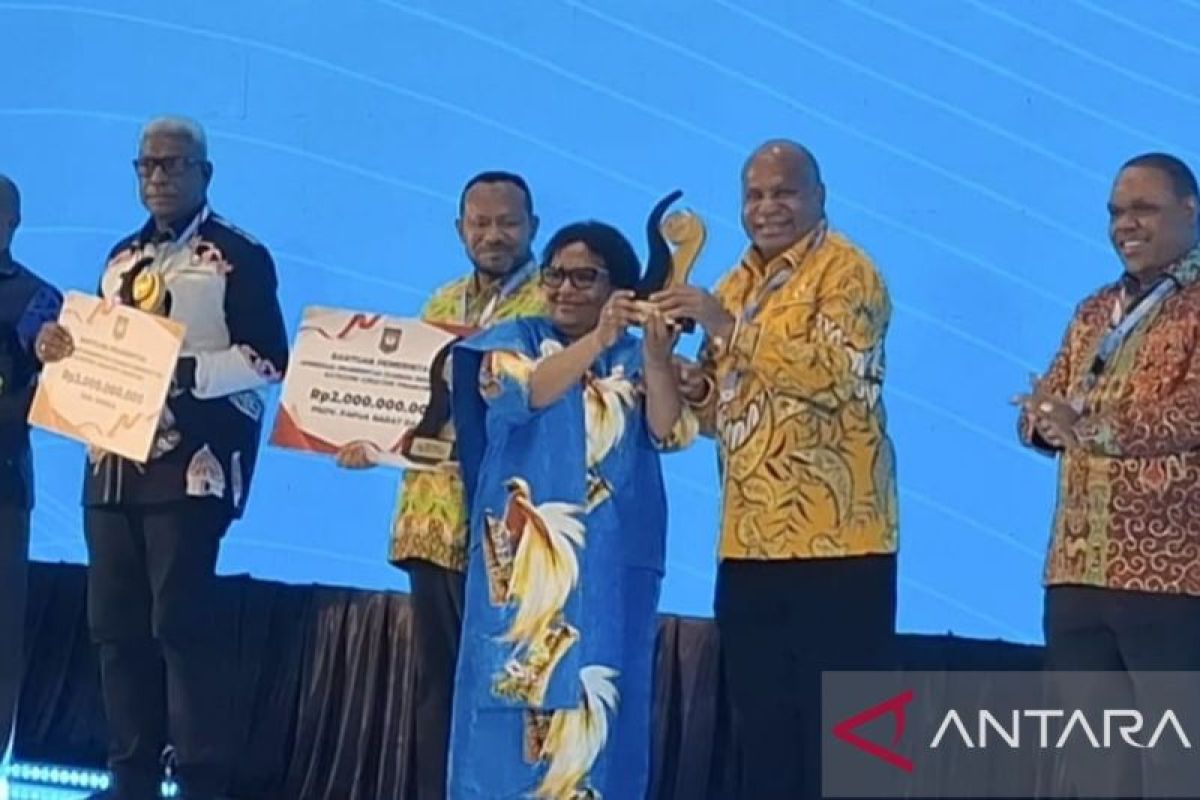
Jakarta (ANTARA) - Deputy Minister of Home Affairs Ribka Haluk has emphasised that the success of Papua’s special autonomy (Otsus) funds should not be measured solely by physical development, but by the benefits directly felt by communities, right down to the villages. “The most important thing is not just the visible physical development, but how the results are truly felt by the people in the villages, including increased income, job creation, and the growth of new economic activities at the local level,” Ribka said in a statement in Jakarta on Tuesday. Ribka stressed that strengthening downstream industries in Papua is continuously directed towards expanding economic added value and opening new growth opportunities for communities across various regions. The programme is part of a regional potential-based development strategy that focuses not only on raw material production but also on processing up to the industrial stage. She added that downstream processing is key to ensuring Papua does not merely remain a producer of raw materials, but is able to enter higher-value industrial chains. Consequently, economic value does not leave the region but circulates within Papua, providing a broader impact for Indigenous Papuans. Vice President Gibran Rakabuming Raka, during a working visit to West Papua, reaffirmed the importance of optimising special autonomy funds to deliver a direct impact on public welfare. One area of focus is the development of leading commodity industries that are beginning to be integrated from upstream to downstream. In line with this, Anton, the person in charge of the Sago Field School for the Agats Diocese, explained that community-based development is one of the keys to strengthening downstream processing at the grassroots level. The approach used emphasises strengthening local culture and the economy simultaneously. “Here, it is more about strengthening the local aspect. So, while in Meranti it is sago industrial technology for a large scale, here it is a local scale, with more of a cultural approach, while simultaneously developing downstream processing,” said Anton. This model demonstrates that downstream processing can be adaptive according to regional characteristics, while maintaining the social and cultural sustainability of local communities. Processing derivative products in the regions is also an important step in creating a longer economic value chain. Support for accelerating downstream processing was also affirmed by Minister of Agriculture Andi Amran Sulaiman. The government, he said, continues to accelerate the development programme for smallholder plantation commodities integrated with processing industries. “This year it is Rp3.2 trillion, last year it was Rp2 trillion. The total is more than Rp5.5 trillion. We reported this to the President and he said this assistance should be continued,” said Amran. He added that all districts in Papua are involved in the strategic commodity development programme, which covers strengthening production through to downstream processing, encompassing hundreds of thousands of hectares across various regions. With this policy reinforcement, downstream processing in Papua is seen as increasingly opening up broader economic opportunities. The transformation from merely a raw material producer to a region producing value-added goods forms an important foundation for more equitable and sustainable economic growth in Papua.