
Deputy Minister Otto: New Criminal Code a Fundamental Transformation of Justice
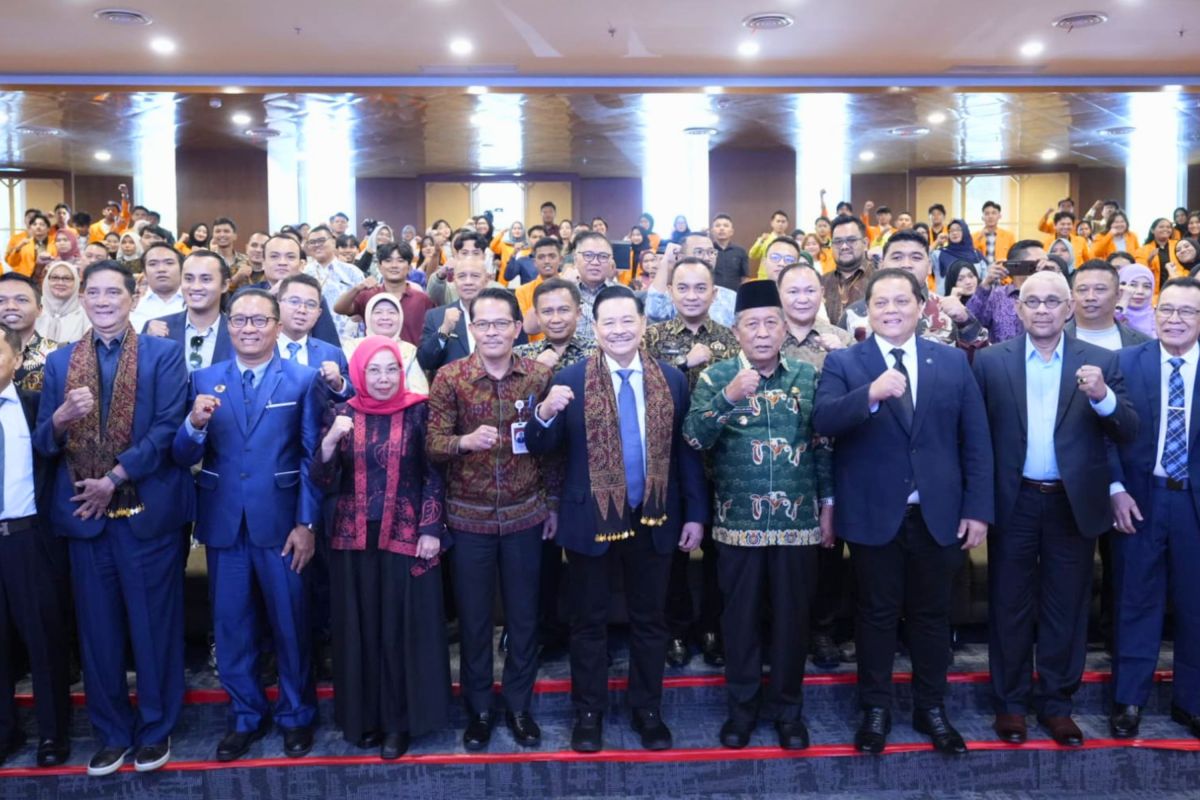
Jakarta (ANTARA) - Deputy Coordinating Minister for Law, Human Rights, Immigration, and Corrections Otto Hasibuan stated that the birth of the new Criminal Code (KUHP) and Criminal Procedure Code (KUHAP) is not merely a regulatory update, but a fundamental transformation in how the Indonesian nation interprets justice.
Speaking at a national seminar at Jambi University on Thursday (25/6), he said that with the presence of the national KUHP and KUHAP, Indonesia is undertaking a fundamental transformation in the way justice is perceived. “We are shifting from a legal paradigm that punishes for retribution to one that restores for balance,” Otto said, as confirmed in Jakarta on Friday.
According to him, the transformation of national criminal law brings its own challenges in implementation. Therefore, advocates, as an officium nobile or noble profession, have a strategic responsibility to ensure that the values of justice in the new KUHP and KUHAP can be applied concretely within society.
The deputy minister also stressed the importance of changing the criminal law paradigm from retributive justice to corrective, rehabilitative, and restorative justice. He assessed that this new approach places due process of law, the protection of human rights, and the restoration of social relations as the main foundations of the national criminal justice system.
Furthermore, he outlined four strategic roles for advocates in the implementation of the national KUHP and KUHAP: adapting the restorative justice paradigm, understanding the concept of living law, acting as guardians of human rights in the legal process, and actively educating the public regarding the paradigm shift in criminal law. He said advocates act as human rights guardians to ensure every law enforcement officer complies with the corridors of the new KUHAP.
“In addition, advocates also have a strategic role in disseminating the legal implications of the new articles to the public to prevent unintentional criminalisation,” he said.
Thus, Otto invited all elements, especially academics and advocates, to jointly oversee the national criminal law reform agenda. He opined that criminal law reform will be the greatest legacy for future generations, making advocates an important part of overseeing and ensuring the criminal law transition runs holistically and in accordance with the ideals of Indonesia’s criminal law transformation.
The national seminar, titled ‘Transformation of Indonesia’s Criminal Justice System: Challenges and the Strategic Role of Advocates in the Implementation of the National KUHAP and KUHP’, was organised by the Faculty of Law at Jambi University together with the National Leadership Council (DPN) of the Indonesian Advocates Association (Peradi) and the Jambi Branch Leadership Council (DPC) of Peradi.