
Deputy Minister: Optimising Free Nutritious Meals to Boost Domestic Milk Demand
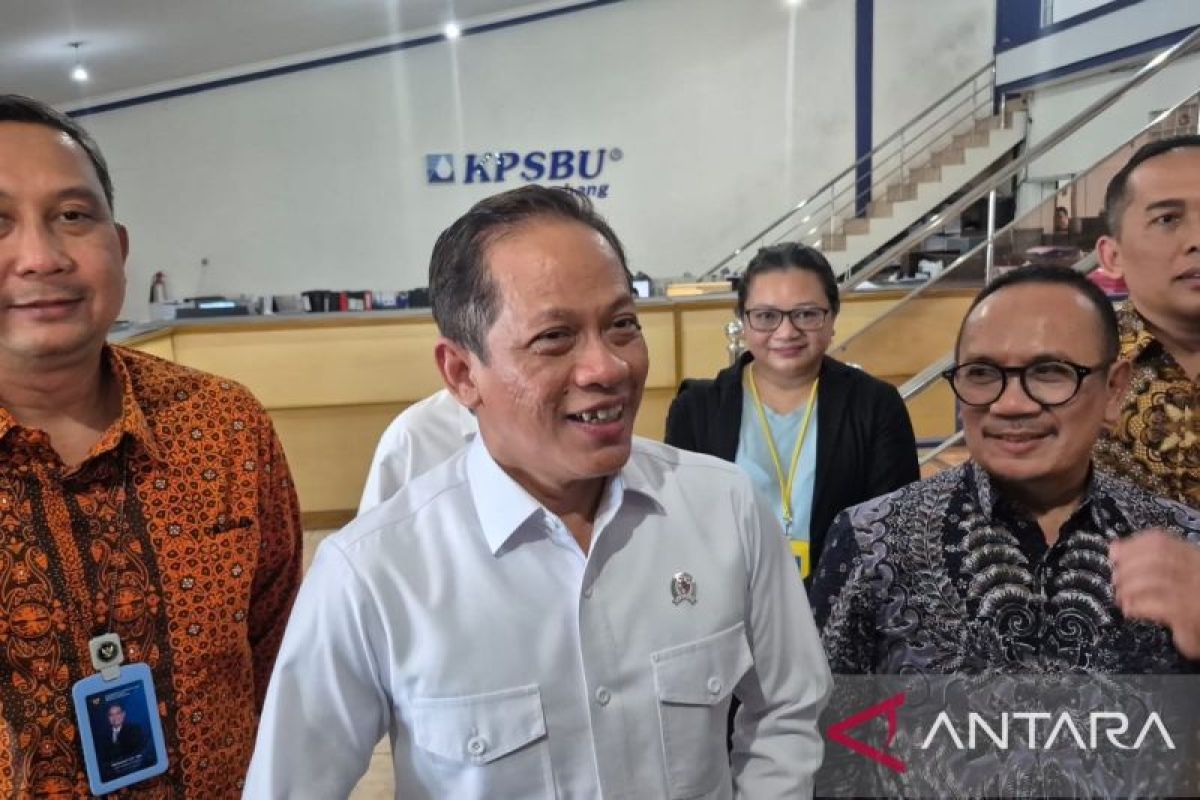
Bandung Barat (ANTARA) - Deputy Coordinating Minister for Food Hanif Faisol Nurofiq has stated that the government is continuing to push for the optimisation of the Free Nutritious Meals (MBG) programme to boost domestic milk demand, as part of efforts to address the nation’s still relatively low milk consumption.
During a visit to the North Bandung Dairy Farmers Cooperative (KPSBU) in Lembang on Friday, he said increasing milk consumption is a crucial part of supporting nutritional improvement in the community while simultaneously strengthening demand for domestic dairy products.
“Yes, of course it is encouraged (domestic milk products through MBG). We strongly encourage an increase in milk demand because the milk consumption of the Indonesian people is still very low,” he said after reviewing the cooperative.
He noted that Indonesia’s current milk consumption is only around 16.7 kilogrammes per capita per year, far lower than that of many milk-producing countries. According to him, this level of consumption indicates that there is still a significant opportunity to increase national milk demand through various government programmes, including MBG.
“If divided by 365 days, the amount is only about 1 or 2 tablespoons per day. This means our people’s milk consumption indeed still needs to be continuously increased,” he stated.
On that occasion, Hanif also said that the increase in milk consumption must be balanced with strengthened domestic production so that national needs do not continue to depend on imported supplies. He mentioned that the government is currently encouraging various efforts to increase milk production, including through the development of livestock technology that allows dairy cows to be cultivated in wider areas.
Moreover, the Central Statistics Agency (BPS) recorded that Indonesia’s fresh milk production in 2025 reached 820,874.80 tonnes, with East Java contributing 475,394.90 tonnes, West Java 251,871.10 tonnes, and Central Java 75,336.85 tonnes, so this figure still needs to be increased.
“If this technology is successful and we can engineer the microclimate inside the pen, then dairy farming does not always have to be in mountainous areas but can be developed in lower plains,” he said.
Hanif said the increase in milk demand through the MBG programme must be accompanied by an increase in domestic production capacity so that the economic benefits can be felt by farmers and the national dairy industry, while simultaneously reducing dependence on milk imports.