
Deputy Minister of Primary and Secondary Education Encourages Papuan Students to Prepare for Leadership Roles
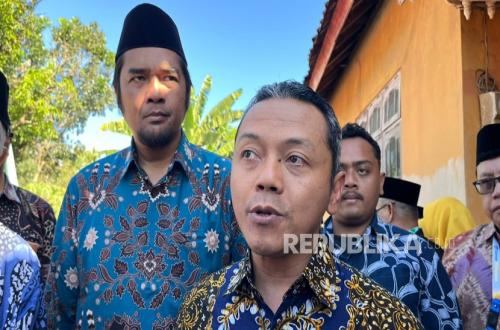
The Deputy Minister of Primary and Secondary Education, Fajar Riza Ul Haq, has encouraged students from Papua to build self-confidence, develop their potential, and prepare themselves to become future leaders. Fajar conveyed this message during a visit to the Sekolah Anak Indonesia (SAI) in Sentul, Bogor Regency, West Java, on Thursday.
In a dialogue with the students, Fajar emphasised that education aims to do more than just improve academic abilities. According to him, schools must also serve as spaces for children to recognise their own abilities, learn independence, and cultivate the courage to take on roles within society.
“This is the future of Papuan leaders and the future of Indonesia. Are you ready to lead Indonesia?” Fajar asked the students.
He stated that the opportunity to become a leader is open to every child, regardless of ethnic background or region of origin. Education, he noted, must provide equal space for children to grow and develop their capacities.
Fajar believes that education plays a vital role in instilling human values, unity, and mutual respect amidst Indonesia’s diversity. “Education and religion teach us to love and respect one another. Whatever our religion or ethnicity, we are Indonesia. Papua is Indonesia. Anyone, from anywhere, can become a leader in Indonesia,” he said.
This message is particularly relevant for SAI students, many of whom hail from various regions in Papua and are pursuing their education far from their homelands. Boarding school life provides them with new experiences in learning independence while interacting with a more diverse environment.
During the dialogue, students shared their learning experiences and their future aspirations. A student from Nabire admitted to becoming more independent and focused on her studies since moving to the dormitory. She noted that living away from her family has taught her time management and responsibility for her daily needs, adding that she aspires to become a flight attendant.
Meanwhile, a student from Intan Jaya expressed her desire to become a doctor, a goal driven by the fact that her home region still requires more healthcare professionals. These stories demonstrate that education is not merely about individual success, but is also linked to the needs of their home communities, ranging from healthcare services to human resource development.
Estus, a student from Intan Jaya, asked how education could develop student talents without restricting their freedom to learn. Fajar explained that the Ministry of Primary and Secondary Education encourages interactive and enjoyable learning processes. He noted that learning should provide space for students to think critically, ask questions, engage in dialogue, and discover their interests.
“We encourage liberating education that provides space for children to ask, dialogue, and develop their interests and talents. I see that this approach is already being practised in this school,” said Fajar.
He added that education offering space for exploration helps students find their individual strengths. Therefore, schools should not only measure progress through academic achievement but also through creativity, courage, independence, and social interaction skills.
Fajar praised the teaching methods at SAI, which connect education with the students’ culture and daily lives. This approach makes the learning process feel more connected to the children’s experiences. For instance, the school uses bows and arrows as a medium for teaching mathematics, and Asmat woodcarving is utilised to develop creativity while introducing cultural richness.
This culture-based approach is essential because children should not have to abandon their original identity when receiving an education outside their region. Modern knowledge can be learned alongside a strengthened connection to the culture and environment of their origins.
“This is education that humanises humans, connects with nature, develops talent, and strengthens a child’s independence,” Fajar remarked.
SAI is a boarding school for Papuan children managed by the Alirena Foundation. The school employs an educational approach based on the potential of the child, culture, and connection to nature.
The boarding school model also provides a space for character building outside formal classroom hours. Children learn to live together, build discipline, resolve daily issues, and develop a sense of responsibility toward themselves and their environment.
For students from areas with limited educational access, these experiences can broaden their horizons regarding future educational and professional possibilities. However, Fajar emphasised that the ultimate hope is that these learning experiences will eventually benefit their home communities. He expressed his hope that students would not lose their connection to Papua as they pursue further education or enter the workforce, and that the knowledge and experience gained would serve as capital to help address challenges in their respective regions.
Source: jawawa.id (https://jawawa.id/newsitem/deputy-minister-of-primary-and-secondary-education-encourages-papuan-students-to-prepare-for-leadership-roles-1790290244)
Originally published by Republika (https://news.republika.co.id/berita/tlvg80451/wamendikdasmen-dorong-siswa-papua-siapkan-diri-jadi-pemimpin), translated from Indonesian