
Deputy Minister of Manpower Invites Students to Oversee National Employment Programmes
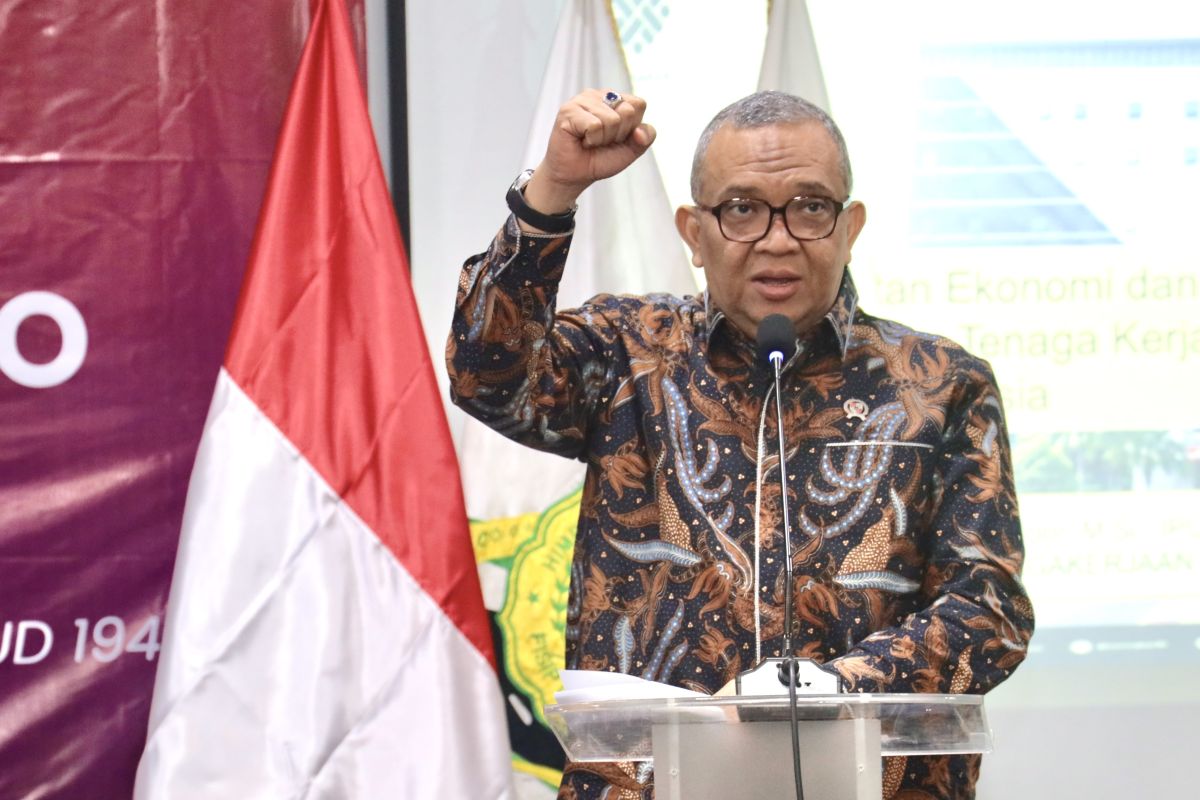
Jakarta (ANTARA) - The Deputy Minister of Manpower, Afriansyah Noor, has invited university students to participate in overseeing national employment programmes.
According to Afriansyah, students hold an important position as an independent moral force in supervising government policies. “The aspirations conveyed need to be based on scientific studies and presented objectively,” the Deputy Minister stated in a briefing in Jakarta on Friday.
Furthermore, Afriansyah noted that this supervisory function is increasingly relevant amidst global economic uncertainty. The weakening of the industrial sector and widespread layoffs, he said, are challenges faced by various countries, including Indonesia and several nations in the region.
This situation is a primary concern for the Ministry of Manpower (Kemnaker) in maintaining public access to employment opportunities. He stated that various policies are being prepared to help job seekers improve their readiness for the labour market, particularly among the younger generation.
One such initiative is the National Internship Programme (MagangHub), which provides opportunities for recent graduates to experience a professional environment directly. The Deputy Minister noted that during the internship programme, participants receive guidance from professional mentors within companies and government agencies.
“Through the MagangHub programme, participants gain work experience and mentoring from professional mentors in both the private sector and government institutions,” he said.
Additionally, Afriansyah explained that direct involvement in a professional environment is expected to equip participants with the necessary skills to enter the workforce after completing their internships. “After gaining experience through the internship process, participants are expected to be absorbed into the workforce,” he added.
On the other hand, Deputy Minister Afriansyah mentioned that expanding access to practical learning is also a vital part of addressing the issue of youth categorised as Not in Education, Employment, or Training (NEET). Currently, 19.44 per cent of Indonesian youth aged 15-24 are not working, not in education, and not undergoing training.
“This condition represents both a challenge and an opportunity to optimise the demographic bonus,” he remarked.
To address this issue, the Ministry of Manpower is developing vocational training through Vocational Training Centres (BLK) so that the public can access skill-based learning and certification free of charge, with materials tailored to industrial needs. This effort must be accompanied by the involvement of the younger generation, including students, in monitoring employment policies while preparing themselves as future leaders. “This involvement can be realised through open communication and the search for collective solutions to various challenges in the field of employment,” he concluded.
Source: jawawa.id (https://jawawa.id/newsitem/deputy-minister-of-manpower-invites-students-to-oversee-national-employment-programmes-1788530690)
Originally published by Antara (Indonesian) (https://www.antaranews.com/berita/5726512/wamenaker-ajak-mahasiswa-kawal-program-ketenagakerjaan-nasional), translated from Indonesian