
Deputy Minister of Manpower emphasises importance of human resource competence in microbanking sector
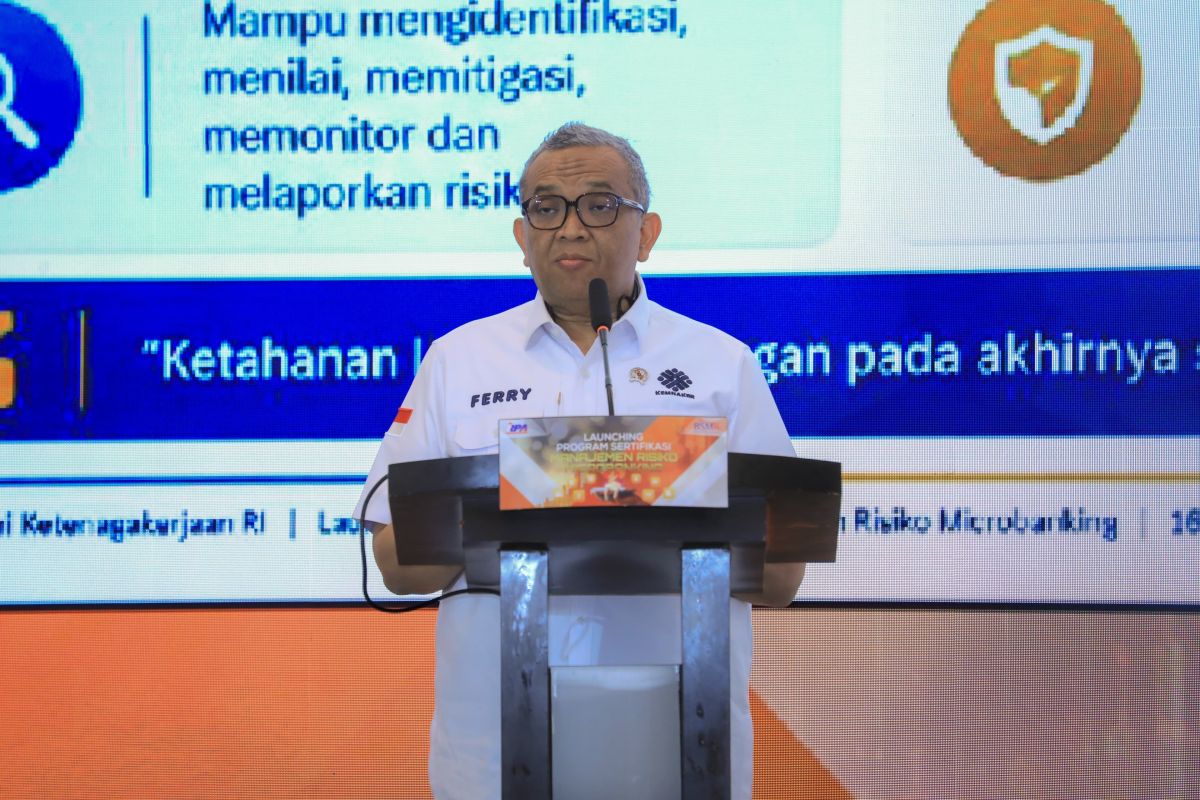
Jakarta (ANTARA) - Deputy Minister of Manpower Afriansyah Noor has emphasised the importance of human resource (HR) competence in supporting risk management within the microbanking sector.
“The microbanking sector plays a strategic role in the community’s economy as it serves as the primary pillar for access to financing for micro, small, and medium enterprises (MSMEs),” Afriansyah stated in a briefing in Jakarta on Thursday.
Furthermore, Afriansyah noted that risk management is vital in the microbanking sector, which faces various challenges ranging from credit and operational risks to fraud.
To address this, he stated that competent human resources are required to identify, control, and monitor these risks.
As the dynamics of the financial industry move rapidly, increasing human resource capacity cannot rely solely on theoretical mastery, he added.
“Competence must also encompass practical skills, work attitudes, and experience that are relevant to job requirements,” he said.
In this context, competency certification serves as an instrument to ensure the standard of workforce capability. Afriansyah emphasised that the certification process must not merely be an administrative formality but must reflect the actual capabilities of workers in the field.
“Competency certification must adhere to the ‘4T’ principle, namely: measurable, tested, validated, and trustworthy. The benchmark for success lies not in the number of certificates issued, but in the real impact on increasing productivity and the quality of industry management,” he said.
To ensure that competency certification meets the 4T principles, the Ministry of Manpower (Kemnaker) performs five key roles: maintaining competency standards, guaranteeing training quality, providing qualification recognition, aligning programmes with labour market needs (link and match), and overseeing the impact of certification on industrial efficiency.
“These five roles are part of the Ministry’s efforts to ensure that competency certification is aligned with job requirements and industrial developments,” said Afriansyah.
“Thus, certification serves not only as recognition of workforce competence but also reflects the abilities required in the workplace,” he added.