
Deputy Minister of Human Rights: Human rights issues must be resolved from the upstream
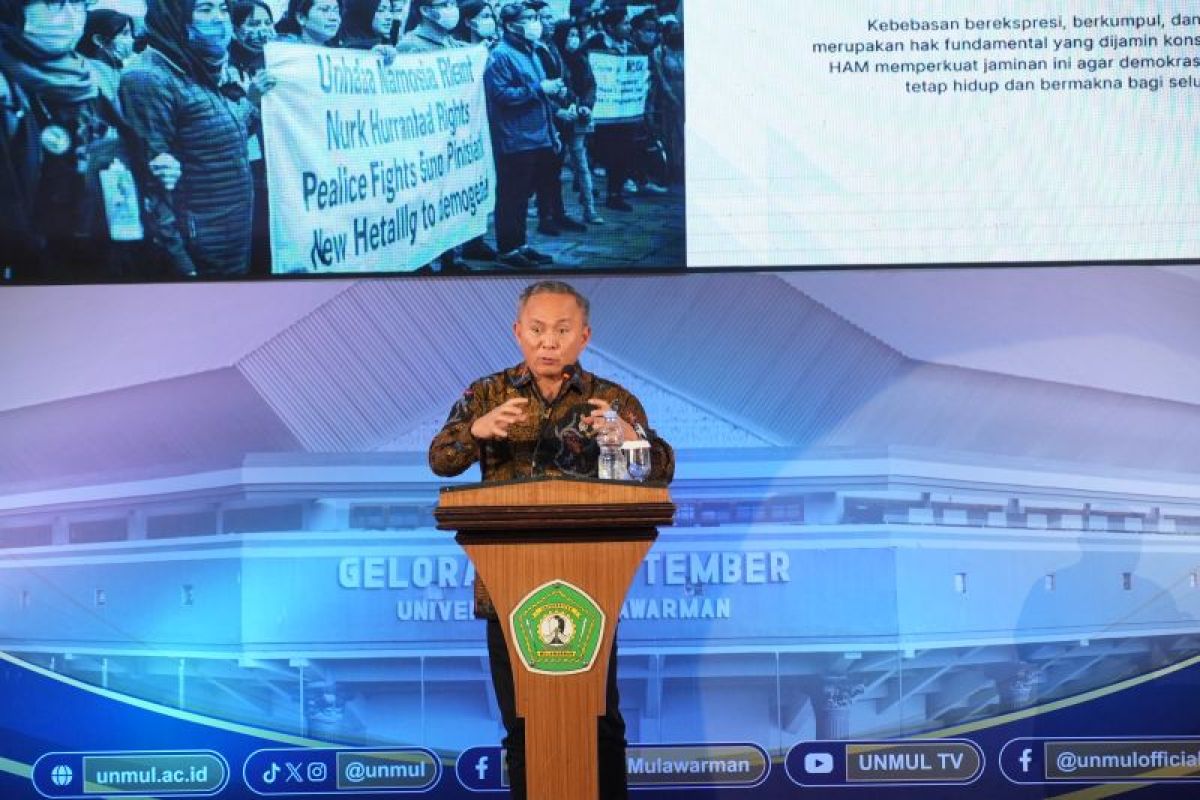
The state must be present in the various problems faced by society. The Ministry of Human Rights is working to build a system capable of preventing, monitoring, and resolving human rights issues from upstream to downstream.
Deputy Minister of Human Rights Mugiyanto affirmed that the government is striving to strengthen the human rights protection system by resolving issues from the upstream stage of policy and regulation to prevent various violations from recurring.
According to Mugiyanto, a human rights approach is insufficient if only applied after problems occur; it must also touch the root of the issue through strengthening a human rights compliance system that involves all stakeholders.
“The state must be present in the various problems faced by society. The Ministry of Human Rights is working to build a system capable of preventing, monitoring, and resolving human rights issues from upstream to downstream. Therefore, human rights compliance must become a shared standard, for the central government, regional governments, and the business sector,” said Mugiyanto in a statement in Jakarta on Tuesday.
He added that the strengthening of regulations is also directed at building a human rights compliance system applicable to ministries and agencies, regional governments, and the business sector as part of national development.
The public lecture was interactive, with students conveying various aspirations and criticisms, including concerns over abandoned mining pits in East Kalimantan that have caused fatalities.
Responding to this, Mugiyanto said that public criticism is an important part of efforts to strengthen human rights protection.
“What the students have conveyed are actually issues the government is working on through the Ministry of Human Rights. Human rights issues must be resolved from the upstream. Therefore, the resolution is not enough after a problem occurs, but must also touch the root of the issue in the realm of policy and regulation. The state must be present to build a system capable of preventing such problems from recurring,” he stated.
Mugiyanto emphasised that criticism and aspirations from the public must be seen as energy to continue improving the human rights protection system.
“The various criticisms and aspirations conveyed by the public are energy for me to keep fighting. The struggle for human rights is a long journey that must not stop. As long as there are problems faced by society, the state must continue to work and improve itself,” he said.
He added that universities have an important role as spaces for dialogue that allow ideas, criticism, and aspirations to be conveyed peacefully within a healthy academic tradition.