
Deputy Minister of Home Affairs Urges Local Governments to Strengthen Disaster Mitigation and Anticipation
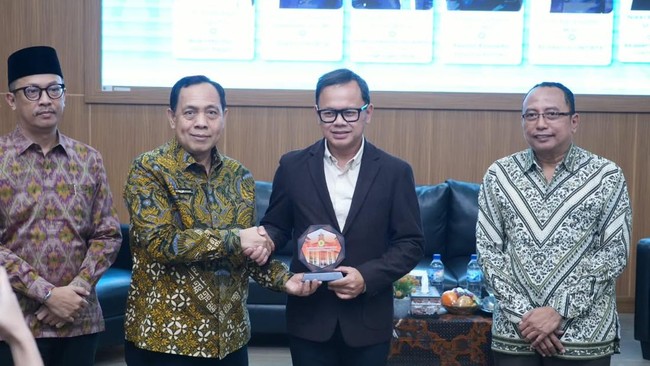
The Deputy Minister of Home Affairs, Bima Arya Sugiarto, is urging local governments to build disaster resilience through a new, responsive, and anticipatory paradigm. According to him, this paradigm needs to shift away from the old reactive approach by strengthening mitigation efforts and disaster investment from the initial planning stages.
Bima made these remarks as a keynote speaker at the 3rd SENANDIKA (National Seminar on Public Administration Untirta) 2026, themed “Climate Change Adaptation Policy and Coastal Disaster Mitigation.” The seminar was held via a hybrid format at the Convention Hall of Sultan Ageng Tirtayasa University (Untirta), Serang, Banten, on Wednesday (7/10/2026).
In its implementation, Bima emphasised the vital role of regional heads in understanding the characteristics, needs, and disaster risks of their respective areas. He noted that such understanding is a crucial component in developing disaster policies that align with local conditions.
“Therefore, I am encouraging the Governor of Banten, Andra Soni, as well as regents and mayors within Banten Province, to care deeply about these issues, especially regarding climate change. Local governments understand the character, needs, and risks of their regions best,” Bima explained.
Bima added that disaster management has undergone a paradigm shift. Following Indonesia’s experience with major disasters such as the Aceh tsunami, the government has developed significant capacity in fast response, emergency, and disaster management. This led to the formation of the National Disaster Management Agency (BNPB) and Regional Disaster Management Agencies (BPBD), strengthening the responsive paradigm.
“We must move quickly now. Having served as a mayor for 10 years, I have experienced firsthand how we must act swiftly during disasters. I have dealt with floods, landslides, and tornadoes. Along with other regional heads, we are constantly trained to improve rapid response. We are getting better at this,” he stated.
However, Bima argued that local governments can no longer rely solely on a responsive paradigm. An anticipatory paradigm must also be strengthened, including building disaster mitigation awareness at the community level.
He cited Japan’s implementation of disaster anticipation as an example. During an earthquake, the public understands necessary safety steps, such as taking cover under a table and avoiding immediate exits to reduce risk. Furthermore, citizens are equipped with disaster kits, including backpacks containing essentials like torches, medicines, and clothing.
Bima asserted that disaster anticipation and mitigation efforts must be integrated into local government planning. Consequently, when public funds are allocated for development, they should not only be directed towards physical infrastructure but also towards supporting disaster mitigation needs through the Regional Budget (APBD) mechanism.
“How much of the APBD is allocated for spatial planning that is resilient to disasters? Are there disaster-resistant buildings? Are there pavements, pedestrian paths, and evacuation meeting points, as well as disaster education? Are these present?” he questioned.
Bima also pointed to the practices in West Sumatra Province, which has faced frequent disasters yet maintains a high level of resilience. In practice, West Sumatra includes disaster mitigation in its APBD, ensuring specific allocations for these needs. He emphasised that such efforts must begin at the planning stage and be carried out in integration with relevant ministries and agencies.
“The challenge today is building integration, because often planning, budgeting, and indicators are all different,” he added.
In his closing remarks, Bima encouraged students to play an active role in reminding regional heads about the importance of climate change issues. He noted that various communities can also contribute to encouraging local governments to build anticipatory disaster systems.
“Do not remain silent. You may feel distant from this, but your lives depend on the anticipatory steps taken by local governments—specifically, how safe your homes are from the possibility of disasters,” he concluded.
Source: jawawa.id (https://jawawa.id/newsitem/deputy-minister-of-home-affairs-urges-local-governments-to-strengthen-disaster-mitigation-and-anticipation-1791363374)
Originally published by CNBC Indonesia (https://www.cnbcindonesia.com/news/20261007151131-4-774129/wamendagri-bima-dorong-pemda-perkuat-mitigasi-dan-antisipasi-bencana), translated from Indonesian