
Deputy Minister of Home Affairs Urges Acceleration of TB Preventive Therapy and Tuberculosis Management in Sidoarjo
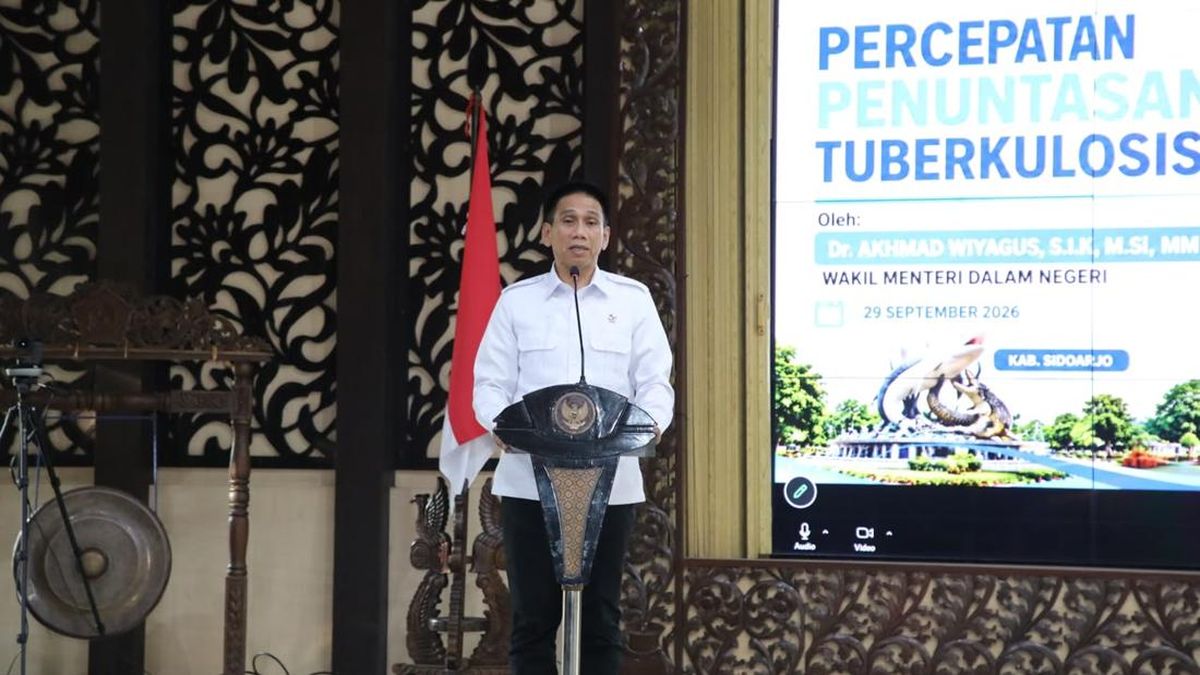
The Deputy Minister of Home Affairs, Akhmad Wiyagus, is pushing for the acceleration of Tuberculosis Preventive Therapy (TPT) administration in Sidoarjo Regency, East Java. This step must be accompanied by strengthened case finding, close contact tracing, data integration, and cross-sector collaboration to accelerate tuberculosis (TB) elimination efforts.
“Therefore, please make case findings more effective, and most importantly, integrate the data. This is our initial capital for determining our direction and the strategies we will implement,” said Wiyagus during the declaration of TB-Alert Villages and Sub-districts, themed “Synergy Together Towards Tuberculosis Elimination,” in Sidoarjo Regency, East Java, on Tuesday (29/9).
Wiyagus explained that integrated data is a vital foundation for determining TB management strategies. Once cases are identified and patients receive treatment, tracing close contacts must be conducted to identify groups requiring preventive intervention through TPT.
In line with this, he reminded officials of the importance of orderly reporting. Various TB management efforts implemented in the field must be well-recorded so that achievements can be accurately known and serve as a basis for evaluation and the formulation of subsequent management steps.
According to Wiyagus, the acceleration of TPT also needs to be supported by appropriate socialisation and education, particularly for close contacts. This is essential to build an understanding of the role of TPT in preventing TB infections from developing into active tuberculosis disease.
“TPT certainly requires socialisation and education. The way it is communicated should not be presented as an option for close contacts—whether they should take it or not. Instead, the narrative must be that it must be taken to kill the germs present in the body,” he asserted.
He requested that local governments utilise the time until the end of 2026 to pursue TPT administration targets. According to him, acceleration must be carried out collectively to ensure that achievements in 2026 do not fall below those of 2025.
In addition to accelerating TPT, Wiyagus emphasised the importance of strengthening TB-Alert Villages and Sub-districts as part of the effort to expand management to the community level. Tuberculosis control requires the involvement of various stakeholders according to their respective roles.
“TB management must be well-collaborated, as reflected in the composition of the alert villages and sub-districts being declared today,” he said.
He added that TB management is not only related to health aspects but also touches upon community productivity as well as social and environmental conditions. Therefore, interventions must be carried out across sectors, including the provision of sanitation and clean water, nutritional adequacy, and the improvement of housing conditions that require attention.
On this occasion, Wiyagus also expressed his appreciation for the commitment of the Sidoarjo Regency Government in strengthening tuberculosis control.
He expressed hope that the acceleration of TPT, accompanied by strengthened case finding, data integration, orderly reporting, and cross-sector collaboration, could further accelerate TB elimination efforts in the region.