
Deputy Minister of Home Affairs States Sustainable National Vision is Key to Golden Indonesia
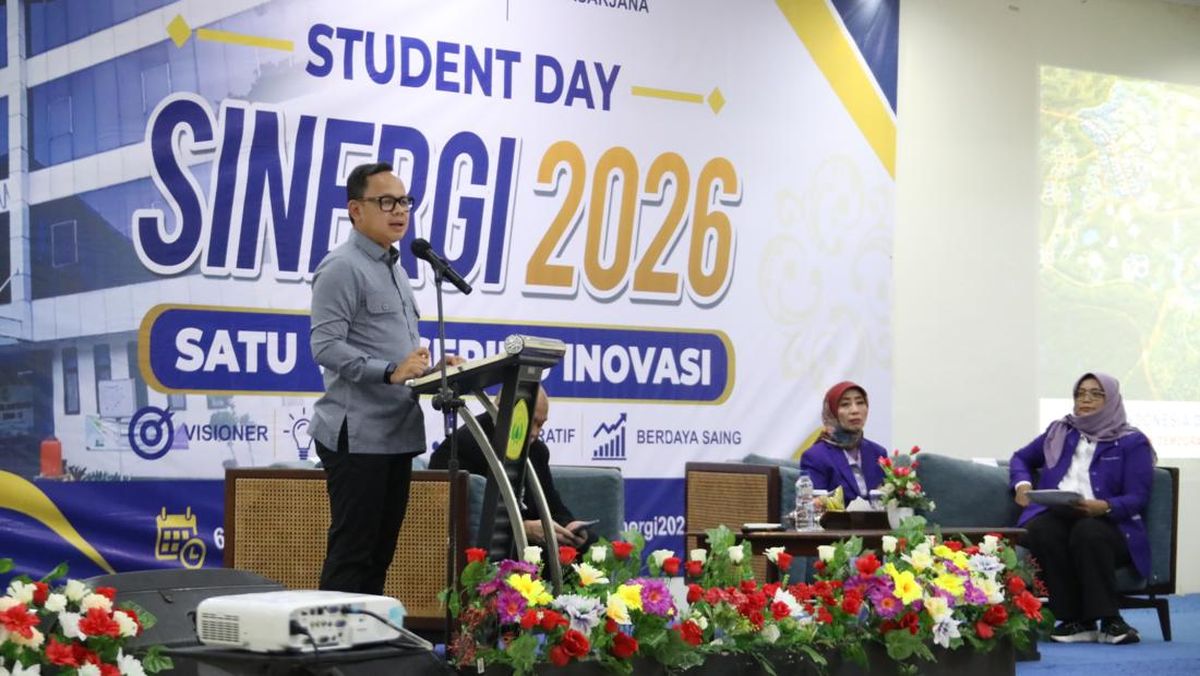
The effort to realise ‘Golden Indonesia 2045’ requires several important prerequisites, including the existence of a sustainable national vision. This vision serves as the foundation to ensure that the direction of development remains consistent and proceeds according to plan.
This was stated by the Deputy Minister of Home Affairs, Bima Arya Sugiarto, while serving as a speaker at the Student Day event for the Pakuan University Postgraduate School in Bogor Regency, West Java, on Saturday. The event was attended by the Rector of Pakuan University, Didik Notosudiorno, the Dean of the Postgraduate School, Sri Setyaningsih, and members of the university’s academic community.
“The story of a developed nation is a story of sustainability,” said Bima.
He explained that several developed nations, such as Singapore, have achieved progress by implementing sustainable development visions. Bima expressed his hope that leaders, particularly regional heads, could apply the same principle.
Specifically, Bima highlighted that there are still shifts in development directions in several regions whenever there is a change in regional leadership.
In addition to a sustainable vision, Bima assessed that independence is also a crucial factor in driving national progress. According to him, independence must be supported by effective leadership to ensure that the wheels of government operate optimally.
“Even if we have many smart and great people, and democracy is exalted, if the government does not function, it is useless. We will go nowhere,” he said.
Bima emphasised the importance of strengthening collaboration and innovation in development. He asserted that the government cannot work alone and requires the active involvement of various parties. In this regard, he appreciated Pakuan University for organising an event with an innovative, collaborative, and competitive theme.
Furthermore, Bima also reminded that increasing global geopolitical tensions must be a concern for regional leaders. He noted that developments in the international situation have a direct impact on the lives of people domestically.
“Because of this geopolitical uncertainty, it impacts the dollar, it impacts oil, and so on. Therefore, number one, geopolitics matters,” he added.
In addition to understanding geopolitical dynamics, regional heads are encouraged to continuously improve the capacity of human resources (HR) in their respective regions. Bima assessed that high-quality human resources play a vital role in strengthening the performance of regional bureaucracies. However, the quality of human resources must also be supported by appropriate governmental strategies.
“The issue is whether the strategy is appropriate or not? Only time will tell; therefore, this strategy is a risk for leaders,” Bima concluded.