
Deputy Minister of Home Affairs States President Will Determine One Data Indonesia Organism
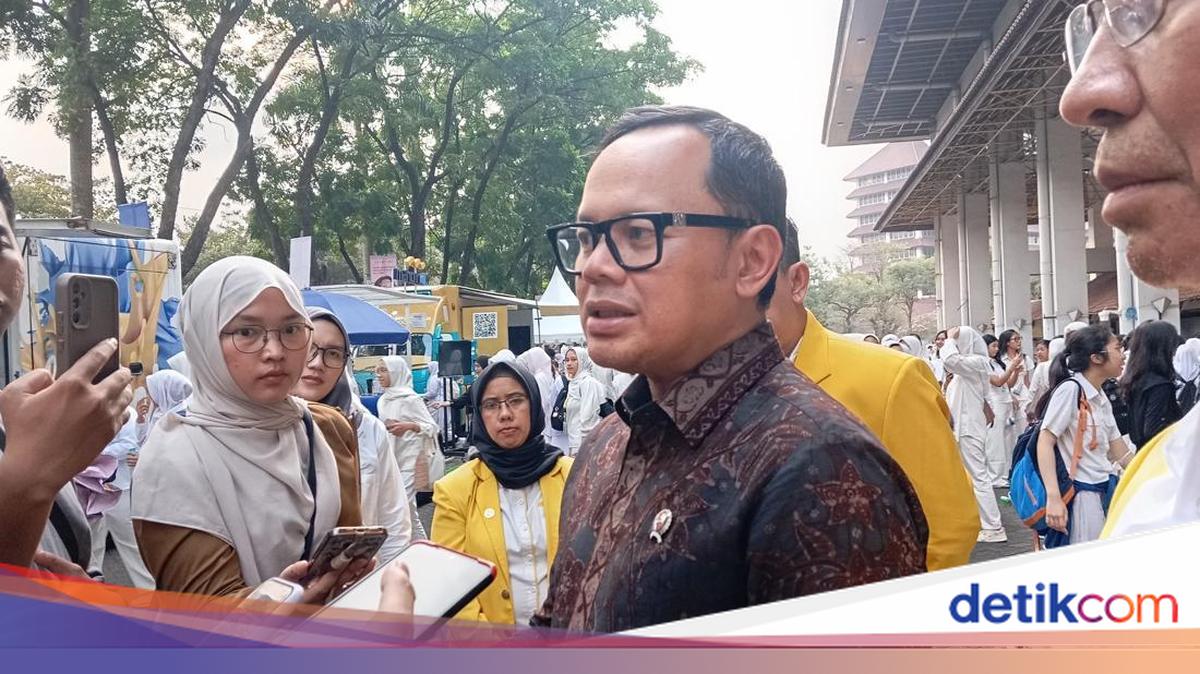
The Deputy Minister of Home Affairs, Bima Arya Sugiarto, stated that the Draft Law (RUU) on One Data Indonesia emphasises an integrated system. Bima Arya noted that there will be an organiser to manage Indonesia’s data, reporting directly to the President.
“The principle is that the data is integrated but not centralised; that is all,” said Bima Arya at the parliamentary complex, Senayan, Jakarta, on Monday (5/10/2026).
Bima explained that there will be data guardians managing information from the regional levels. He stated that the technical aspects regarding this national data organiser will be regulated through government regulations.
“They will manage it, yes, but there will be many data guardians. There are guardians at the regional level as well,” said Bima Arya.
“We will leave it to the process; there will be technicalities and government regulations in place,” he added.
Bima mentioned that the President will determine the specific body related to One Data Indonesia, noting that the President possesses the discretion to make such decisions.
“The President will also determine what the body looks as; the President has the discretion to make decisions. The President will also determine the structure of the chairperson and vice-chairperson,” he said.
Below are the 15 key points of the SDI Draft Law presented by the Working Group Chairperson, Sturman Panjaitan, during the Decision-Making Meeting:
A. Regulation of National Basic Data (DDN) controlled by the state as the primary reference for development planning, fiscal policy and budgeting, social assistance distribution, and other national strategic needs, including criteria for establishing six clusters and the classification of open, limited, and closed data.
B. Regulation of SDI governance through the SDI Master Plan, SDI Architecture, SDI Management, and SDI Cycle, coordinated by the Minister, including the determination of national priority data.
C. Institutional strengthening through the formation of an SDI organiser reporting to the President, replacing the One Data Indonesia Agency with a coordinative, normative, and facilitative role in coordinating data supervisors, data producers, and data guardians.
D. Regulation of the division of authority between central government, regional government, and village/sub-district governments in producing and managing data, including village data deliberations as a participatory forum to agree on village data.
E. Regulation of data supervisors, data producers, and data guardians across levels from national to village/sub-district and corporations, as well as data users and their obligations.
F. Regulation of data standards, metadata, reference codes and/or master data, and a national data catalogue system that must be implemented by all data producers and guardians without centralising data control within a single institution.
G. Regulation of SDI infrastructure and risk management, including the use of digital technology, blockchain, and artificial intelligence to ensure national data sovereignty, traceability, and human oversight.
H. Regulation of data interoperability implemented without centralising physical databases and without transferring ownership, control, or management responsibility from the data producers.
I. Regulation of data usage and access control, including the imposition of fees for access to limited data as non-tax state revenue, and the requirement for parliamentary approval for the access and transfer of closed data outside Indonesian jurisdiction.
J. Strengthening of data security and protection through security standards implemented by cyber and cryptography agencies, cryptographic infrastructure, digital certificate management systems, security audits, data sovereignty audits, and incident reporting within a maximum of 24 hours.
K. Regulation of funding, incentives, guidance, supervision, evaluation, and accountability, including the submission of supervisory reports by the organiser to the President and the House of Representatives (DPR).
L. Strengthening community participation in SDI implementation, including providing input, reporting suspected data misuse, participatory supervision, and voluntary data contributions.
M. Regulation of dispute resolution mechanisms prioritising non-litigation methods, with a mediation period of a maximum of 14 working days, extendable by another 14 working days.
N. Regulation of administrative sanctions, criminal provisions, and transitional provisions to ensure compliance and the sustainability of SDI implementation, including the removal of certain prohibitions which will be formulated into criminal provisions.
O. Formation of the organiser within a maximum of one year and the adjustment of SDI systems and infrastructure based on the regulations of Presidential Regulation Number 39 of 2019 concerning One Data Indonesia.