
Deputy Minister of Home Affairs Ribka Emphasises Importance of Regional Development Consistency
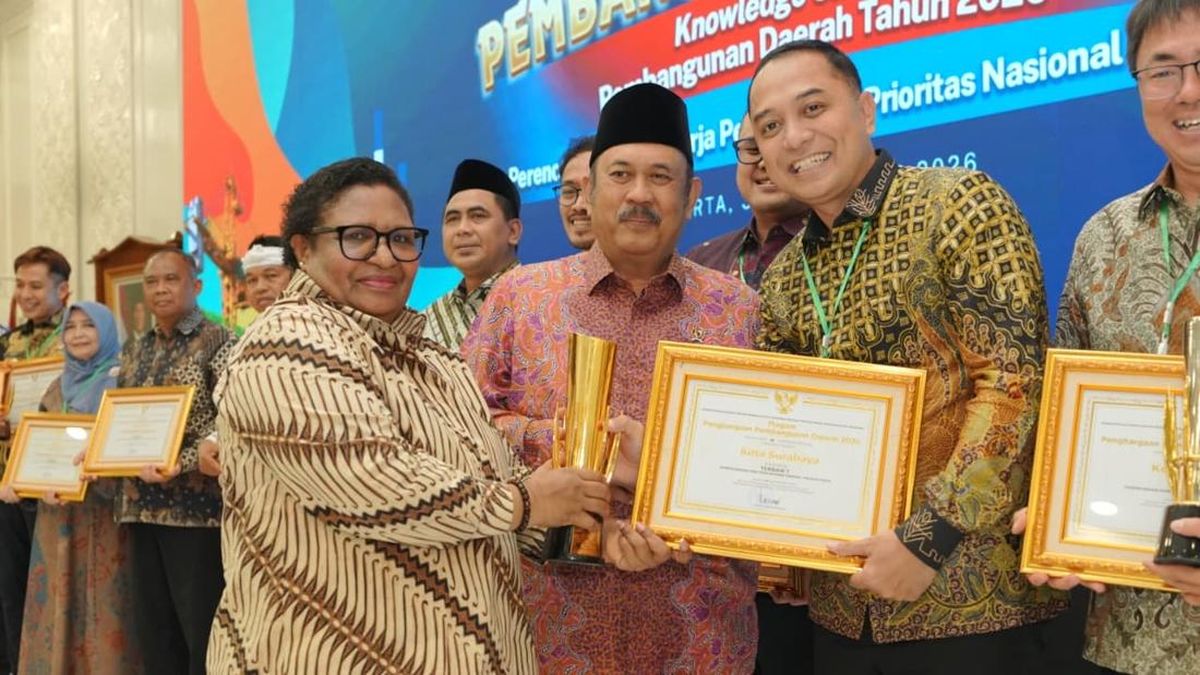
Deputy Minister of Home Affairs Ribka Haluk has emphasised the importance of consistency among regional governments (Pemda) in executing development planning to ensure that formulated programmes are implemented and provide a real impact on society.
This was stated by Ribka while serving as a keynote speaker at the Regional Development Award (PPD) Handover and Regional Development Knowledge Sharing 2026 event at the Office of the Ministry of National Development Planning/National Development Planning Agency (PPN/Bappenas), Jakarta, on Wednesday (30/9).
According to Ribka, the awards presented to several regional governments serve as a form of appreciation for the innovation and creativity demonstrated in regional development.
However, she expressed hope that these achievements would serve as motivation for regions to continuously improve the quality of planning and sustainable development implementation. This includes ensuring that Regional Medium-Term Development Plan (RPJMD) documents are aligned with the National Medium-Term Development Plan (RPJMN).
She noted that consistency between planning and execution is a vital component in ensuring that development programmes truly address the needs of the people. Therefore, synergy between the central and regional governments must continue to be strengthened.
“Consistency with planning is very important. Synergy between the central government and regional governments is crucial,” said Ribka.
Furthermore, she encouraged regional governments to ensure that budget management is directed towards priority programmes that provide real benefits to the public, including those initiated by the central government.
Development, she added, is ultimately measured not only by the implementation of programmes but also by their impact on public welfare.
Moreover, Ribka stated that regional governments also need to pay attention to various development indicators, ranging from economic growth, poverty, and unemployment to health, education, and human development.
This is essential so that the direction of development is not merely oriented towards administrative achievements but is capable of addressing the specific needs of each region.
She assessed that the differing characteristics of each region require development approaches suited to their respective conditions. Consequently, regional governments need to utilise data and regional conditions as a basis for formulating policies, while simultaneously strengthening coordination with the central government.
On the other hand, Ribka expressed her appreciation to the regional governments receiving the PPD 2026. She hoped that such awards could be maintained to ensure the quality of development planning and implementation remains high. Appreciation was also extended to the Ministry of PPN/Bappenas and relevant parties organising the event.
“This serves as both an encouragement and an honour, as not all regions achieve this (receiving an award),” concluded Ribka.
Also present on the occasion were the Minister of PPN/Head of Bappenas Rachmat Pambudy, Governor of West Java Dedi Mulyadi, Governor of South Papua Apolo Safanpo, Vice Governor of Central Java Taj Yasin, several regents/mayors, and other relevant officials.