
Deputy Minister of Home Affairs Outlines Efforts to Maintain Regional Development Sustainability
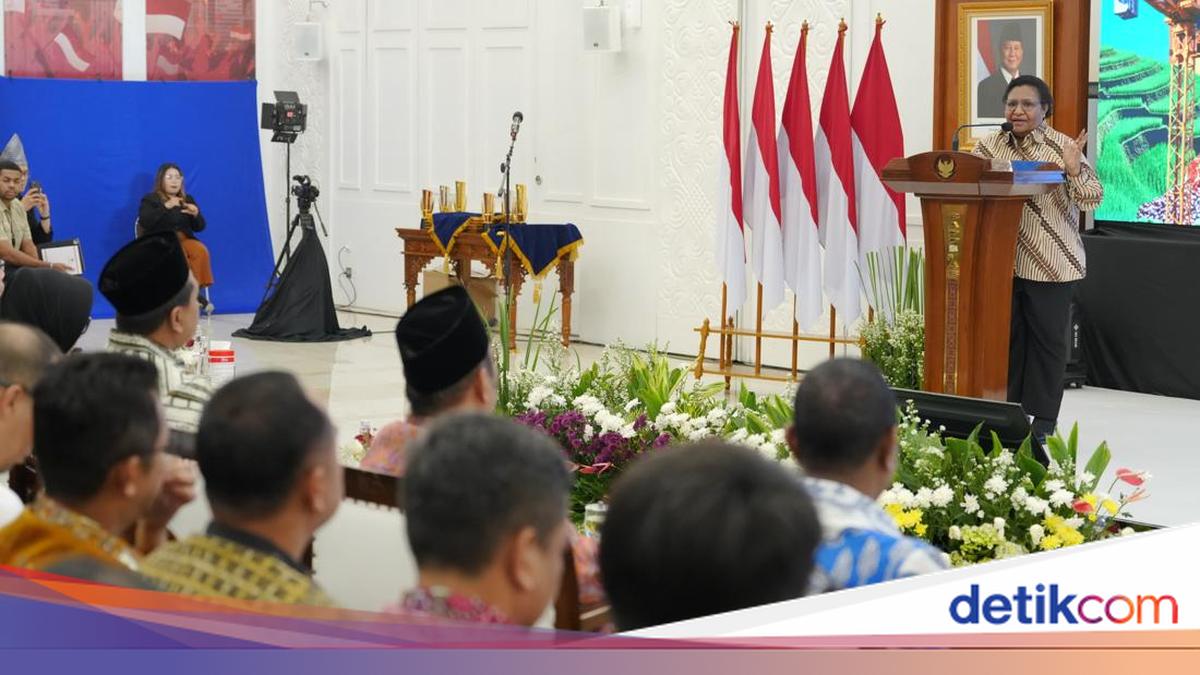
The Deputy Minister of Home Affairs, Ribka Haluk, stated that the Ministry of Home Affairs (Kemendagri) is continuously striving to maintain the sustainability of regional development. These efforts are being implemented through inflation control, the strengthening of economic growth, and ensuring that regional development remains aligned with national priority programmes.
Ribka noted that sustainable development requires consistency from the planning stage through to execution. Therefore, it is essential to build synergy between the central and regional governments so that planned programmes can be implemented in a directed manner and provide benefits to the community.
“Consistency in planning is very important,” Riblar said in a written statement on Thursday (1/10/2026).
These remarks were made while representing the Minister of Home Affairs, Muhammad Tito Karnavian, as a keynote speaker at the 2026 Regional Development Award (PPD) and Regional Development Knowledge Sharing event at the Ministry of National Development Planning/Bappenas office, Jakarta, on Wednesday (30/9).
To maintain regional economic stability, the Ministry of Home Affairs consistently holds weekly inflation control coordination meetings with regional governments and relevant ministries and agencies. This step is taken to maintain price stability and ensure that inflationary volatility does not hinder the development process.
“The goal is to manage regional inflation, the rising prices of goods, and everything else so that there is good control, allowing all these development processes to be carried out in the regions,” she said.
In addition to inflation, the Ministry of Home Affairs will continue to oversee regional economic growth by forming a team to monitor economic performance. This measure is intended to ensure that central government programmes and interventions can be effectively implemented at the regional level.
“Therefore, regarding economic growth, we at the Ministry of Home Affairs—the Minister of Home Affairs has already formed a team to continuously monitor so that all ‘Asta Cita’ programmes from our President in this era of transformation related to economic issues, and all intervention programmes from the central government, are truly implemented in the regions,” she explained.
According to Ribka, strengthening the regional economy must also be directed towards supporting national strategic agendas, such as investment development, job creation, and downstreaming (hilirisasi) according to regional potential. Consequently, the synchronisation of central and regional planning needs to be continuously strengthened so that national programmes can deliver a real impact on local communities.
Furthermore, the Ministry of Home Affairs is encouraging data-driven development and the management of regional budgets (APBD) oriented towards programmes that provide direct benefits to the public. This includes efforts to reduce poverty and unemployment, as well as improving the quality of health, education, and human development.
Ribka emphasised that national and regional development planning are a single entity. Therefore, consistency in planning, budgeting, and execution must be maintained so that all development programmes move in a unified direction.
“In theory, it is okay, but in practice, it is sometimes far from that, Mr. Minister of Bappenas. This is what we perhaps need to discipline together,” she concluded.