
Deputy Minister of Home Affairs Emphasises Programme Synchronisation for Underdeveloped Regions
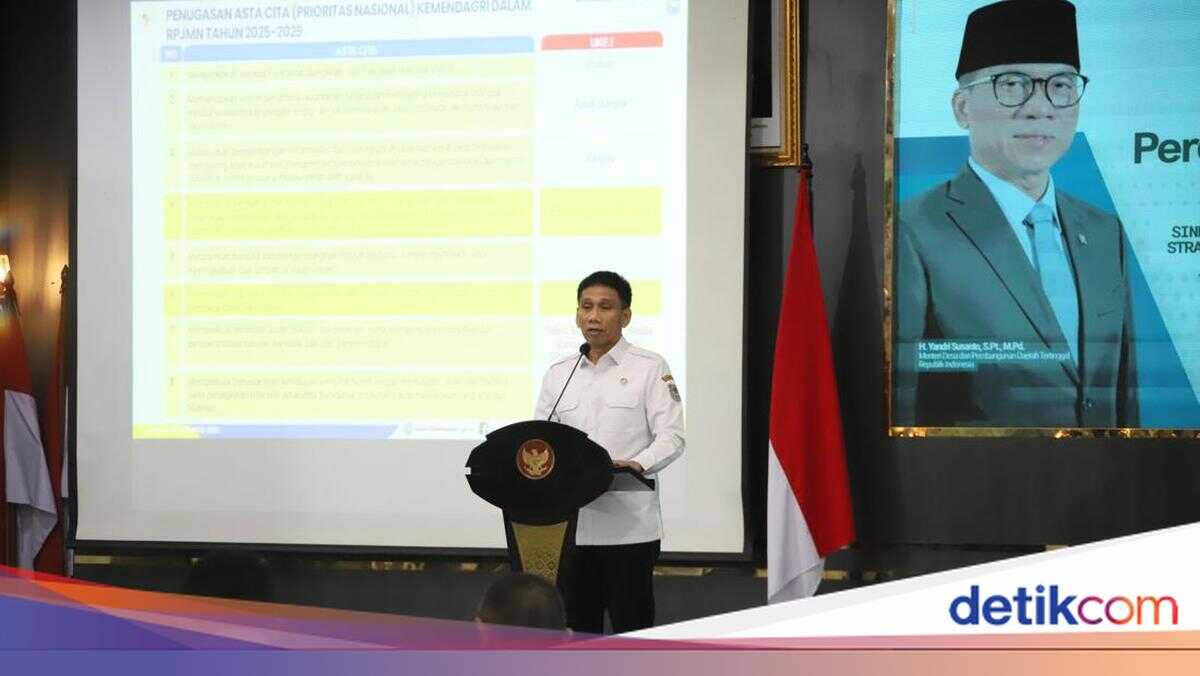
Deputy Minister of Home Affairs (Wamendagri) Akhmad Wiyagus has emphasised the importance of accelerating development in underdeveloped regions through synchronisation of central and regional programmes, as well as strengthening village governance. This strategic approach is considered crucial for ensuring economic equity, alleviating extreme poverty, and enhancing village self-reliance across all regions of Indonesia.
This was conveyed by Wiyagus whilst attending a Coordination Meeting on Accelerating Development of Underdeveloped Regions held at the Office of the Ministry of Villages and Development of Underdeveloped Regions (Kemendes PDT) in South Jakarta.
“We ensure that every presidential priority programme, ranging from food self-sufficiency to elimination of extreme poverty, is integrated into development planning at the regional and village levels,” said Wiyagus in a written statement on Wednesday (25 February 2026).
In his presentation, Wiyagus highlighted several major challenges still faced by underdeveloped regions. These challenges include limited fiscal capacity, low local revenue (PAD), and inadequate basic service quality.
To address these issues, he affirmed that the Ministry of Home Affairs (Kemendagri) has established various affirmative action programmes outlined in its Strategic Plan (Renstra) 2025-2029. These programmes are designed to accelerate development whilst strengthening the foundation of village governance.
One key focus is strengthening the capacity of village apparatus in underdeveloped and very underdeveloped regions to become more professional and competent. Additionally, through the National Border Management Agency (BNPP), the government will provide strategic management training to 1,200 regents and construct 20 office units in priority locations to improve the quality of public services.
The government will also launch the BERAKSI programme (Empowered, Accountable, Synergistic) as an effort to align village development planning with national priority agendas.
“This programme also targets strengthening basic services through optimisation of health posts to reduce stunting, as well as strengthening local economies through Village-Owned Enterprises (BUMDes) and Red and White Village Cooperatives,” Wiyagus explained.
Furthermore, Wiyagus affirmed the Ministry of Home Affairs’ commitment to continue providing technical assistance so that villages in underdeveloped regions do not proceed alone in the development process. He hopes that villages can become the main driver in improving community welfare sustainably.
“Let us make this coordination meeting a momentum to strengthen collaboration, in order to realise a more equitable Indonesia towards Golden Indonesia 2045,” he concluded.