
Deputy Minister of Home Affairs Emphasises Importance of Holistic Leadership at KPPD IV Opening
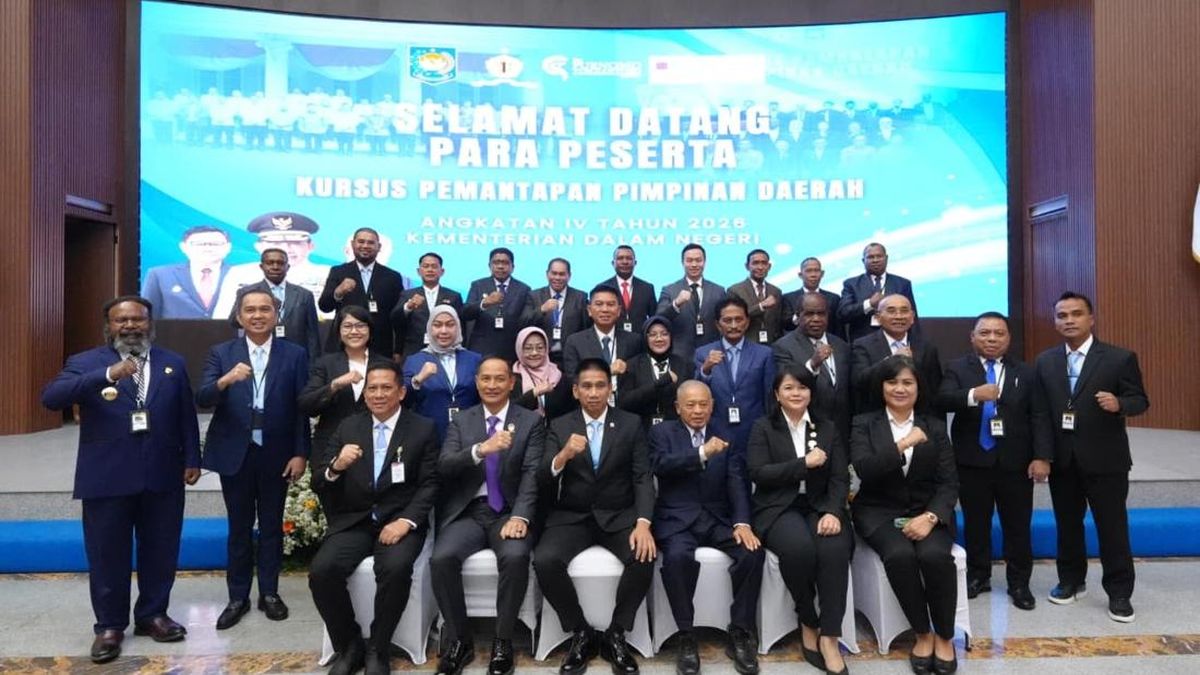
The Deputy Minister of Home Affairs, Akhmad Wiylarus, has emphasised the importance of holistic leadership for regional heads in facing the dynamics and challenges of development. According to him, regional heads need to possess a comprehensive perspective in viewing issues while formulating policies that are aligned with both regional and national interests.
He made these remarks while opening the 4th Batch of the Regional Leadership Strengthening Course (KPPD) for 2026 at the Sasana Bhakti Praja Building, Ministry of Home Affairs Headquarters, Jakarta, on Thursday (3/9).
Wiyagus explained that the KPPD serves as a strategic forum to strengthen regional leadership capacity and broaden national insight. The forum also aims to enhance the ability of regional heads to formulate and implement policies that are responsive, innovative, and oriented towards the interests of the community.
He added that the support from the National Resilience Institute (Lemhannas) in this activity is expected to expand the participants’ perspectives in understanding various issues comprehensively, holistically, and integrally. This understanding must be based on national insight and national resilience.
“You will all receive truly extraordinary materials. We will eventually realise that we cannot work alone amidst a global geopolitical situation that is very dynamic and changing super fast,” he stated in a written statement on Thursday (3/9).
Wiyagus noted that the KPPD provides a momentum for regional heads to step away from governmental routines and expand their perspectives in understanding the strategic environment. This is essential to ensure regional heads are increasingly prepared to face development challenges.
Regional heads, he said, also need to align the implementation of government with Law Number 23 of 2014 concerning Regional Government. Furthermore, regional heads must understand how to translate the ‘Asta Cita’ programme into regional policies so that central and regional programmes run in alignment.
“Central policy is not just central policy; it must also be linear with regional policy. Some regional heads who already understand this relatively face no problems,” said Wiyagus.
He added that various steps taken by regional governments are essentially the region’s contribution to national interests. These steps include improving public services as well as strengthening food and energy security.
In addition, regional governments are encouraged to improve the quality of education and health. Investment and job creation are also part of these efforts.
“Regional leadership is not enough to be merely administrative—as the Minister of Home Affairs often reminds us—but must also possess strategic orientation, the ability to anticipate, and the courage to bring about change,” Wiyagus asserted.
In line with this, he reminded regional heads not to view issues solely from a sectoral interest. According to him, aspects of national resilience such as demography, geography, and natural resources are interconnected and require collaboration in policy formulation.
To ensure that the learning in the KPPD provides a real impact, Wiyagus encouraged every participant to bring a clear and measurable agenda for change. This agenda, he noted, must be tailored to the specific needs of each participant’s region.
“Our hope from the Ministry of Home Affairs is that those attending this course do not merely gain knowledge and obtain a certificate to be displayed in an office, but bring ideas—ideas for change that can be realised and become concrete programme policies,” he said.
On the other hand, the Acting Head of the Human Resources Development Agency (BPSDM), Andi Ony, stated that the KPPD aims to increase the capacity of regional leaders to be visionary, adaptive, and innovative. He noted that this capacity must be accompanied by a strong national character in facing global dynamics.
He mentioned that there are 23 participants in the 4th Batch of the 2026 KPPD, consisting of 18 regents and 5 mayors.
“As an output of this KPPD, every participant is required to prepare an action plan related to the problems occurring in their respective regions, so a regional head’s action plan for problem-solving is necessary,” concluded Andi.
For information, the event was also attended by the Deputy Governor of Lemhannas Erwin S. Aldedharma, Purnomo Yusgiantoro, the Purnomo Yusgiantoro Centre team, and the regional heads participating in the 4th Batch of the 2026 KPPD.
Source: jawawa.id (https://jawawa.id/newsitem/deputy-minister-of-home-affairs-emphasises-importance-of-holistic-leadership-at-kppd-iv-opening-1788440522)
Originally published by CNN Indonesia (https://www.cnnindonesia.com/nasional/20260903184200-25-1399736/wamendagri-tekankan-pentingnya-kepemimpinan-holistik-saat-buka-kppd-iv), translated from Indonesian