
Deputy Minister of Home Affairs Emphasises Energy Security Towards Developed Nation Status at Air Force Command and Staff College
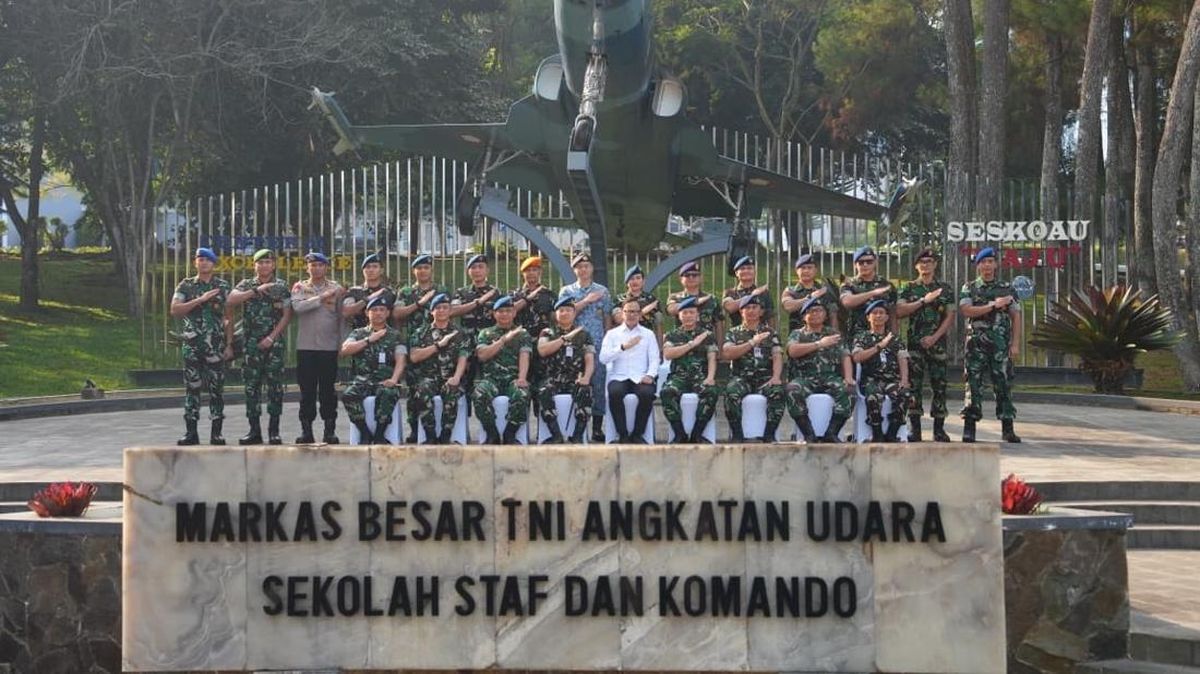
The Deputy Minister of Home Affairs, Bima Arya Sugiarto, has emphasised the importance of energy independence and security for Indonesia. This step is considered strategic in achieving the target of becoming a developed nation within the next 20 years.
He conveyed this during a public lecture at the Widya Mandala I Building, Air Force Command and Staff College (Sesko AU), Lembang, West Bandung Regency, West Java, on Wednesday (30/9). The event was attended by student officers of the 65th Air Force Command and Staff College cohort.
Bima noted that Indonesia is currently in a strategic phase to determine its future development direction. Several international institutions even project that Indonesia has the potential to become one of the five largest economic powers in the world.
However, this great opportunity must be accompanied by the nation’s ability to build independence across various sectors. Dependence on certain sectors, including energy, can affect national security amidst global geopolitical dynamics.
“No country can leap from a middle-income to a developed nation without building national independence,” he stated in a written statement on Wednesday (30/9).
He continued that threats to the nation today are no longer limited to conventional conflicts. The forms of threats have expanded widely into the realms of cyber, information, and the energy sector.
Bima assessed that the energy sector is now the primary foundation for various societal and governmental activities. These needs encompass public services, industry, transport, healthcare facilities, defence systems, and digital infrastructure.
Therefore, national energy security needs to be prepared maturely and comprehensively. This effort involves the availability of new and renewable energy, technological capability, and the readiness of the community to face change.
In this process, local governments hold a very important role. Each region is requested to identify energy potential, fiscal capacity, human resources, infrastructure, and natural resources.
“These regions are vital. They are now the frontliners, at the forefront of energy security,” he asserted.
The government is currently pushing three main strategies to strengthen energy security. These strategies include accelerating the transition to new and renewable energy, strengthening energy reserves and diversification, and improving consumption efficiency through electrification.
According to Bima, one example of implementing this innovation can be seen in the processing of waste into electricity in Bogor. The area produces approximately 4,000 tonnes of waste per day, a portion of which can be processed into electrical energy.
This step serves as a dual breakthrough to address waste issues while simultaneously providing a new energy source. The government aims to significantly reduce waste accumulation volumes in the coming years.
Through this activity, he hopes that the student officers of Sesko AU can understand the link between energy security, regional development, and national resilience. This understanding is essential for future leaders to build collaboration in addressing global challenges.