
Deputy Minister of Home Affairs Bima: Reducing Out-of-School Children is Key to Achieving Golden Indonesia 2045
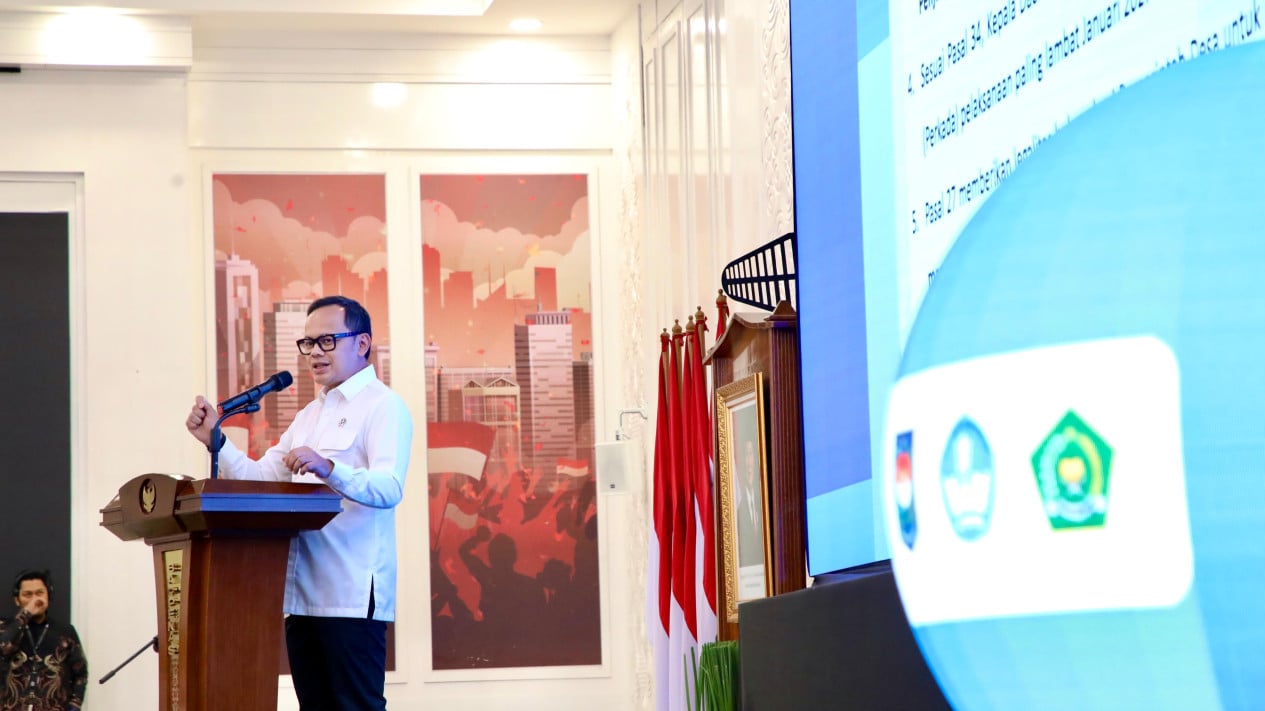
Jakarta, VIVA – Deputy Minister of Home Affairs Bima Arya Sugiarto has asserted that reducing the rate of out-of-school children (ATS) is one of the essential keys to realising the ‘Golden Indonesia 2045’ vision. According to him, Indonesia’s success in utilising its demographic bonus is heavily dependent on the quality of education provided to the younger generation.
Bima made these remarks while representing the Minister of Home Affairs, Muhammad Tito Karnavian, during the launch of Presidential Regulation (Perpres) Number 3 of 2026 concerning the Prevention and Handling of Out-of-School Children. The event was held via a hybrid format at the Djunaedi Hadisumarto Building, Ministry of National Development Planning (PPN)/Bappenas, Jakarta, on Wednesday (3/6/2026).
“One of the primary keys to maximising the demographic bonus is education. We will lose this golden momentum if we do not focus on this dimension. Coordination between the central government and regional governments is key for us,” he stated.
He revealed that several major factors contribute to the high number of out-of
school children. These include economic issues and poverty, social and cultural aspects that influence public perception of education, limited access to education—particularly in underdeveloped, frontier, and outermost regions—and the suboptimal connection between the education sector and the needs of the workforce.
“Furthermore, on the ground, we see obstacles involving street children and abandoned children who often lose their right to schooling due to a lack of essential population documents,” he explained.
Bima also detailed various steps taken by the Ministry of Home Affairs (Kemendagri) to support the handling of out-of-school children. This includes guiding regional governments (Pemda) to meet Minimum Service Standards (SPM) in the field of education through their Regional Revenue and Expenditure Budgets (APBD).
“We are ensuring that these regions focus on the SPM in the education sector,” he added.
Additionally, the Ministry of Home Affairs has issued policies providing space for regional governments to utilise Unforeseen Expenditure (BTT) to support educational programmes in accordance with prevailing laws and regulations. This tactical intervention is intended to directly impact the achievement of specific education-related SPM targets for 2024.
“This is a tactical regulatory intervention from the Ministry of Home Affairs. If we look at this Presidential Regulation, it contains several very significant substances that we hope all regional heads will recognise, as it serves as a powerful tool,” he emphasised.