
Deputy Minister of Hajj: Pilgrims Free to Choose Location for Sacrificial Animal Slaughter
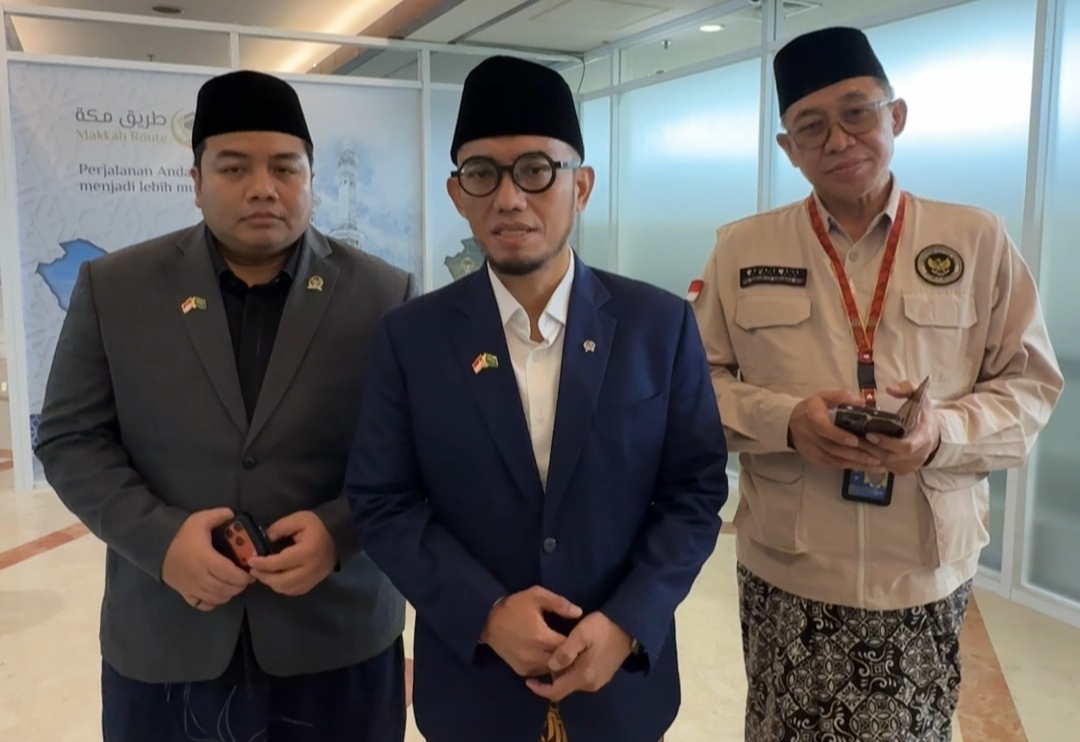
Deputy Minister of Hajj and Umrah, Dahnil Anzar Simanjuntak, stated that the government is providing ample space for Hajj pilgrims to follow their respective beliefs regarding the location for the slaughter of sacrificial animals (dam). This statement was made after inspecting the Makkah Route service at Juanda Airport in Sidoarjo Regency on Friday (May 15th).
Dahnil explained that the Ministry of Religious Affairs has issued a circular that accommodates differences of opinion (khilafiyah) among scholars regarding the place of dam slaughter. The government has chosen to facilitate all views that have a strong basis in religious doctrine.
“We respect the MUI’s fatwa (religious ruling) which requires the dam to be slaughtered in the Holy Land, but we also respect the decision of Tarjih Muhammadiyah and the views of Islamic boarding schools that allow the slaughter to take place in the country,” said Dahnil.
In his explanation, Dahnil detailed two mechanisms that pilgrims can take. First, for those who believe that the dam must be carried out in Mecca, they must go through the legal channels of the Saudi Arabian government, namely the Adahi institution. This is important to avoid being in an illegal administrative status in Saudi Arabia. Second, for those who choose to slaughter the dam in the country, they are welcome to channel the dam through official zakat (alms) institutions or carry it out in their respective hometowns in Indonesia.
This policy is taken as a form of state presence that embraces all levels of society without favoring any particular Islamic jurisprudence. Dahnil emphasized that the ministry’s role is to support the smooth running of worship without limiting the authority of pilgrims’ beliefs.
“The Ministry of Hajj and Umrah is a ministry for all groups. We are not in a position to blame any one fatwa, but rather to facilitate all decisions of scholars who have authority,” he said.
The inspection at Juanda Airport also ensured the readiness for the departure of pilgrims, including pilgrims from Jember, which this year experienced an increase in the number of pilgrims to three thousand people. Pilgrims are expected to be able to focus on worship with the legal certainty regarding the procedures for the slaughter of the dam. (H-2)
The Ministry of Hajj and Umrah revealed that as many as 80 prospective pilgrims who do not have official visas can be prevented from departing from 14 international airports.
The Deputy Minister of Hajj and Umrah (Wamenhaj) of the Republic of Indonesia, Dahnil Anzar Simanjuntak, said that the increase in avtur (aviation fuel) for prospective pilgrims will be borne by the government.
One of the strategic issues discussed was the potential increase in global fuel prices, which could impact the cost of Hajj flights.
The Deputy Minister of Hajj and Umrah (Wamenhaj) Dahnil Anzar Simanjuntak called on all Indonesian people to pray for the smooth running of the 2026 Hajj pilgrimage.
The Deputy Minister of Hajj and Umrah Dahnil Anzar Simanjuntak said that about 2,000 Indonesian Umrah pilgrims had experienced difficulties when they wanted to return to their homeland from Saudi Arabia.
Makkah Route is a form of advance immigration checkpoint service, where inspections are carried out by Saudi Arabian Immigration officers directly at departure airports in Indonesia.
The Deputy Speaker of the DPR (House of Representatives), Adies Kadir, inspected the implementation of the Makkah Route program for Indonesian Hajj pilgrims, especially from the Solo embarkation point, in 2025.
Makkah Route is a very important innovation to improve the quality of Hajj pilgrimage services.
Source: jawawa.id (https://jawawa.id/newsitem/deputy-minister-of-hajj-pilgrims-free-to-choose-location-for-sacrificial-animal-slaughter-1780570096)
Originally published by Media Indonesia (https://mediaindonesia.com/nusantara/890565/wamen-haji-jemaah-diberi-kebebasan-tentukan-lokasi-potong-dam), translated from Indonesian